Health issues for women at work and what actually helps: the moves that raise company value
Links on this page include advertising.
As more women work, the share of women in the labour force has passed 40%. a Ministry of Health, Labour and Welfare report puts the figure at 31.24 million as of 2023, and an environment where they can work well is needed more than ever.
Amid all the calls for workplaces where women can work well, health issues specific to women are easily overlooked. Menstruation-related symptoms, PMS, the menopause: women face a range of health issues through shifts in hormone balance across their lives. These are not personal matters but business issues with a large effect on productivity and company value.
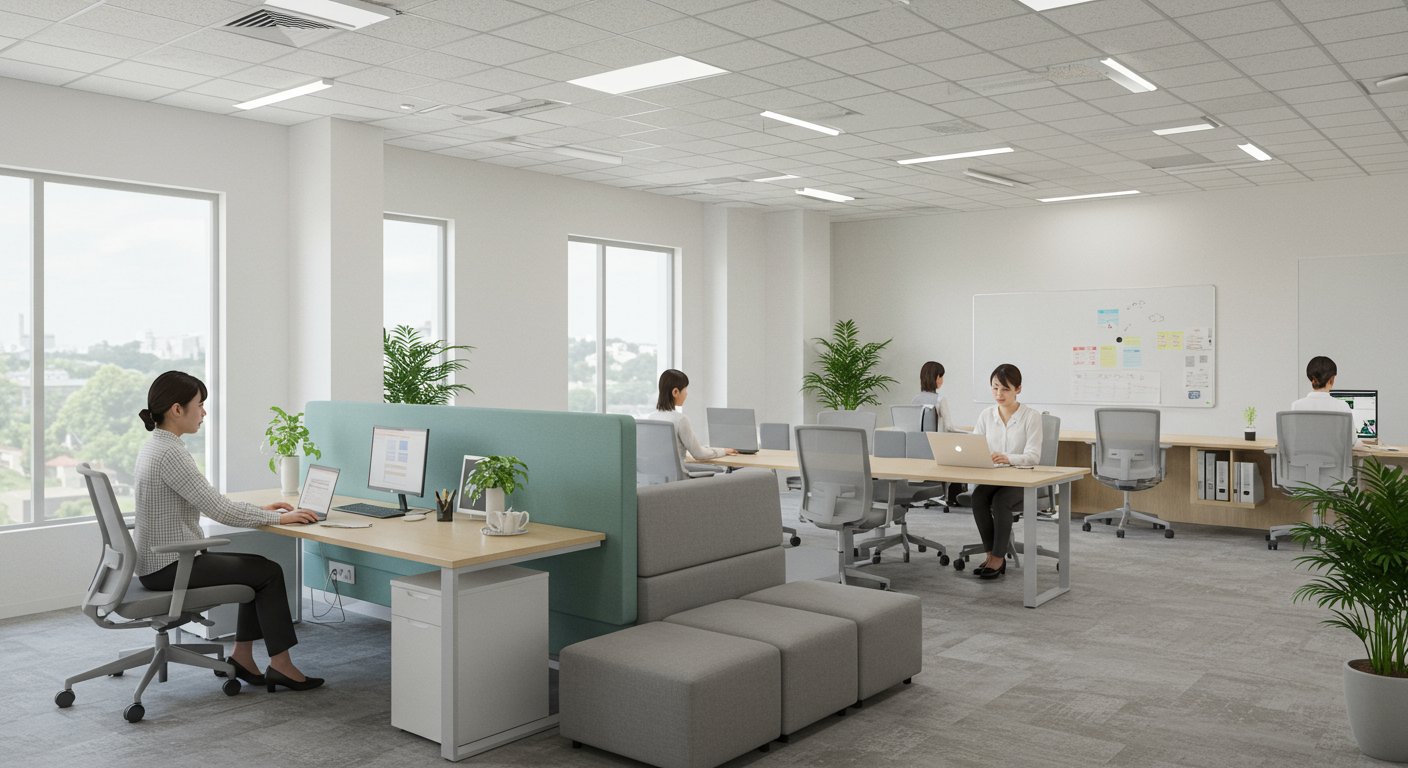
a survey by the Ministry of Economy, Trade and Industry According to it, about 52% of women staff said they had struggled at work because of a health issue specific to women. Within that, menstruation-related symptoms and conditions accounted for 72%, PMS for 43%, the menopause for 19% and mental health for 19%.
The socio-economic burden of menstruation-related symptoms and the like is estimated at some 682.8 billion yen a year, of which 72% comes from absence and from losses in the amount and quality of work. Women's health issues do not stop at how an individual feels; they are an important issue feeding straight into productivity and management.
TOC
Health issues specific to women, and responding at each stage of life
Women's health issues change a great deal with the stage of life, because female hormones shift greatly across adolescence, the reproductive years, the menopause and later life.
What most often causes difficulty at work are the reproductive years, from the twenties to the forties, and the menopause, which begins in the late forties. The reproductive years bring period pain, PMS and endometriosis; the menopause brings hot flushes, insomnia and mood swings. These vary greatly from person to person, and so does their severity.

Many women struggle with menstruation-related symptoms, and the large problem is a lack of understanding at work. Plenty push through, for reasons such as having a male manager who is hard to talk to, or feeling awkward taking menstrual leave when no other woman around them does.
On menopausal symptoms, a lack of understanding across society is a serious issue. What the symptoms are and how to deal with them are not widely known, and often people do not reach the right medical care or support. As things stand, many keep working while putting up with changes in how they feel.
With the right knowledge and the right measures, these health issues can be eased and productivity maintained. For a company, health support matched to women's stages of life matters both for attracting people and for productivity.
Where companies stand on supporting women's health, and what remains
Support for women's health is among the themes of greatest interest in workplace wellness. In a survey by the Ministry of Economy, Trade and Industry's working-level liaison meeting on workplace wellness, measures for health issues specific to women came first among the activities of greatest interest, at 56%.
Against that interest, though, what is actually being done still falls short. Many companies feel the need but cannot see which issues they have, or do not know what measures to take.
Managers' ability to respond is another issue. The same Ministry of Economy, Trade and Industry data shows 34% of managers saying they had struggled to respond to a health issue specific to women, with a lack of knowledge and understanding slowing support down. Women themselves often sense that the workplace makes it hard to raise such things, and in workplaces with many male managers and colleagues there is reported reluctance to bring up menstruation or the menopause at all.
Solving this depends on building understanding across the whole company and introducing concrete support. Leading companies run training and awareness work on women's health issues, set up help desks, and promote flexible working such as working from home and flexitime.
Effective support for women's health, and what has worked
More companies are taking women's health issues on. Here are concrete measures and examples of what has worked.
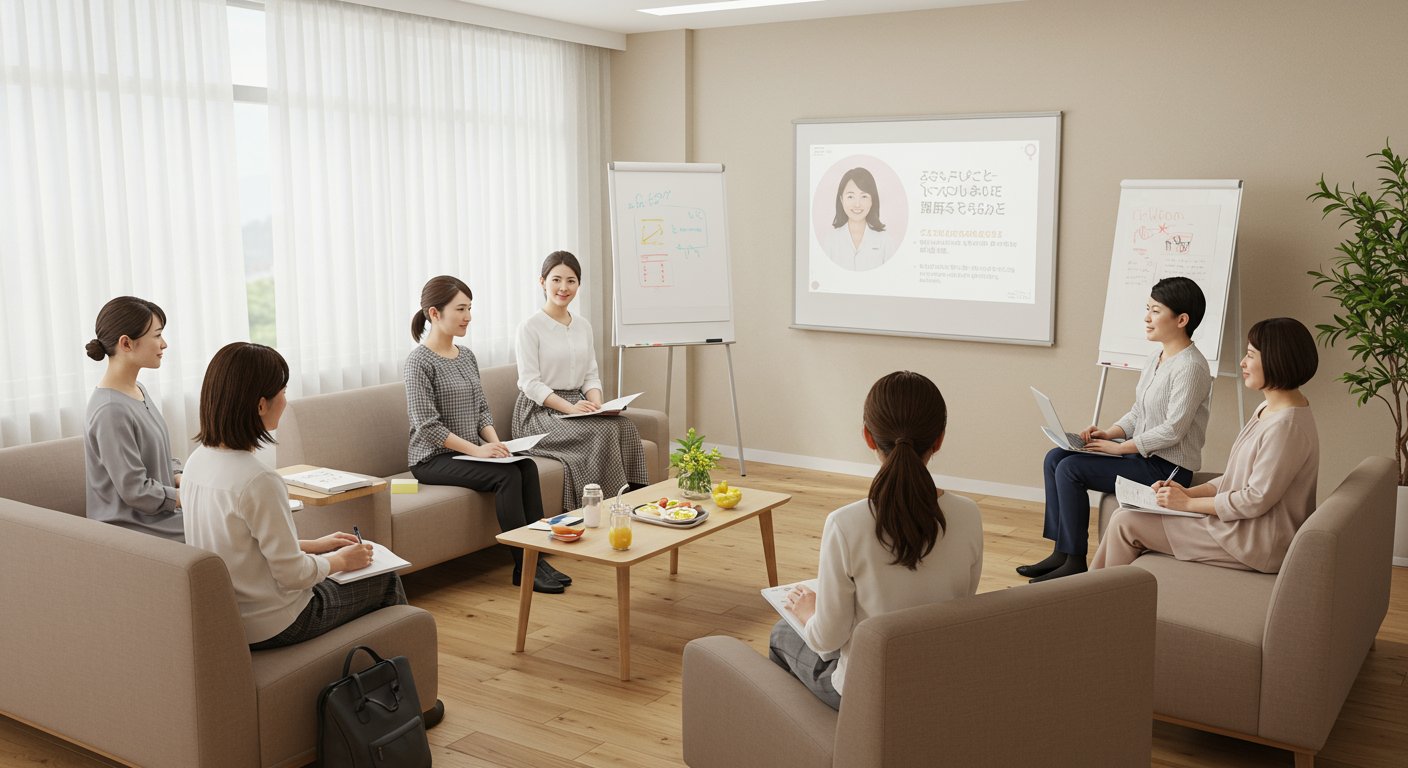
The first thing that matters is building understanding among staff. All staff, women and men alike, holding basic knowledge of health issues specific to women is the first step. Otsuka Pharmaceutical runs regular internal seminars on women's health, working to build understanding among all staff, managers included.
Next comes flexible working. Working from home and flexitime make it possible to work in line with how you feel. Kao Corporation promotes flexible working such as shorter hours and working from home, in response to health issues specific to women.
Putting support channels in place matters too. A health help desk with an occupational physician or nurse, and services dedicated to women's health, both work well. Aflac Life Insurance has run a survey on women's health covering all its women employees and officers, and set up an internal help desk staffed by nurses and others, as health support built on the particular characteristics of women's minds and bodies.
An approach through food, as with Yasai Yakuzen, is also one we expect to draw attention. A programme that combines the wisdom of yakuzen with a practical way of eating built on everyday vegetables is something people take on under their own steam, and what they learn along the way can be put to use in reskilling as well.
How supporting women's health raises company value
Taking on support for women's health brings a company a range of benefits.
The first is higher productivity. Feeling off through menstruation or the menopause readily leads to lost concentration and absence, which tells on efficiency across the company. Proper support holds down those losses and builds an environment where staff can work more steadily.
The second is keeping people. A workplace where health feels looked after is a great support in continuing a career, particularly for women through childbirth, childcare and the menopause. That in turn means fewer people leaving and better use of the people you have.
A stronger position in the hiring market follows too. Companies active on wellness are regarded as good places to work and are more readily chosen, particularly by younger people and women. Measures that take women's health into account also improve the company's image as one that meets its responsibilities. They help towards recognition such as the Health and Productivity Stock Selection and Health and Productivity Management certification, which raises company value.
Over the long run, better staff health cuts medical costs and sickness benefit, which does the company's finances good as well.
Support for women's health, then, is not a cost but an investment with the future in view. What matters is looking past the short-term burden to the long-term return.
In summary: supporting women's health is a win for company and staff alike
Women's health issues at work are no longer personal matters but important management issues feeding straight into productivity and company value. Proper support for health issues specific to women, from menstruation-related symptoms and PMS to the menopause, does good for company and staff alike.
What companies getting this right have in common are three things: building understanding across the company, introducing flexible working, and putting support channels in place. Together these build an environment where women can keep working in line with their health.
Supporting women's health does good on many fronts: productivity, attracting and keeping people, and the company's image. As shortages of workers deepen with the falling birthrate and ageing population, an environment where women can work in good health for a long time has become essential to sustained growth.
Why not take on support for women's health at your company? Starting with a small step can produce a large change.
Sources
- Ministry of Economy, Trade and Industry, on women's health within workplace wellness (accessed 30 August 2025), https://www.meti.go.jp/policy/mono_info_service/healthcare/downloadfiles/josei-kenkou.pdf
- Five steps to introducing workplace wellness, a practical guide to getting it right
- Seven eating habits for staying healthy while working remotely, and the traps to avoid
Related articles
-
 Seven benefits of Health and Productivity Management certification, and what to watch in the application
 -
How workplace wellness connects to the SDGs: five points where they meet
-
Six steps for a mid-sized company starting workplace wellness: getting the most from what you spend
-
What workplace wellness does for recruiting: the data on hiring power
-
Femtech literacy makes a company stronger: a new angle on workplace wellness
-
How workplace wellness changes the future for women at work: the front line of employee benefits
-
How to head off the health risks that come with remote work: the case for wellness at home
-
Seven eating habits for staying healthy while working remotely, and the traps to avoid