What self-study in yakuzen gives you, and the basics to know
Links on this page include advertising.
Curious about yakuzen but unsure where to start?
I am one of those who met yakuzen when a doctor ordered me to stop through overwork, and was struck by what it did. Yakuzen brings the wisdom of Chinese medicine into daily life, and what makes it so appealing is that you can practise it with everyday supermarket vegetables, without special ingredients. I genuinely wished I had known sooner.
Learning yakuzen by yourself gives you the freedom to deepen your understanding at your own pace. Being able to concentrate on the knowledge that fits your own constitution and complaints is another advantage.
*This article contains Amazon Associates affiliate links. The books featured were chosen after our editors checked the contents, not at the request of or in return for payment from any advertiser.
The trap of self-study, though, is that it is easy to drown in information. Yakuzen is a deep body of knowledge grounded in Chinese medicine, and without learning it systematically you get lost.
TOC
Seven steps for learning yakuzen by yourself
Learning yakuzen by yourself effectively depends on a step-by-step approach. Here are seven steps drawn from my own experience: a path for a beginner to step into the world of yakuzen without strain and build skill steadily. Rather than trying to understand it all at once, go one step at a time.
1. Understand the basic concepts of yakuzen
Start by learning the basic concepts of Chinese medicine that underlie yakuzen: yin-yang and five-phase theory, and qi, blood and fluids. Yakuzen is not simply cooking but a way of staying well that brings the wisdom of Chinese medicine into what you eat. Its aim is to choose ingredients to suit your constitution, how you feel and the season, and keep body and mind in balance.
For a beginner, starting with an introductory book rich in illustrations and diagrams beats a difficult specialist volume. If it lets you follow yin and yang, the five phases and qi, blood and fluids in diagrams, Kampo Seikatsu o Tanoshimu Kyokasho: understand the reasons and settle better, by Daisuke Sakurai, a book like it makes a good way in. Reading the same book over and over is how the basics stick.
What is bothering you at the moment? Starting from the yakuzen knowledge that answers that symptom makes it easier to keep your motivation.
2. Start yakuzen with everyday ingredients
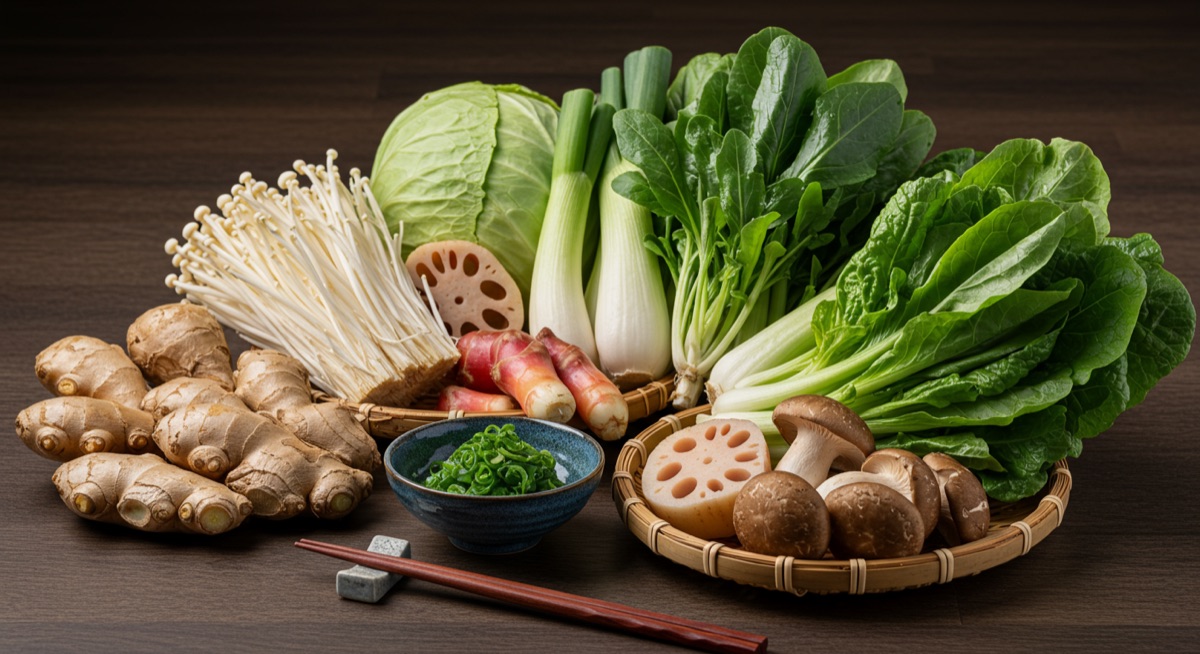
Yakuzen may bring to mind special kampo ingredients, but the vegetables and fruit you already use have yakuzen properties of their own.
Ginger, for instance, warms the body and lifts the metabolism. Onion gets qi circulating and helps with swelling. Tomato cools heat in the body and eases a dry throat.
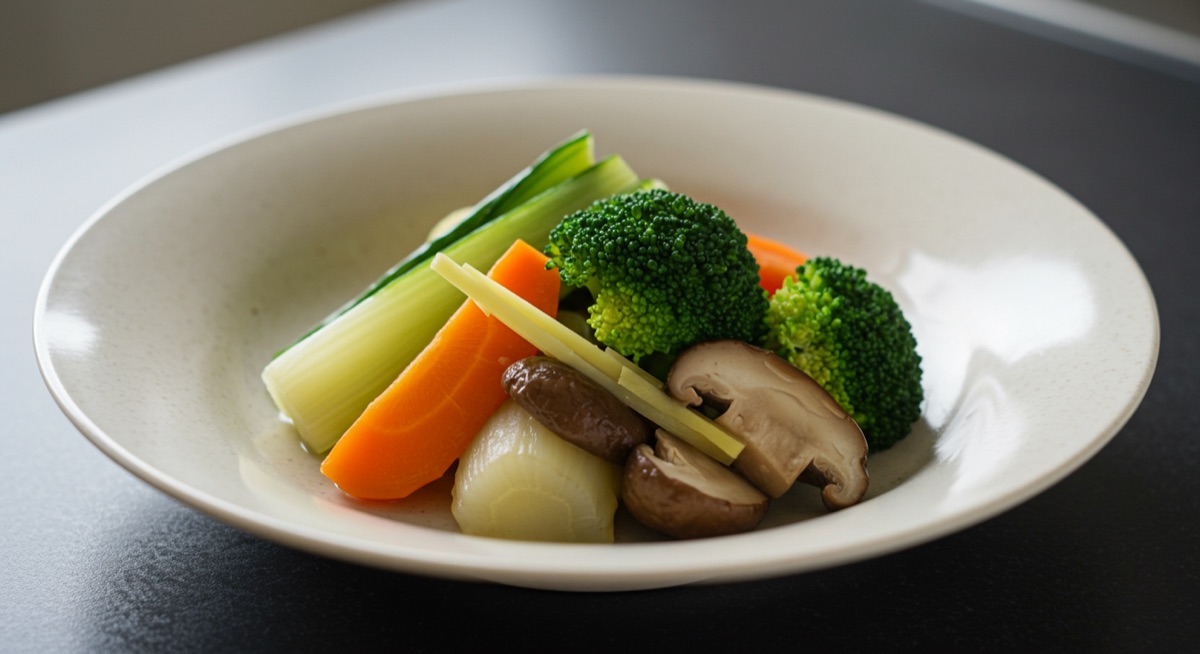
Learn what supermarket vegetables do in yakuzen terms, one at a time, and start by bringing them into everyday cooking. Do not overthink it; knowing the basic natures, warm and cool, is what matters first.
3. Know your constitution
The heart of yakuzen lies in choosing ingredients to suit your own constitution. Chinese medicine sorts constitutions into qi deficiency, blood deficiency, yin deficiency, phlegm-damp, blood stasis, qi depression and others.
Knowing which type you are makes practising yakuzen far more effective. Someone of the qi deficiency constitution, who feels the cold and tires easily, would do well to bring in plenty of warm ingredients.
For a book with a constitution checklist, try Kampo-teki Ouchi Kenshin by Daisuke Sakurai; online, try the Yasai Yakuzen constitution check. Once you know your constitution, the direction of your study becomes clear. Before I earned the Kokusai Yakuzenshi qualification, I too started by getting to know my own constitution. That was a large part of what deepened my understanding of yakuzen.
4. Learn yakuzen by season
Choosing ingredients as the seasons turn matters in yakuzen. Bringing in plenty of cooling ingredients in summer and warming ones in winter, eating in step with the rhythm of the season, is what keeps you well.
A book you can read one theme a day, such as 365-nichi no Yuru Yojo by Sumi Sakaguchi,, is easy to work with through the year as the seasons turn.
Resources for learning yakuzen by yourself
Learning yakuzen by yourself depends on good resources. Here is a selection of what genuinely helps, picked out of the sea of information beginners get lost in.
Introductory books worth reading
A great many yakuzen books are published, but a beginner wants one that is both readable and practical. A single volume covering the basic theory through to recipes for each season is a strong ally in self-study.
- Your first book: Yuru Yakuzen: change how you eat and look and feel better, by Yoko Ikeda| mostly comics and essays, easy to read through
- Putting the basics in order: Wagamama Yojokun by Yohei Suzuki| when you want to go a step deeper into how Chinese medicine sees things
- In the kitchen: Ocha de Kantan Nomu Yakuzen by Momoko Ueki| when you want to start easily, from drinks
How to choose, and a comparison of eight books, is set out in detail in Books for yakuzen beginners, and how to choose.
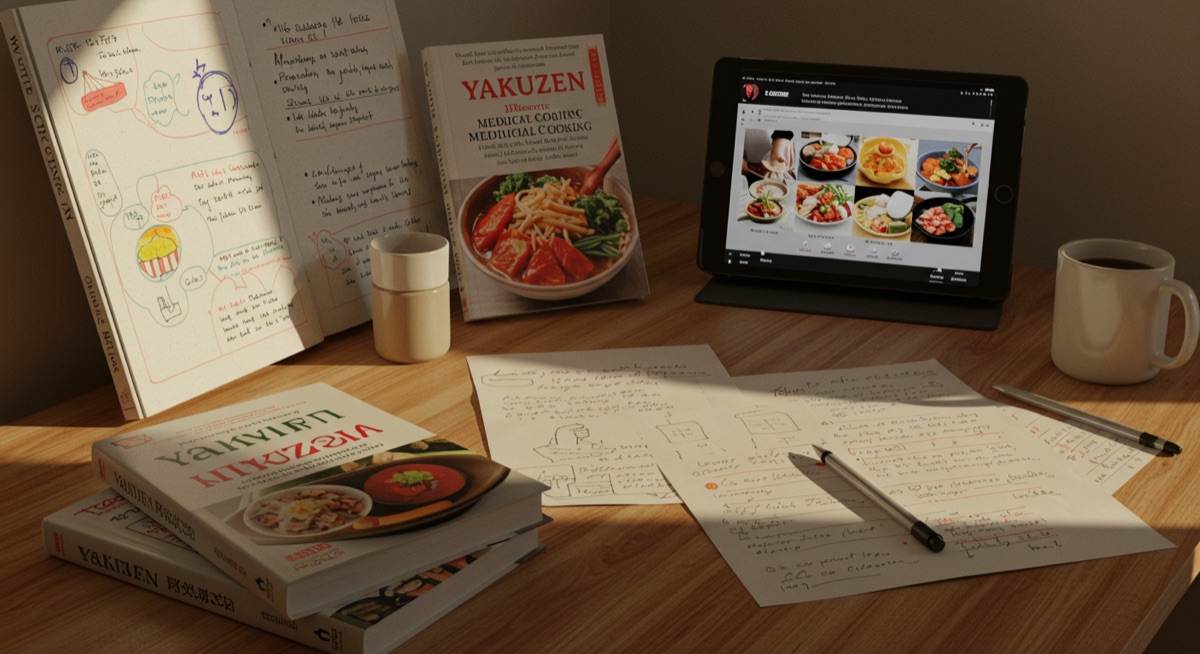
Picking a book up in a shop and choosing one that matches where you are matters. A book with type too small, or too many technical terms, may be a high bar for a beginner.
Online courses and video content
Online courses and videos are a strong ally in self-study alongside books. Learning visually deepens understanding, and being able to watch the actual cooking is a considerable advantage.
An online course such as Yasai Yakuzen, with more than 40 videos to learn from covers a wide range, from the basics of yakuzen to using everyday vegetables in it.
What is good about learning from video is that you can watch again. Difficult ideas settle gradually as you watch them more than once.
Being able to learn at your own pace is what makes self-study worth it. A concentrated stretch at the weekend, or a little each day, whatever rhythm suits you: that is the secret to keeping it going.
Deepening your understanding by practising and feeling it
Yakuzen is not only knowledge; real understanding comes from cooking and eating. Here is how to combine theory with practice.
Start with simple yakuzen recipes
When I first started learning, I took on complicated recipes and nearly gave up. Starting from a simple ginger soup is what let me keep going.
For a beginner, simple, easy recipes are the ones. A Chinese-style ginger and chicken soup for feeling the cold, say. Put Chinese soup base, ginger paste, cooked chicken breast and pre-cut vegetables, all available at a convenience store, into a pan and simmer, and an easy, healthy soup is ready.
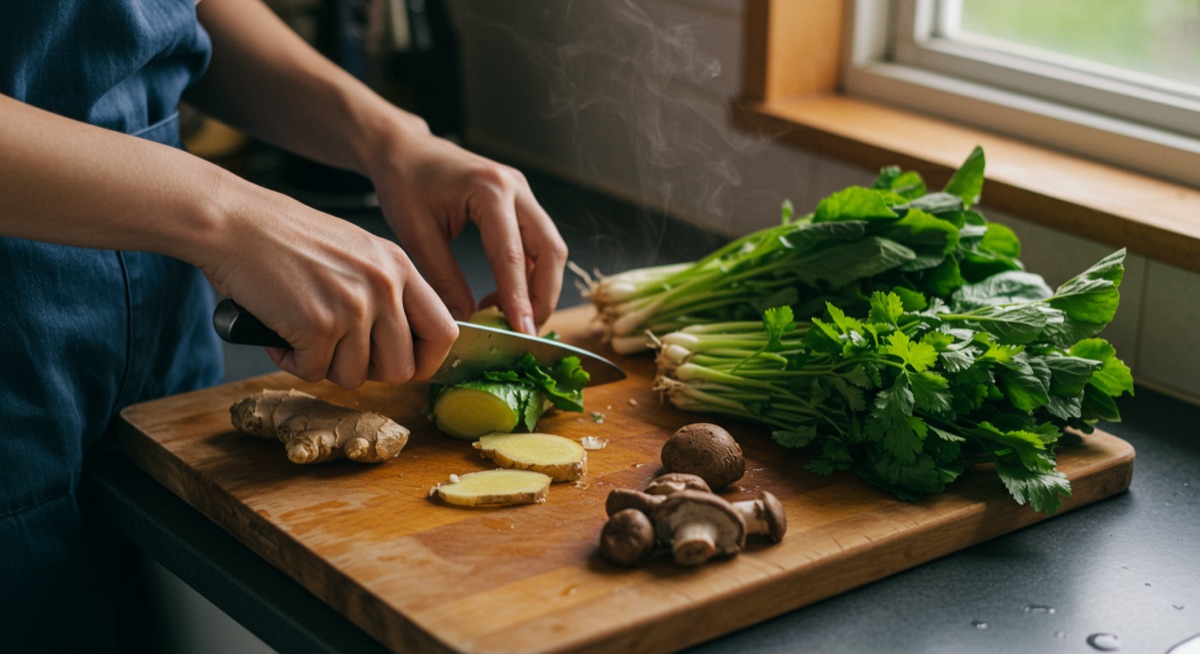
Keeping a yakuzen diary of what you made makes it easier to notice what it did and how things change through the seasons. Value what you yourself felt: that your body warmed after this soup, that your skin improved on this combination.
What yakuzen does differs from person to person. Sometimes it will not do what the textbook says, and that too is a valuable chance to be in conversation with your own body.
Find other people doing yakuzen
Even studying alone, having people with the same interest speeds up your learning. Try a yakuzen community on social media, or an online study group.
Hearing what others do and what they have been through brings discoveries you would not reach alone. The surprise of seeing an ingredient used a certain way, or a first-hand account of a combination that worked for a particular complaint, is a valuable source you will not find in a book.
When I started learning yakuzen I took a great deal from an online community. Precisely because you are studying alone, exchanging notes with others now and then widens what you see.
The path to a yakuzen qualification
Once you have the basics through self-study, aiming at a qualification is worth considering if you want to go deeper. There are several yakuzen qualifications, and choosing to suit your purpose matters.
Stepping up from self-study to a qualification
Yakuzen qualifications range from the beginner-level Yakuzen Advisor to the specialist Kokusai Chui Yakuzenshi. Once you have some knowledge through self-study, take on one that matches your level.
Putting yakuzen to work professionally
Yakuzen knowledge can be put to work in many jobs. Menu development at a yakuzen restaurant, teaching cookery, health-related consulting: the field is widening.
After taking leave through overwork myself, I came to run a subscription service built on what I know of yakuzen. Precisely because the knowledge came through my own experience, I feel it is worth passing on.
Yakuzen knowledge also helps in looking after your own health and your family's. Even where a qualification does not lead directly to work, it is without doubt a valuable asset that raises the quality of daily life.
What it takes to keep studying yakuzen alone
Learning yakuzen by yourself is a journey of steady steps. Deepen your learning in stages: understanding the basic concepts, practising with everyday ingredients, understanding your constitution, and applying it through the seasons.
Using good resources and deepening your understanding by cooking and eating are the keys to getting self-study right. Exchanging notes with people who share the interest widens it further.
And if you want to go deeper still, taking on a qualification is worth considering. Yakuzen knowledge is useful across a wide range, from looking after your own and your family's health to putting it to work professionally.
There is no end to learning yakuzen. Which is exactly why it has a depth you can enjoy for a lifetime. Why not take your own first step into it?
Yakuzen brings the wisdom of Chinese medicine into daily life today. Nothing special has to be prepared: choose and cook the vegetables you eat without thinking properly, through a yakuzen lens, and everyday meals become better to eat and better for you. If you want to know more about vegetable yakuzen, do have a look at the official Yasai Yakuzen site. It shows you how to bring yakuzen in to suit your constitution and how you feel.
This site takes part in the Amazon Associates Program, an affiliate programme designed to provide a means for sites to earn referral fees by advertising and linking to Amazon.co.jp.
That nagging complaint may be a sign of your constitution
Your yakuzen constitution, in three minutes
- Bringing yakuzen in through the seasons: making the most of what is in season
- [Updated 2025] Books for yakuzen beginners, and how to choose
Related articles
-
 What is yin-yang theory in yakuzen?
 -
What is five-phase theory? The idea at the root of Chinese medicine
-
What are qi, blood and fluids in yakuzen?
-
[Updated 2025] Easy yakuzen recipes from everyday ingredients, and how to work them into your life
-
Why yakuzen is drawing attention from busy men today: three effects and how to practise it
-
How I started a business through yakuzen: what I would tell you
-
Starting a side business with yakuzen: the road from no experience to income
-
Nine tips for keeping yakuzen going, and how to make it a habit