Seven eating habits for staying healthy while working remotely, and the traps to avoid
Links on this page include advertising.
Now that working from home is ordinary, how has your eating changed?
As of 2025, the rate of remote working remains high. Remote work brings a great deal, from less time commuting to more freedom in how you work, but new health issues have surfaced alongside it. Changes in what we eat in particular have a large effect on our health.
According to work by the University of Tsukuba's School of Medicine and the Japan Preventive Association of Life-style related Disease, working from home means less movement, irregular eating and more snacking, and weight gain and a higher risk of lifestyle disease have been reported. This is hardly someone else's problem.
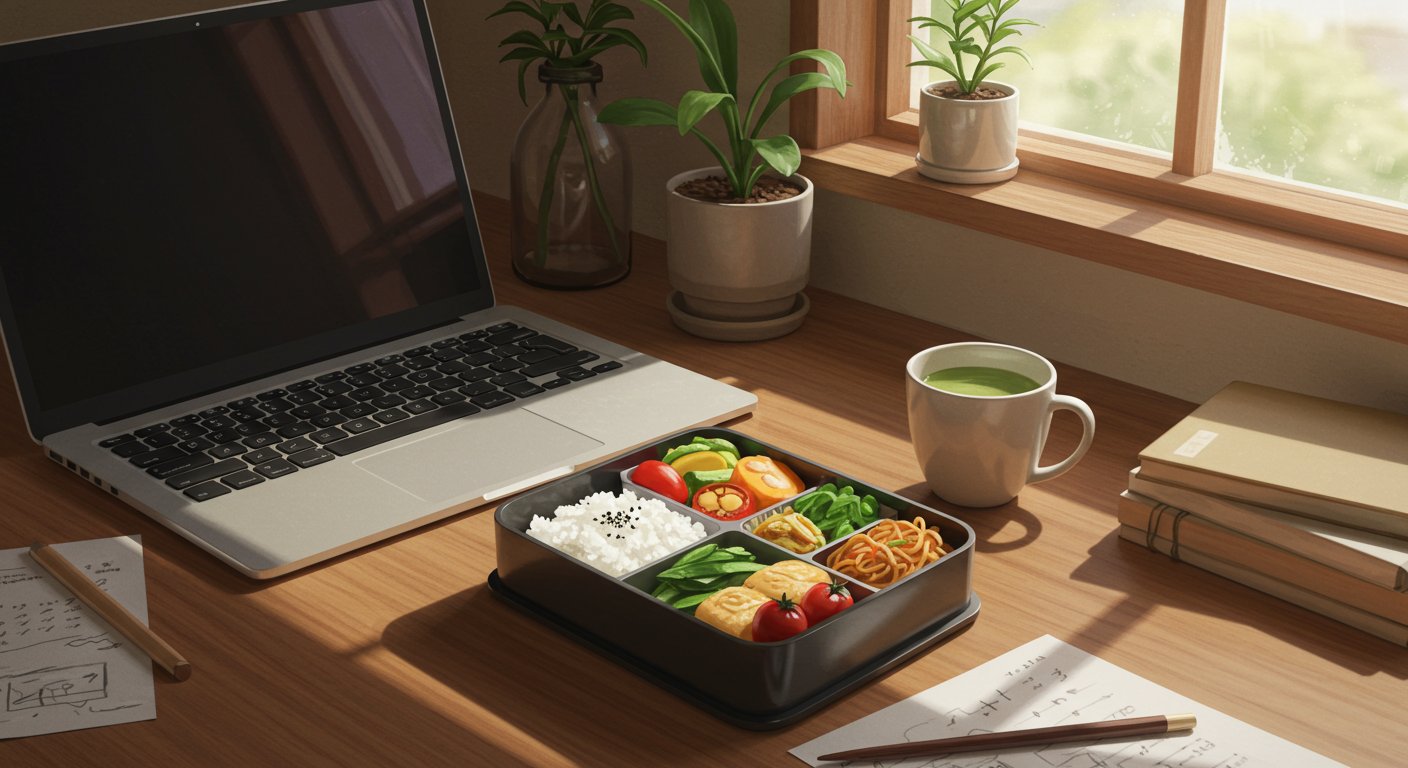
That said, there is also eating that only working from home makes possible. Research from the Department of Social Epidemiology at Kyoto University's Graduate School of Medicine has found that people working at home tend to eat more fruit and vegetables.
This article covers seven ways of eating that protect your health while working remotely. With a practical approach built on ingredients from any supermarket, drawing on the wisdom of Chinese medicine, let us head off the traps of working at home.
Sources
-https://prtimes.jp/main/html/rd/p/000000058.000018672.html
-https://www.tairyoku.or.jp/information/images/tanakacolumn2020.4.24.pdf
TOC
1. Use time management to build a regular eating rhythm
The biggest trap of remote work is that mealtimes become irregular.
At home there is no clear lunch break as there is in an office, and it is easy to find you have skipped a meal, or that you are eating something constantly. That causes weight gain and loss of concentration. Start with managing when you eat.
In practice, setting mealtimes in advance in your calendar or scheduling app works well. Fix the times for breakfast, lunch and dinner and set an alarm to tell you when they come round.
2. Use the one-plate meal for a balanced diet
Preparing food while working at home is a battle with the clock.
Cooking something elaborate between tasks is not realistic. But leaning on instant food and delivery because they are easy tends to unbalance what you eat. This is where the one-plate meal comes in.
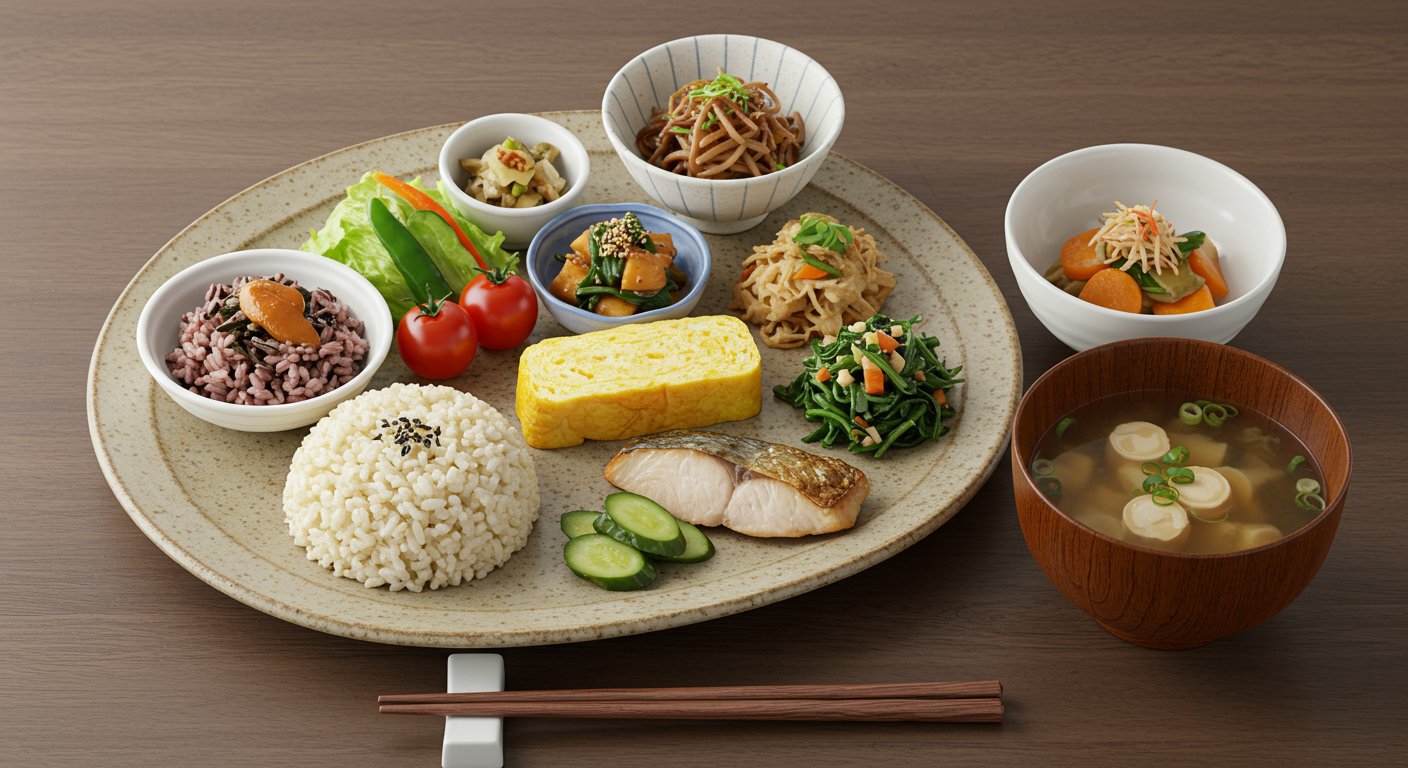
A one-plate meal is a style where a staple, a main and a side are arranged in balance on a single plate. It is easy to prepare and easy to clear away, and it lets you see the balance at a glance. The trick when building one is the 3:1:2 rule. Make three-tenths of the plate carbohydrate (brown rice or multigrain rice works well), one-tenth protein (meat, fish, tofu) and two-tenths vegetables (three or more of different colours), and the balance sorts itself out. Add fruit or a fermented food in what is left and it is perfect.
3. Choose ingredients to suit your constitution
That off-day may in fact come down to what you eat.
Working at home makes you more sensitive to changes in how you feel than office work does. Concentration that will not hold, drowsiness in the afternoon, badly stiff shoulders: all of it feeds straight into how you work.
One way to ease these vague off-days is to choose ingredients that suit your constitution. Nothing special has to be prepared; simply bringing in supermarket vegetables to match how you are can do good.
If you feel the cold or tire easily, for instance, make a point of bringing in warming ingredients such as ginger and spring onion. If you feel irritable or flushed, adding cooling ingredients such as cucumber and lettuce brings things back into balance.

4. A strategy for drinking enough
Are you drinking enough while working remotely?
In an office, going to the kitchen or talking with a colleague brought natural chances to drink something. At home it is easy to concentrate so hard that you forget.
Uber Eats' trend ranking for the first half of 2025 puts water high in the food and household goods category. That presumably reflects people working at home recognising how much drinking matters and buying it regularly. Drinking enough is essential to holding concentration and recovering from tiredness. In a room with air conditioning or heating in particular, you can become dehydrated without noticing. Around 1.5 to 2 litres a day is generally recommended.
5. Smart snacking: making what you snack on better
The great temptation of working at home is how close the kitchen is. Plenty of people open the fridge for a change of scene and end up eating something. With no one watching, people are said to snack more often at home.
Snacking is not a bad thing in itself. Snacking well actually prevents sharp swings in blood sugar and helps hold concentration. What matters is what you choose and how you bring it in.
Good options are nuts with fruit, yoghurt with a little granola, or a tofu smoothie. These head off a sharp rise in blood sugar while giving you what you need.
6. Quick, healthy food that works alongside childcare
Combining remote work with raising children is harder than it looks. The key is preparing balanced food efficiently in the time you have.
The trick to quick food that is still nourishing is cooking once and using it several times. Chopping vegetables in one go at the weekend, making dishes that keep, and having ingredients on hand that cook easily in the microwave all help.
The one to lean on is freezer stock. Freeze boiled vegetables, marinated meat and simmered dishes in portions, and on a busy weekday a balanced meal is a matter of putting them together. One parent working from home said that spending an hour on Sunday evening chopping vegetables and marinating meant weekday meals took ten minutes. That saved time turns into time with the children, or rest for yourself.
Start with what you can, without pushing. A single batch a week to begin with. Once you are used to it, build up how often and how many dishes.

7. Mood-lifting food for mental health
One of the unseen traps of remote work is mental health slipping. Loneliness and the blurred line between work and life can tell on mood and on how you feel in mind and body.
Food is in fact closely tied to mental health. Making a point of eating the nutrients needed to produce the so-called happiness hormones, serotonin and dopamine, can help steady and lift your mood.
These are the nutrients it is said to be worth having regularly.
- Tryptophan (the raw material for serotonin): banana, dairy, soy products, nuts
- Omega-3 fatty acids (supporting how the brain works): oily fish, linseed oil, walnuts
- B vitamins (producing neurotransmitters): whole grains, green and yellow vegetables, pulses
- Magnesium (easing stress): spinach, almonds, black soybeans
Food alone, of course, cannot solve what is going on mentally. Regular exercise and connection with other people matter to a steady mood too. Make a point of talking to people online and building moments to refresh into the day.
In summary: an eating strategy for keeping remote work healthy
Remote work has changed how we work a great deal, and with it the responsibility for looking after our health has passed to us.
Put these seven ways of eating into practice and you can avoid the traps of working at home and keep working in good health.
- Use time management to build a regular eating rhythm
- Use the one-plate meal for a balanced diet
- Choose ingredients to suit your constitution with Yasai Yakuzen
- A strategy for drinking enough
- Smart snacking: making what you snack on better
- Quick, healthy food that works alongside childcare
- Mood-lifting food for mental health
The thinking behind Yasai Yakuzen is a practical way of bringing the wisdom of Chinese medicine into how we eat now. Using supermarket vegetables and making a point of eating for your constitution eases vague off-days and lifts how you work.
Why not start today, using the conditions of remote work to manage what you eat?
Healthy eating habits feed not only into managing weight and heading off illness but straight into productivity and creativity at work. Working at home is exactly why investing in your own health is worth it.
How to head off the health risks that come with remote work: the case for wellness at home
- Health issues for women at work and what actually helps: the moves that raise company value
- How to head off the health risks that come with remote work: the case for wellness at home
Related articles
-
 Seven benefits of Health and Productivity Management certification, and what to watch in the application
 -
How workplace wellness connects to the SDGs: five points where they meet
-
Six steps for a mid-sized company starting workplace wellness: getting the most from what you spend
-
What workplace wellness does for recruiting: the data on hiring power
-
Femtech literacy makes a company stronger: a new angle on workplace wellness
-
How workplace wellness changes the future for women at work: the front line of employee benefits
-
How to head off the health risks that come with remote work: the case for wellness at home
-
Health issues for women at work and what actually helps: the moves that raise company value