Eating yakuzen the right way: six points that get the most out of it
Links on this page include advertising.
Does yakuzen look hard? Do you feel nothing from it? Do either of those sound familiar?
Yakuzen is not simply kampo food; it is a prescription through food, matched to your constitution and the season. Brought in properly, what it does is surprisingly easy to feel.
TOC
What is yakuzen? The basics for getting the most from it
Yakuzen was born in China some 3,000 years ago and is a way of eating grounded in the theory of Chinese medicine. Its aim is to ease the state called pre-illness, where you are not ill but feel vaguely off.
A heavy body, poor sleep, badly stiff shoulders, tiredness that will not lift, cold hands and feet: these are in fact signs of pre-illness. Left alone, they may progress into an illness proper.
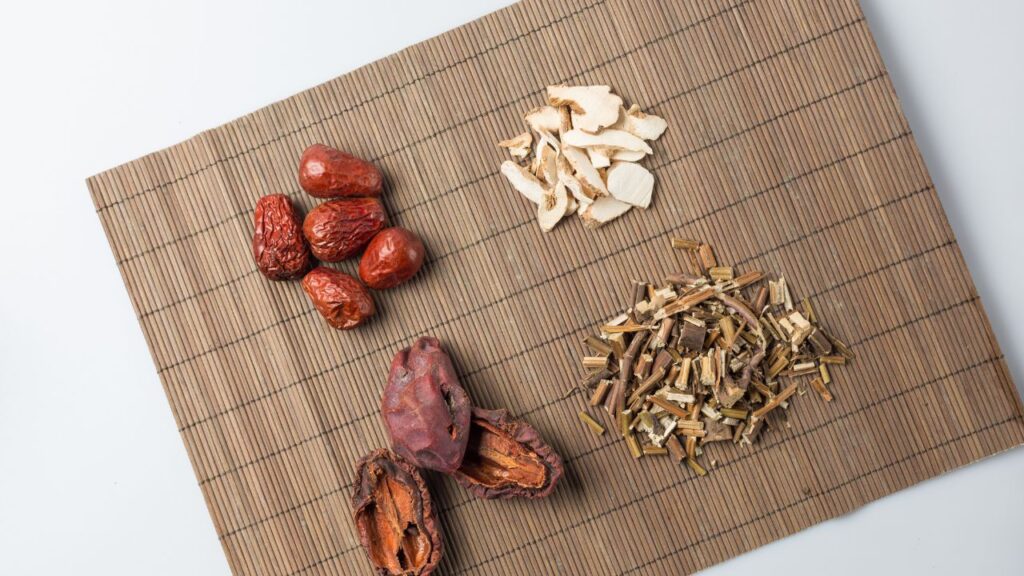
The basic ideas of yakuzen include yin and yang, the five phases, the five flavours and neutral nature. Understanding them is what draws the most out of yakuzen.
So let us look at the points that get the most out of it.
1. Knowing your constitution is the first step
The most important thing in yakuzen is knowing your own constitution. Chinese medicine sorts constitutions into qi deficiency, blood deficiency, yin deficiency, yang deficiency, phlegm-damp, blood stasis, qi depression and others.
If you tire easily and catch colds easily, for instance, it may be the qi deficiency constitution. If you feel vaguely off, with rough skin, feeling the cold and poor sleep, it may be the blood deficiency constitution.
If you feel heavy, swollen and tire easily, it may be the phlegm-damp constitution, which is put down to fluid that will not move. If you flush, feel dry and have trouble falling asleep, it may be the yin deficiency constitution, a sign of being short on moisture.
Knowing your constitution is what brings the yakuzen approach that suits you into view.
How do I find out my constitution?
Being seen by a specialist is the surest way, but a simple self-check or the Yasai Yakuzen check will give you the broad picture. Check things like how easily your hands and feet get cold, how easily you tire, whether you have an appetite, and how your bowels are.
2. Choosing ingredients for the season doubles the effect
Yakuzen holds that each season has ingredients that suit it. This rests on the idea that eating in line with nature is best for the body.
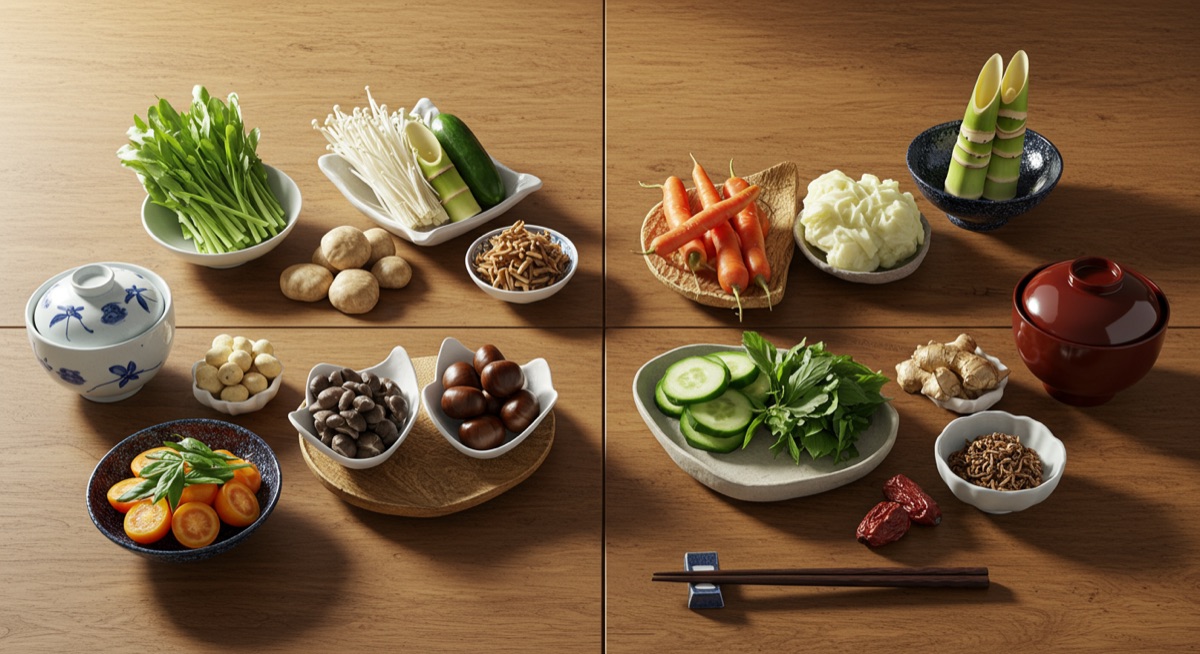
Spring is the season of the Liver, which is wood. Plants that grow upwards, such as new shoots and young leaves, are held to be good. Greens such as lettuce, celery and shungiku, plus new-season onion and asparagus, are the ones.
Summer is the season of the Heart, which is fire. Ingredients that cool heat suit it. Make a point of bringing in cooling, water-rich ingredients such as cucumber, tomato and watermelon.
Autumn is the season of the Lung, which is metal. To protect the body from dryness, moistening ingredients are held to be good. Fruit such as pear, apple and persimmon, plus white wood ear and honey, are the ones.
Winter is the season of the Kidney, which is water. Ingredients that warm the body and store energy suit it. Bring in warming ingredients such as root vegetables, black soybeans, walnut, ginger and spring onion.
Choosing ingredients that suit the season puts the body in harmony with nature's rhythm, and yakuzen does the most it can.
3. Understand the nature of ingredients and combine them
Yakuzen holds that ingredients have one of the five natures: hot, warm, neutral, cool and cold. Understanding these lets you combine them effectively.
Warm and hot ingredients warm the body and work well for anaemia and for feeling the cold. Ginger, spring onion, garlic, kabocha squash, chestnut, carrot, Chinese chives and chicken are typical.
Cold and cool ingredients cool the body and work well for flushing and high blood pressure. Tomato, cucumber, banana, apple, wheat, buckwheat and eggplant come under this.
Neutral ingredients have a mild nature, neither warming nor cooling. Rice, potato, daikon, carrot and pork are among them.
How to choose ingredients for your constitution
If you feel the cold, bring in plenty of warm and hot ingredients; if you flush easily, choose cool and cold ones. Adjustment by season is needed too.
Someone who feels the cold even in summer should not make everything cooling, but keep the balance by bringing in warming ingredients such as ginger and spring onion in moderation.
Choosing ingredients for your constitution and the season is the secret to getting the most from yakuzen.
4. Raise the effect through the balance of the five flavours
Flavour is an important element in yakuzen too. The five flavours are sour, bitter, sweet, pungent and salty, and each acts on a particular part of the body.
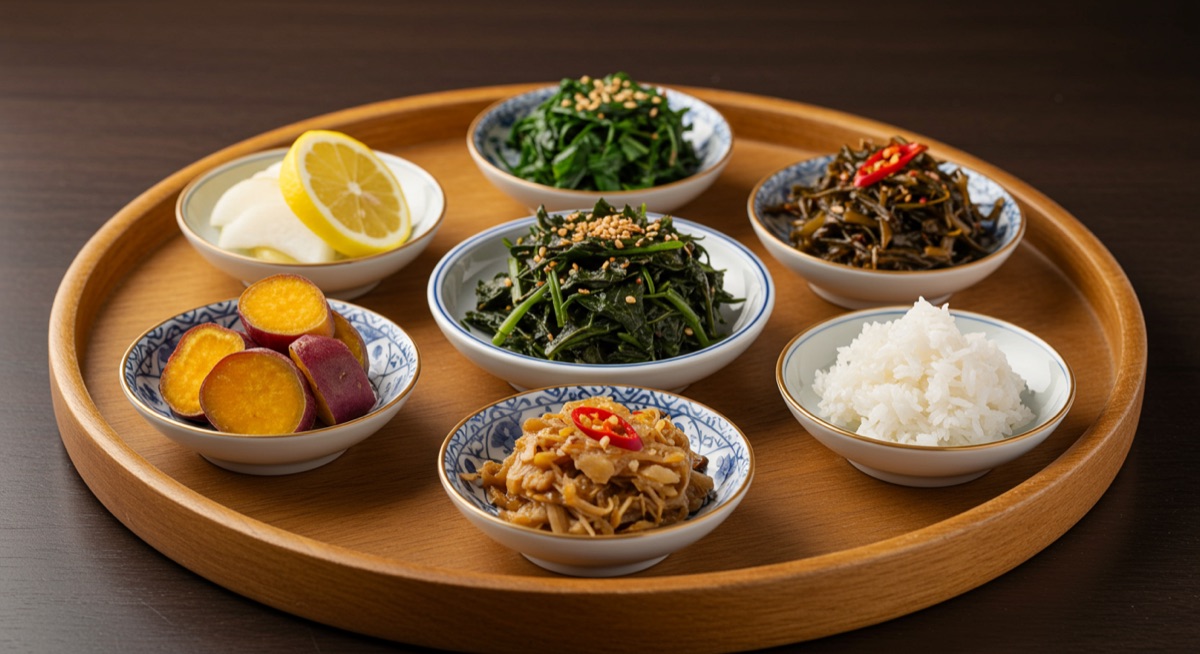
Sour acts on the Liver and gathers things in. Umeboshi, lemon and vinegar are typical. It helps with recovering from tiredness and with digestion.
Bitter acts on the Heart, cooling heat and drying. Bitter melon, shungiku and celery come under this. It settles flushing and inflammation.
Sweet acts on the Spleen, that is, the stomach and intestines, loosening tension and replenishing energy. Rice, tubers and fruit are typical. It works well for recovering from tiredness and building strength.
Pungent acts on the Lung and disperses. Ginger, spring onion and garlic come under this. It helps with sweating and circulation.
Salty acts on the Kidney and softens. Salt and seaweed are typical. It works on swelling and constipation.
Bringing the five flavours in, in balance, keeps the whole body in harmony and raises what yakuzen does.
5. How you cook matters a great deal too
The same ingredient does different things in yakuzen terms depending on how you cook it. This point is surprisingly easy to miss.
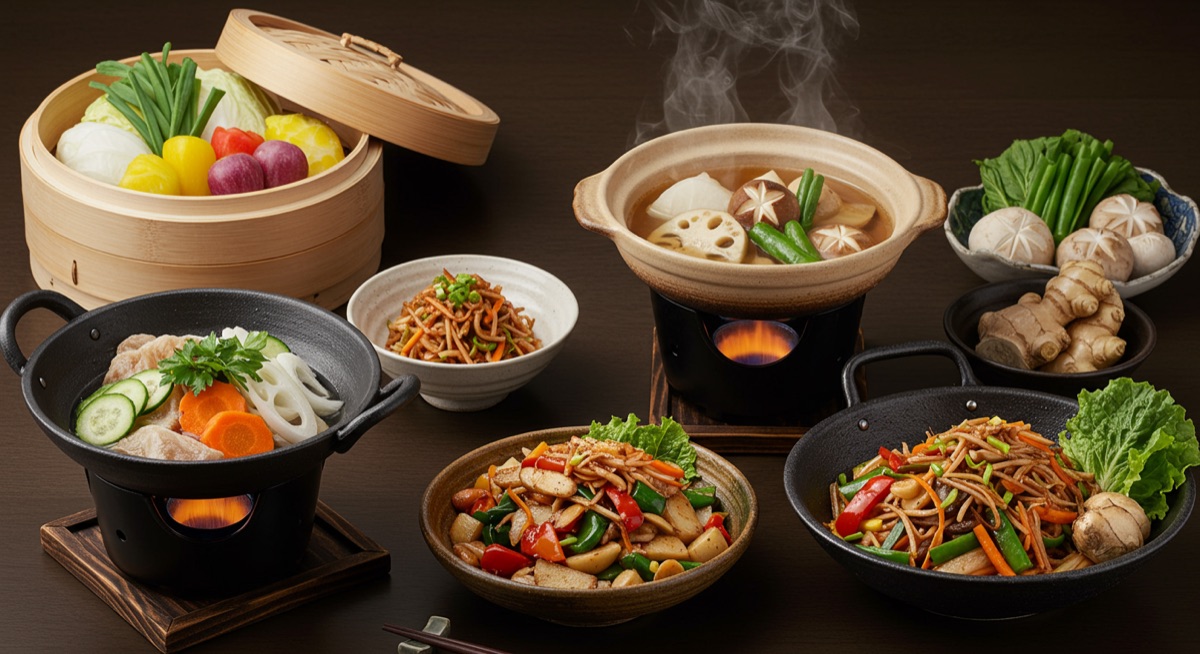
Ginger eaten raw, for instance, is strongly dispersing and works on cold at the surface of the body and on a cold in its early stage. Dried ginger, or ginger simmered a long time, is stronger at warming the interior. If you feel the cold, centre your eating on warm dishes and choose to simmer, steam or fry.
If you flush easily, raw food and boiling suit you. Cold soups made with heat-clearing ingredients work well too.
That the same ingredient yields different effects simply by varying how you cook it is the depth of yakuzen.
6. Keep going, and watch, to find the yakuzen that suits you
Yakuzen does not show overnight. Keep it up and your constitution improves gradually, and you come to feel it.
What matters is watching how your body changes after you eat. If you get sleepy after a meal, feel swollen, or your stomach feels heavy, that ingredient or that combination may not suit you.
If, on the other hand, your body feels light after a meal, energy comes up, or your skin improves, then that yakuzen suits you.
After I took leave through overwork, I faced my own body and felt my constitution improve as I brought yakuzen in.
In summary: the points that get the most from yakuzen
Yakuzen is not a special way of eating but a prescription through food, choosing ingredients and cooking methods for your constitution and the season. Drawing the most from it rests on these six points.
- Know your constitution: understand how Chinese medicine sorts constitutions and choose ingredients that suit yours.
- Choose ingredients for the season: eating in step with nature's rhythm settles the body without strain.
- Understand the five natures and combine accordingly: adjusting for things like feeling the cold or flushing is the key.
- Keep the five flavours in balance: knowing what each flavour does and how it ties to the organs lets you settle things from within.
- Vary how you cook: the same ingredient yields completely different effects depending on the method.
- Keep going, and watch: daily repetition and noticing what your body says are what bring out what yakuzen really does.
Rather than letting a vague off-day pass, why not bring into your life the wisdom of yakuzen, which sits alongside the season and how you feel? You can start with everyday supermarket ingredients, without anything special. Face your own body and find the care through eating that fits you exactly.
- [2025 edition] Getting through summer fatigue with yakuzen, and nine ingredients to try
- Nine tips for keeping yakuzen going, and how to make it a habit
Related articles
-
 What is yin-yang theory in yakuzen?
 -
What is five-phase theory? The idea at the root of Chinese medicine
-
What are qi, blood and fluids in yakuzen?
-
[Updated 2025] Easy yakuzen recipes from everyday ingredients, and how to work them into your life
-
Why yakuzen is drawing attention from busy men today: three effects and how to practise it
-
How I started a business through yakuzen: what I would tell you
-
Starting a side business with yakuzen: the road from no experience to income
-
Nine tips for keeping yakuzen going, and how to make it a habit