[Updated 2025] Books for yakuzen beginners, and how to choose
Links on this page include advertising.
Interested in yakuzen but unsure which book to start with?
When I took leave through overwork I met yakuzen myself, and wished I had known about it sooner. The wisdom of settling the body through everyday meals is exactly what busy people today need.
This article covers how a yakuzen beginner should choose a first book, and which books we recommend as of 2025. From the basics to putting it into practice, there is a book here to suit what you are after.
*This article contains Amazon Associates affiliate links. Every book featured was chosen after our editors checked the contents, and no advertiser asked for or paid for its selection or how it is described.
TOC
Three things to look for when a beginner chooses a yakuzen book
There are so many yakuzen books that choosing is hard. When I started learning, I nearly gave up on books full of difficult characters.
So here are three things a beginner should keep in mind when choosing. Choose on these and you can learn yakuzen enjoyably, without giving up.
1. Is it written by a yakuzen specialist?
The first thing to check is whether the author is a specialist. For accurate knowledge, choose a book written by a specialist in Chinese medicine. Look at the author biography for qualifications such as Chui Yakuzenshi, Kokusai Yakuzenshi or Yakuzen Coordinator. Supervision by a specialist makes the content more reliable.
That said, insisting too hard on expertise leaves you with nothing but difficult books, which is why the next point matters.
2. Is it easy to read and easy to follow?
Yakuzen books are full of characters and plenty are hard to get into. As a beginner, choose for readability and clarity.
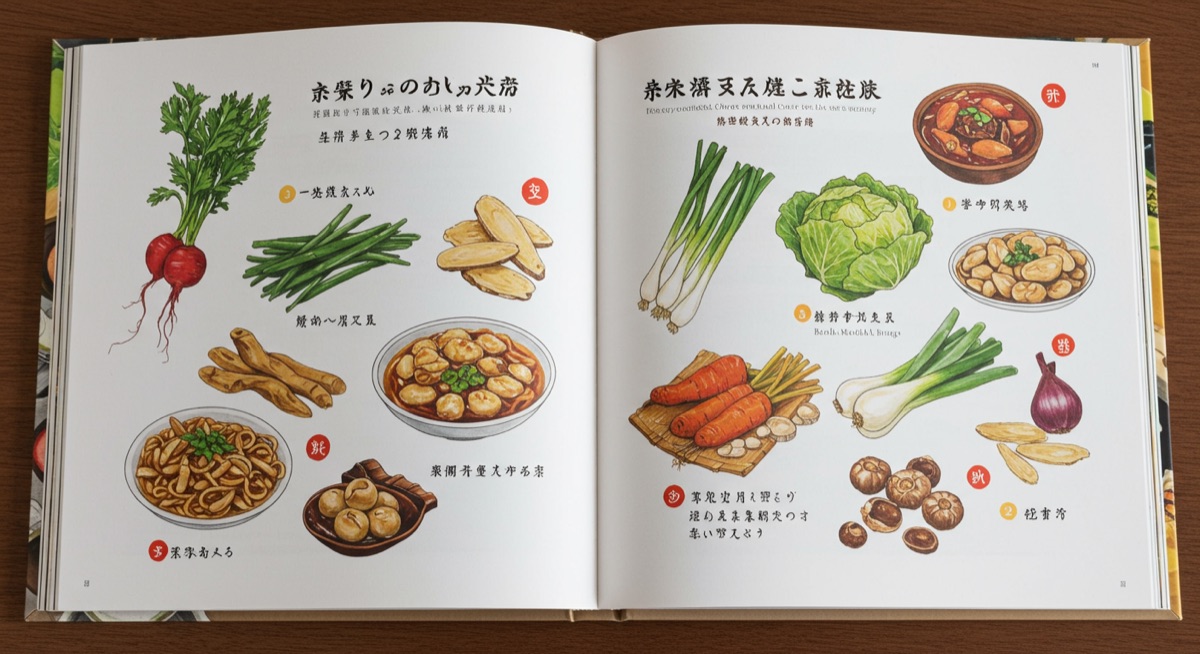
Books that read easily tend to have these features.
- Few enough pages that you can finish it
- Plenty of colourful illustrations and photographs
- A large typeface
- Few difficult characters
- Diagrams and illustrations explaining the concepts
If this is your first time learning yakuzen in particular, a book rich in illustrations and photographs is easier to take in visually and harder to give up on.
3. Is it easy to bring into daily life?
The point of learning yakuzen is, in the end, to bring it into daily life. A recipe book using everyday ingredients is easier to act on than a specialist volume on rare yakuzen materials.
Books with content like this are easy to bring into daily life and worth recommending.
- It suggests ingredients for each season
- It explains what to eat together for particular symptoms
- It has a constitution check and health advice
- It has recipes using ingredients you can buy at the supermarket
- It gives simple methods that busy people can actually follow
Putting what you read into actual meals lets you feel what yakuzen does, and makes what you learned stick.
The yakuzen books I actually used
Now that you know how to choose, here are the books I used myself.
365-nichi no Yuru Yojo (Gentle Daily Care, 365 Days)| by Sumi Sakaguchi
A practical introduction to yakuzen and Chinese medicine that gives one theme a day of easy daily care you can keep up lightly and without strain. It covers a wide range, from ingredients that build resilience to breathing that settles the autonomic nervous system, to feeling the cold, beauty, fertility and mental care. There are 365 days' worth of hints for settling body and mind. Sumi Sakaguchi, who studied Chinese medicine, offers self-care wisdom suited to how people live now, gently. A good one for beginners.
Yuru Yakuzen (Easygoing Yakuzen): change how you eat and look and feel better | by Yoko Ikeda, illustrated by Keiko Katsuyama
You can look good even if you are lazy and careless. Built on the real experience of a woman around forty, this easygoing introduction to yakuzen is funny to read and easy to act on straight away. It works with convenience stores and tinned food, and the author took her cosmetics spending from 100,000 yen a month to 3,000 and lost 5 kg. It also covers how to eat for your constitution and what to watch for. With comics, essays and recipes, it is a good one for yakuzen beginners.
Choosing a yakuzen book by what you want from it
People learn yakuzen for different reasons. Here is how to choose a book for yours.
If you want to learn the basics properly
If you want a firm grasp of the basic concepts, start with Kampo Seikatsu o Tanoshimu Kyokasho (The Textbook for Enjoying a Kampo Life). It explains basic concepts from Chinese medicine, such as qi, blood and fluids and the five phases, in plain terms.
If you want to go a step further, Wagamama Yojokun (Wellness on Your Own Terms) by Yohei Suzuki is a good one. It is full of hints for staying well seen through yakuzen and Chinese medicine.
If you want to learn seriously, consider the textbooks used for qualifications as well. They have the advantage of being systematic and comprehensive.
If you want to start from recipes
If you want to act straight away, a recipe book is the one. Sekai Ichi Oishii Kantan Yakuzen Gohan (The World's Best Easy Yakuzen Meals) carries a great many recipes, so it is easy to find something you want to make.
If you want to start with drinks, Ocha de Kantan Nomu Yakuzen (Easy Yakuzen You Drink, with Tea) by Momoko Ueki is the one. It is rich in recipes for everyday drinks, with teas sorted by symptom and by constitution, which makes it easy to bring into daily life.
Neither requires stocking up on special ingredients; the recipes mostly use what you can buy at the supermarket, so they are easy to act on however busy you are.
If you want to learn by symptom or constitution
If you want yakuzen matched to a particular symptom or constitution, Kampo-teki Ouchi Kenshin (A Kampo Health Check at Home) is the best choice. It explains a wide range of symptoms in detail, so you can find what to do for your own state.
If you want more detail, Kampo-teki Self-care Recipe by Mikaho Takeuchi is worth recommending too. It goes into more specialist territory, which suits anyone who wants to learn deeply.
When my own health slips, I use these books to bring in ingredients that suit the symptom. Settling the body through the thinking of Chinese medicine can make you feel surprisingly better.
How to put what you learn from a yakuzen book into daily life
Reading a yakuzen book is not the point in itself. You feel what it does only by bringing it into real life. Here is how I bring yakuzen into daily life myself.
Start with everyday ingredients
Yakuzen brings to mind special kampo ingredients, but the vegetables and fruit around us have yakuzen properties of their own.
Ginger, for instance, warms the body and helps circulation. Onion gets qi moving and clears swelling. Tomato cools heat in the body and eases a dry throat.
Start by learning what the ingredients you already use do in yakuzen terms. Then you can settle your body through everyday meals without doing anything special.
Make a point of choosing ingredients for the season
Chinese medicine holds that there are foods suited to each season. Choosing ingredients that match the season makes it easier to keep yourself settled.
In summer, make a point of bringing in ingredients that cool heat in the body, such as cucumber, watermelon and tomato; in winter, warming ones such as ginger, spring onion and garlic.
Since I started learning yakuzen I have fallen ill far less often at the turn of the seasons. Simply keeping seasonal ingredients in mind changes the body a surprising amount.
Know your constitution and choose ingredients to suit it
Chinese medicine holds that each person's constitution differs. The same ingredient can do different things depending on the constitution.
Someone of the yin deficiency constitution, who feels the cold easily, would do well to bring in warm ingredients such as ginger, spring onion and lamb. Someone of the yang excess constitution, whose body runs hot, suits cool ingredients such as cucumber, lettuce and pear.
Start by working out your constitution from a book, then choose ingredients to suit it, and yakuzen works better for you.
The eight books at a glance
| What you want | Title | Author | Who it suits |
|---|---|---|---|
| A first book | 365-nichi no Yuru Yojo (Gentle Daily Care, 365 Days) | Sumi Sakaguchi | People who want daily care as a habit, one theme a day |
| A first book | Yuru Yakuzen: change how you eat and look and feel better | Yoko Ikeda | People who want to read on lightly, through comics and essays |
| Learning the basics | Kampo Seikatsu o Tanoshimu Kyokasho: understand the reasons and settle better | Daisuke Sakurai | People who want the basic ideas, qi, blood and fluids and the five phases, set in order |
| Learning the basics | Wagamama Yojokun (Wellness on Your Own Terms) | Yohei Suzuki | People who want to go a step deeper into how Chinese medicine sees things |
| Starting from recipes | Zen no Zen's Sekai Ichi Oishii Kantan Yakuzen Gohan | Zen no Zen | People who want to choose a dish they fancy and cook it |
| Starting from recipes | Ocha de Kantan Nomu Yakuzen (Easy Yakuzen You Drink, with Tea) | Momoko Ueki | People who want to start easily, from drinks |
| By constitution or symptom | Kampo-teki Ouchi Kenshin (A Kampo Health Check at Home) | Daisuke Sakurai | People who want to look things up from whatever is bothering them |
| By constitution or symptom | Kampo-teki Self-care Recipe | Mikaho Takeuchi | People who want a little more detail, symptom by symptom |
Healthy days with the yakuzen book that suits you
We have covered books for yakuzen beginners and how to choose. When you choose one, keep the three points in mind: written by a specialist, easy to read, easy to bring into daily life.
Choose the one that suits what you want, and enjoy the world of yakuzen. Since I met yakuzen my own health has steadied and I have come to feel how much food matters. Bring the wisdom of yakuzen into daily life and spend your days well in mind and body.
For more on yakuzen and on everyday yakuzen built around vegetables, do have a look at the Yasai Yakuzen site as well. It shows you how to practise yakuzen with everyday vegetables from the supermarket.
This site takes part in the Amazon Associates Program, an affiliate programme designed to provide a means for sites to earn referral fees by advertising and linking to Amazon.co.jp.
That nagging complaint may be a sign of your constitution
Your yakuzen constitution, in three minutes
- What self-study in yakuzen gives you, and the basics to know
- Why seasonal ingredients matter in yakuzen: the season and how you feel
Related articles
-
 What is yin-yang theory in yakuzen?
 -
What is five-phase theory? The idea at the root of Chinese medicine
-
What are qi, blood and fluids in yakuzen?
-
[Updated 2025] Easy yakuzen recipes from everyday ingredients, and how to work them into your life
-
Why yakuzen is drawing attention from busy men today: three effects and how to practise it
-
How I started a business through yakuzen: what I would tell you
-
Starting a side business with yakuzen: the road from no experience to income
-
Nine tips for keeping yakuzen going, and how to make it a habit