Why seasonal ingredients matter in yakuzen: the season and how you feel
Links on this page include advertising.
Do you ever feel that things have not been quite right lately? What lies behind it may be closely tied to the turn of the season and to how you have been eating.
Understand the relationship between the seasons and how you feel, bring in what is in season, and the body falls into harmony with nature's rhythm and stays well. This article covers why seasonal ingredients matter, seen through yakuzen, and how to respond to the changes each season brings.
TOC
What season means in yakuzen
Yakuzen holds that every ingredient has a nature.
On the basis of yin-yang and five-phase theory, the foundation of Chinese medicine, ingredients have the qualities of yin and yang. Put simply, yin suggests stillness and cold, yang activity and heat. When the body is in a yin state, supply yang ingredients; when it is in a yang state, yin ones. Keeping the body in balance this way is the basic idea of yakuzen.
What deserves particular attention is that seasonal ingredients hold qualities that settle the body for the conditions of that season. More ingredients are available all year now, but in nature they have different qualities from season to season. Summer gourds cool the body, for instance; each holds the nourishment and the effects that time of year calls for.
How the body changes through the seasons, and what is in season to match
People fall ill easily at the turn of the seasons, particularly moving from spring into summer and summer into autumn. Let us look at the changes each season brings and the ingredients that answer them.
Spring: changes and ingredients
Spring is the season when the Liver works harder.
Chinese medicine holds that as temperatures rise in spring, yang increases and the Liver becomes more active. You become more active, but you may also flush, feel unsettled and get irritable. When the body cannot adapt well to the change from winter into spring, heaviness, headaches and cold-like symptoms can appear, as with what Japan calls May blues and other vague complaints.
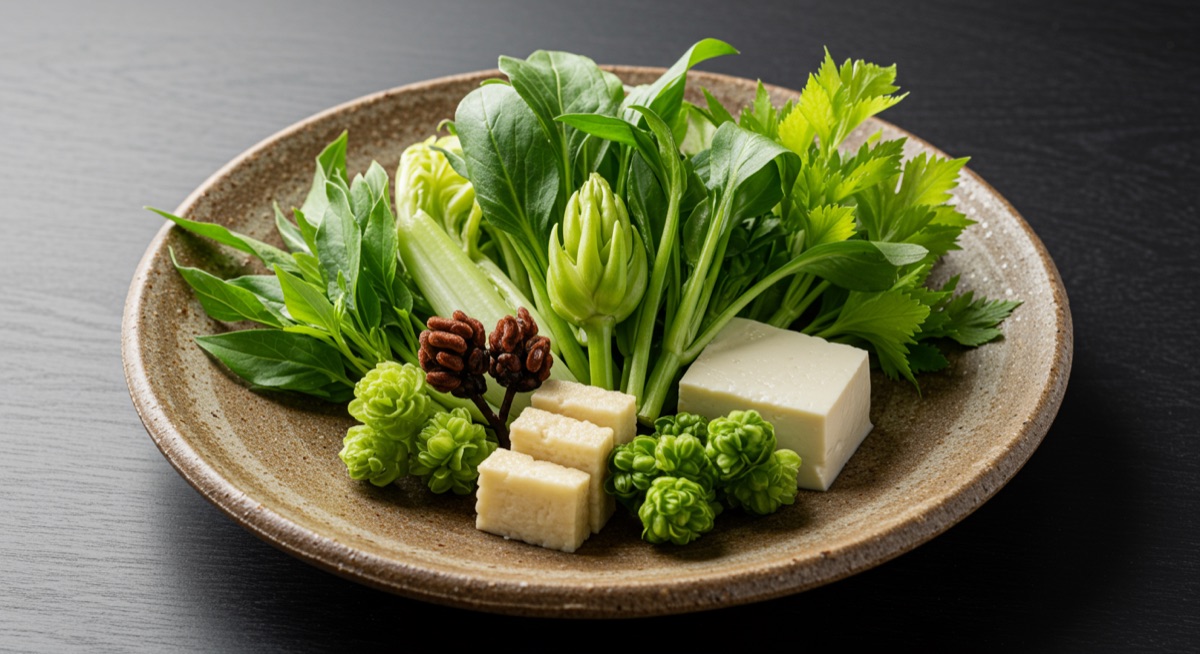
The yakuzen ingredients that suit spring are held to be those that moderate a Liver working too hard. Eating sour ingredients from among the five flavours, and the bitter ingredients that only spring brings, such as udo, fuki no to and taranome, works well on a spring body carrying heaviness and swelling.
Summer: changes and yakuzen ingredients
Summer is the season when the Heart is more active. It is also the season when the rainy weather and the heat lead people to drink too many cold things and build up damp, and when heat itself can get the better of you. Rooms with the air conditioning permanently on also throw things out of balance. What matters is sweating in moderation, replenishing the fluids you need, and settling the body with ingredients that balance heat.
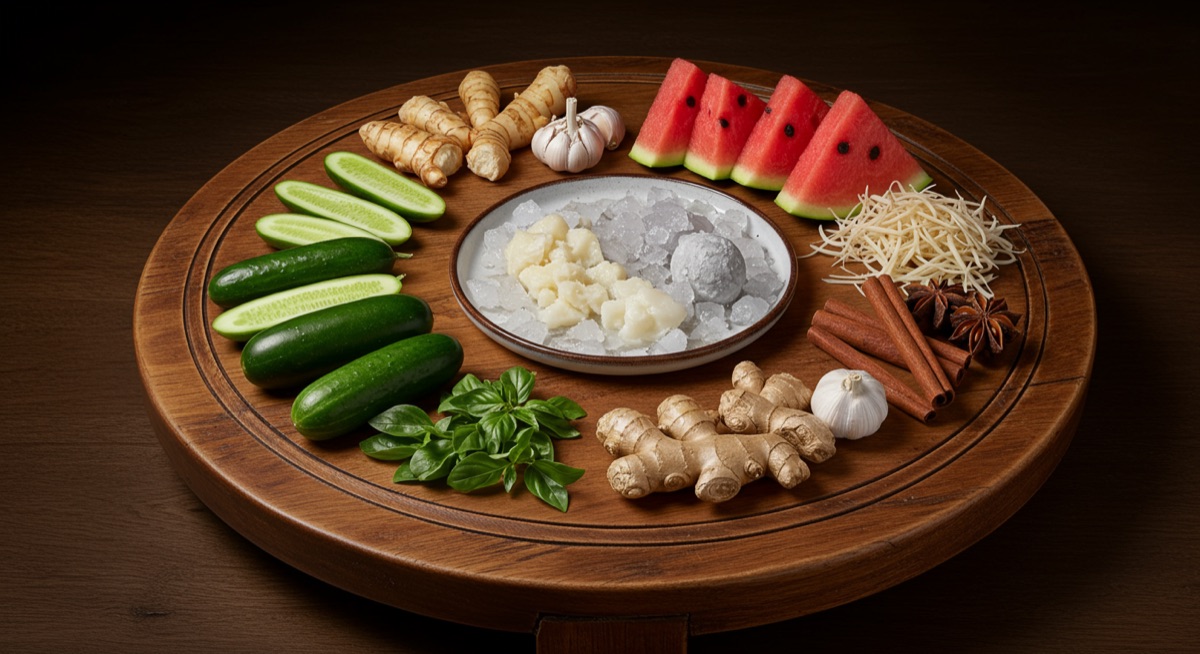
The yakuzen ingredients that suit summer mostly cool a body heated by the weather. Eat summer vegetables such as bitter melon, winter melon, cucumber, lettuce and watermelon, and encourage the passing of water.
For heading off summer fatigue, kabocha squash and shiso, which digest easily and build resilience, are the ones. Sweating also loses blood, so replenish your energy with blood-replenishing ingredients such as spinach, sweet pepper and liver.
Yakuzen for the rainy season
The rainy season is when people fall ill most easily. The clammy damp settles in the body and causes all sorts of trouble.
Seen through yakuzen, the rainy season is closely tied to the Spleen, the digestive system. It is a time when stomach and intestinal trouble and damp-related skin conditions are common.
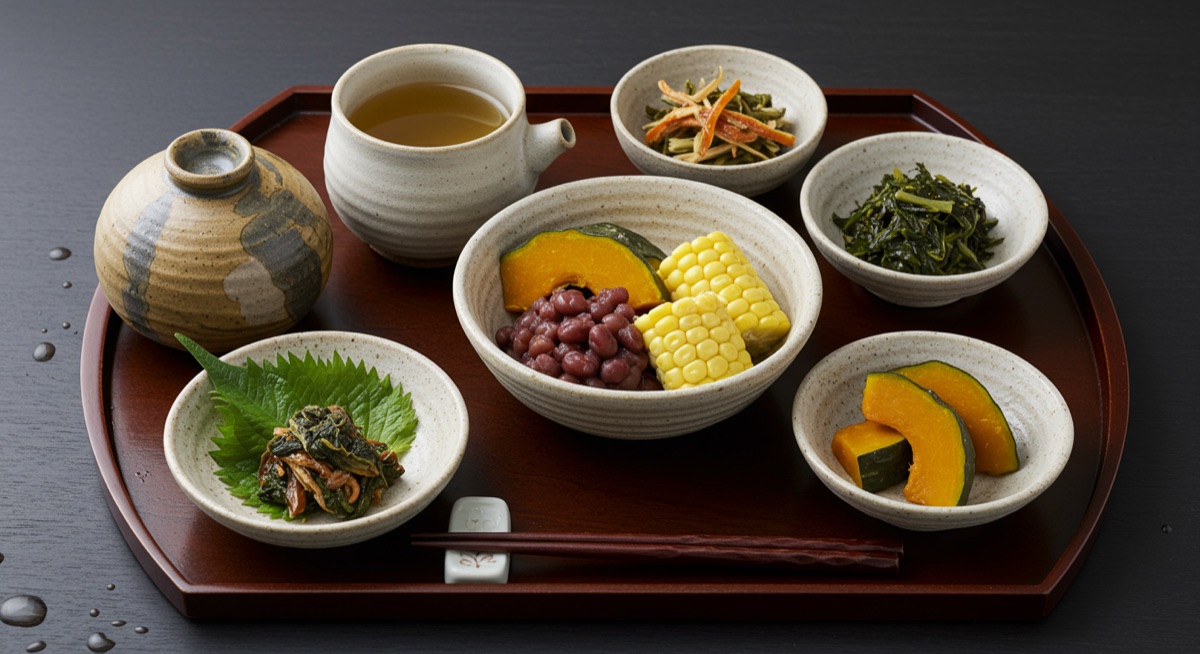
Yakuzen ingredients that work well in the rainy season include:
- Ones that encourage sweating: shiso, ginger, spring onion, coriander and cinnamon, held to drive off the bad influences sitting at the surface of the body
- Aromatic ones: sansho, chinpi (mandarin peel), shiso, fennel, coriander and jasmine, which clear damp and refresh how the gut works
- Ones that strengthen the Spleen: sweetcorn, Job's tears, adzuki bean, broad bean, kabocha squash and sweet potato, which improve digestion and absorption and settle the gut
- Ones that encourage the passing of water: winter melon, adzuki bean, black soybeans, daylily buds, cherry, clam, hard clam and kombu, which help with swelling
That said, cold and raw food loads the Spleen, so take care not to overdo it. Anyone who feels the cold easily should centre their eating on warm food.
What is bothering you at the moment?
Yakuzen for the move from autumn into winter
Moving from autumn into winter, dealing with dryness and cold is what matters.
Autumn is the season when the Lung works harder, and dryness readily tells on the throat and the skin. You also need to prepare to store the Kidney's energy for winter.
Yakuzen ingredients for this time include:
- Moistening ones: pear, apple, white wood ear, honey, Japanese yam
- Warming ones: ginger, spring onion, garlic, cinnamon, black pepper
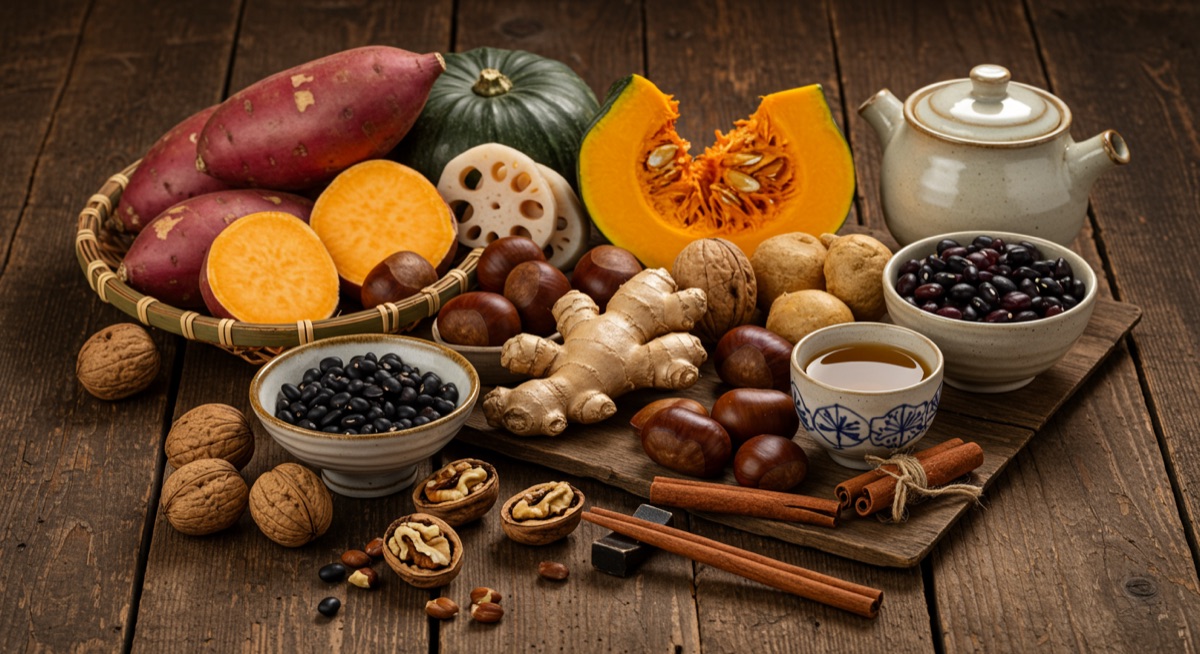
- Kidney-replenishing ones: black soybeans, black sesame, walnut, chestnut, lamb
What deserves particular attention are the ingredients in season from autumn into winter. Sweet potato, kabocha squash, lotus root and chestnut warm the body and build resilience.
Staying well by eating in harmony with the season
Why seasonal ingredients matter in yakuzen goes beyond taste, to the harmony between our bodies and nature. Understand how the body changes through the seasons and make a point of seasonal ingredients with the qualities that time of year calls for, and the body falls into harmony with nature's rhythm and stays well.
Meeting yakuzen made me feel the power ingredients hold, and my own constitution improved. Out of the thought that I wished I had known sooner, I now pass the wisdom of yakuzen on to as many people as I can.
Why not start today, making a point of seasonal ingredients as the seasons turn and as how you feel changes? Turn your kitchen into a medicine chest and yourself into the physician of your own food, and protect your own body and mind, and those of the people you care about.
If you want to know more about yakuzen matched to constitution and how you feel, do have a look at the Yasai Yakuzen site. With a yakuzen approach suited to your constitution, may your days be healthier.
- [Updated 2025] Books for yakuzen beginners, and how to choose
- Yakuzen is closer than you think: supermarket ingredients and what they do, explained simply
Related articles
-
 What is yin-yang theory in yakuzen?
 -
What is five-phase theory? The idea at the root of Chinese medicine
-
What are qi, blood and fluids in yakuzen?
-
[Updated 2025] Easy yakuzen recipes from everyday ingredients, and how to work them into your life
-
Why yakuzen is drawing attention from busy men today: three effects and how to practise it
-
How I started a business through yakuzen: what I would tell you
-
Starting a side business with yakuzen: the road from no experience to income
-
Nine tips for keeping yakuzen going, and how to make it a habit