Starting a yakuzen life with everyday vegetables: easy ways to use them, and what they do
Links on this page include advertising.
Does yakuzen bring to mind special ingredients and complicated cooking?
In fact, you can make proper yakuzen dishes with everyday supermarket vegetables. I met Chinese-medicine yakuzen after a doctor ordered me to stop through overwork and I took leave. Struck by the idea of settling the body through what ingredients do, I now work as a Kokusai Yakuzenshi (international yakuzen practitioner).
The vegetables you eat without thinking, chosen and cooked through a yakuzen lens, become healthy meals matched to your constitution and how you feel.
TOC
What is vegetable yakuzen? The wisdom of Chinese medicine in daily life
Vegetable yakuzen is a way of eating that draws on yakuzen thinking, grounded in Chinese medicine, and uses the power of vegetables to settle body and mind according to your constitution, how you feel and the season.
Yakuzen is often thought to need special ingredients, but vegetable yakuzen uses everyday ones, so anyone can start easily.
See the basic guide to vegetable yakuzen
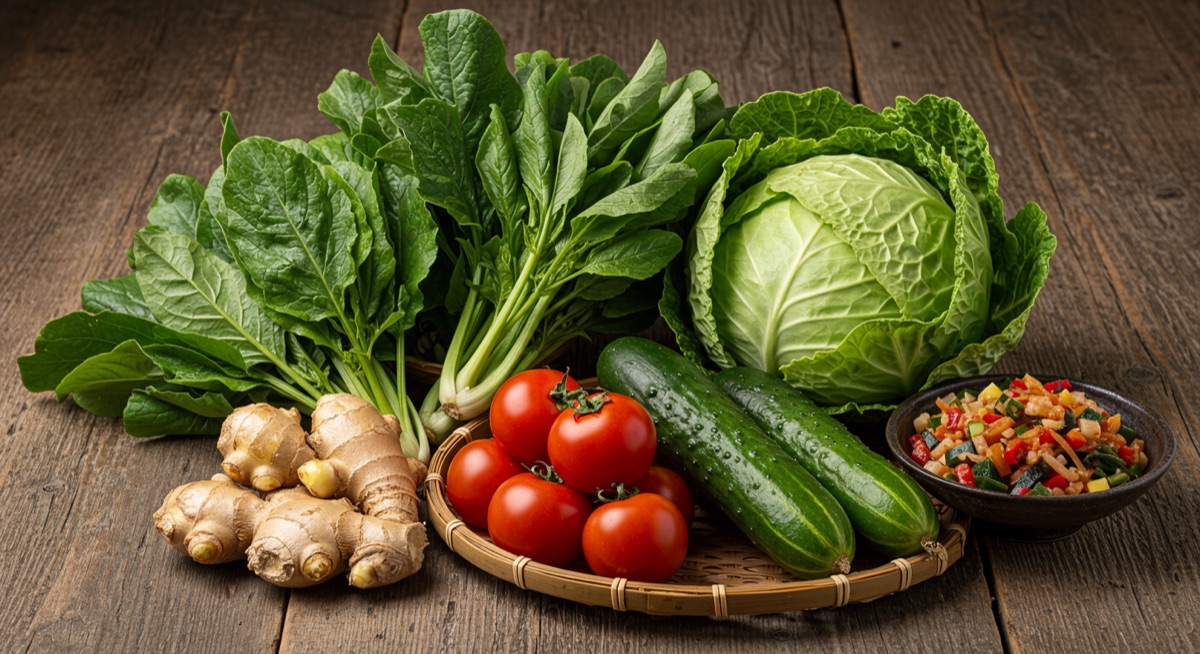
The vegetables you eat without thinking, chosen and cooked properly through a yakuzen lens, make everyday meals better to eat and better for you. What makes vegetable yakuzen most appealing is that nothing special has to be prepared, so healthy eating is easy to start.
When my own health broke down while on leave, I thought that if I had known about yakuzen I might have done something before it did. That is exactly why I want more people to bring yakuzen in with everyday vegetables.
The basics of yakuzen, and the power of vegetables
In yakuzen, ingredients are held to have one of five natures: hot, warm, neutral, cool and cold. Each affects the body differently.
Warm and hot ingredients such as ginger, spring onion and garlic warm the body and work well for feeling the cold and for recovering from tiredness. Cold and cool ingredients such as tomato, cucumber and banana cool the body and work on flushing and high blood pressure.
Are you choosing vegetables that suit your constitution?

Neutral ingredients neither warm nor cool the body and have a mild nature. Rice, adzuki bean and kabocha squash are among them, and they nourish and strengthen. In yakuzen, understanding these natures and choosing ingredients to suit your constitution and the season is what matters. Someone who feels the cold brings in plenty of warm ingredients; someone in whom heat builds up chooses cool ones.
Choosing vegetables for the season and your constitution
Choosing ingredients for the season matters in yakuzen, because what is in season is rich in the nourishment that season calls for. In spring, keep sour in mind to help the Liver, and eat green and spring vegetables. In summer, cool heat with bitter ingredients; in autumn, moisten the Lung with pungent ones; in winter, nourish the Kidney with salty and sweet.
Choosing vegetables for your own constitution matters too. Someone of the phlegm-damp constitution, who swells and feels heavy, suits water-draining vegetables such as cucumber and winter melon. Someone of the yin deficiency constitution, who flushes and dries out, suits moistening vegetables such as tomato and lettuce.
What everyday vegetables do, in yakuzen terms
Everyday supermarket vegetables have fine yakuzen properties of their own. Here is what the classic ones do.
Ginger
Ginger is the classic warm and hot ingredient in yakuzen. It warms the body to the core, encourages sweating and clears toxins from the body. Eaten raw it is strongly sweat-inducing; heated it warms you gently from within. It can be expected to build resilience too, which suits keeping colds off.
What I would suggest is chopping ginger finely and keeping it in the fridge. Adding a little to finish a dish is all it takes to get its warming effect.
Onion
Onion is warm and helps circulation and clears toxins. Raw onion in particular is strongly antibacterial and works well against colds. Heated it grows sweeter and warms the body more. If you feel the cold, a warm soup with plenty of onion is the one.
Tomato
Tomato is cool: it cools heat in the body and eases a dry throat. It suits anyone heading off summer fatigue or with high blood pressure. Lycopene is antioxidant and can be expected to do the skin good too. Heating raises how much lycopene you absorb, so tomato sauce and tomato hotpot are worth trying.
That said, anyone who feels the cold should be careful not to overdo it. Combining it with warm ingredients such as ginger and spring onion is the way.
Cucumber
Cucumber is cold: it cools heat in the body and encourages the passing of water. It suits anyone who swells easily or whose body has heated up in the summer. Anyone who feels the cold, though, should take care not to overdo it, as it cools the gut. Pairing it with warm seasonings such as ginger and black pepper is the way.
Vegetable yakuzen by constitution and by symptom
Chinese medicine sorts constitutions into phlegm-damp, yin deficiency, blood stasis, blood deficiency, qi depression, qi deficiency and others. Bringing in vegetable yakuzen that suits your constitution settles how you feel more effectively.
Find your constitution in detail with the vegetable yakuzen check
The phlegm-damp constitution (swelling and heaviness)
A constitution where excess fluid builds up easily and you feel swollen and heavy. Water-draining vegetables are the ones.
More on the phlegm-damp constitution
Vegetables to try
Cucumber, winter melon, sweetcorn, lotus root, okra
An easy recipe
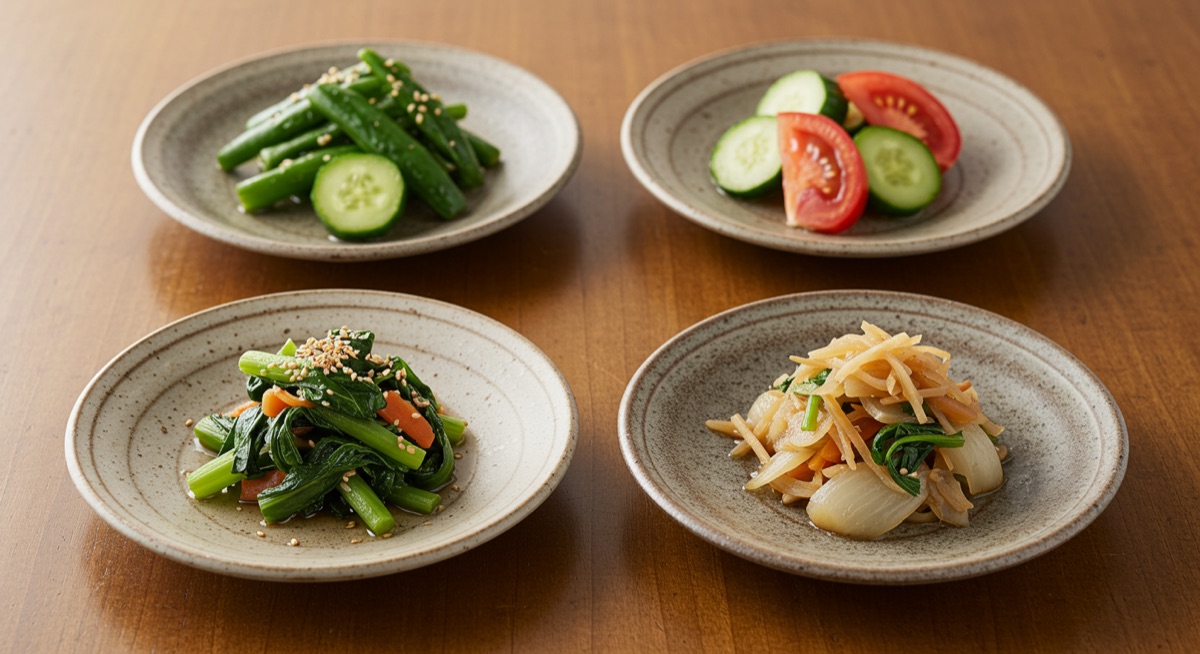
Vinegared cucumber and lotus root: slice cucumber and lotus root thinly and dress with vinegar, salt and a little honey. That is all. It works well for swelling.
The yin deficiency constitution (flushing and dryness)
A constitution where the body's moisture tends to run short, so you flush and feel dry. Moistening vegetables are the ones.
More on the yin deficiency constitution
Vegetables to try
Tomato, eggplant, cucumber, Chinese cabbage, spinach
An easy recipe
Chilled tomato and tofu soup: blend tomato and tofu and season with salt and pepper. That is all. It moistens the body and settles flushing.
The blood stasis constitution (feeling the cold and stiff shoulders)
A constitution with poor circulation, where you feel the cold and get stiff shoulders and period pain. Vegetables that help circulation are the ones.
More on the blood stasis constitution
Vegetables to try
Onion, Chinese chives, garlic, ginger, chilli
An easy recipe
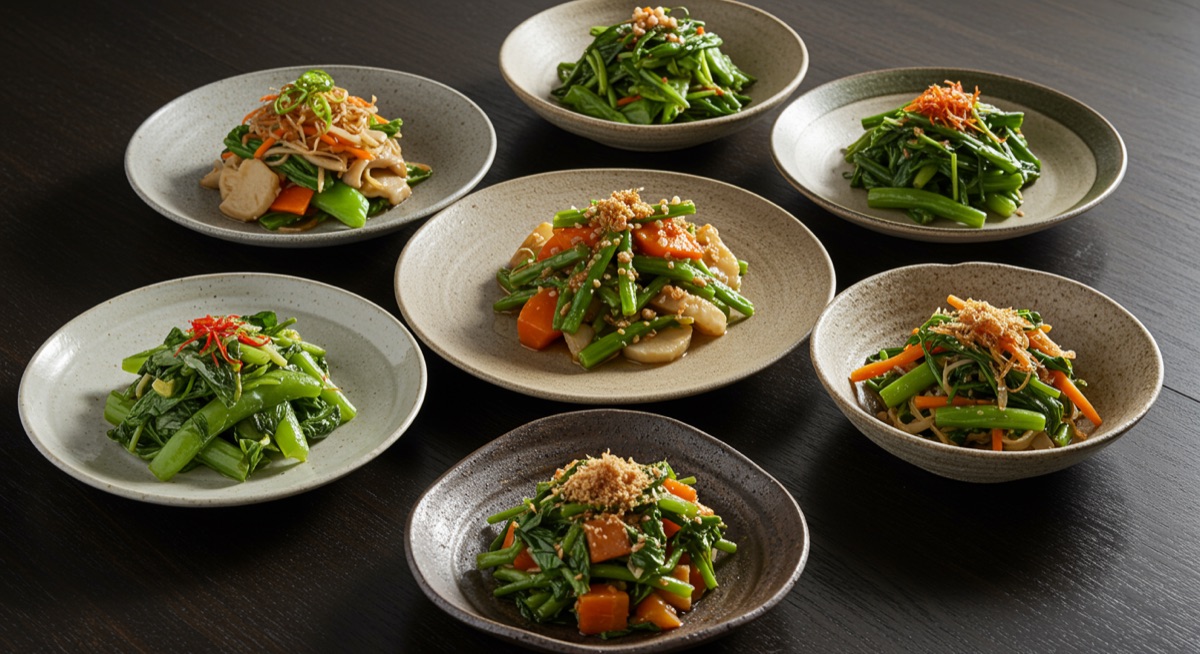
Warm onion and Chinese chive salad: fry onion and Chinese chives lightly and season with olive oil, salt and black pepper. It works well for circulation.
The qi deficiency constitution (tiring easily)
A constitution short on energy, where you tire easily and catch colds easily. Vegetables that replenish energy are the ones.
More on the qi deficiency constitution
Vegetables to try
Kabocha squash, carrot, potato, sweet potato, daikon
An easy recipe
Warm kabocha and carrot soup: simmer kabocha and carrot and blend. That is all. It works well for recovering from tiredness.
Bringing in vegetable yakuzen through the seasons
What the body needs, and how to adjust, changes with the season. Bringing in vegetable yakuzen to match settles how you feel more effectively.
Spring (nourishing the Liver)
In spring, keep sour in mind to help the Liver and bring in green and spring vegetables.
Vegetables to try
Chinese chives, asparagus, bamboo shoot, spring cabbage, nanohana
An easy recipe
Spring vegetables dressed in vinegared miso: boil spring vegetables and dress them in vinegared miso. That is all. It helps the Liver and eases the tiredness of spring.
Summer (nourishing the Heart)
In summer, cool heat with bitter ingredients and settle the balance of water in the body.
Vegetables to try
Tomato, cucumber, eggplant, bitter melon, okra
An easy recipe
Chilled summer vegetable soup: blend tomato, cucumber and sweet pepper and season with salt and olive oil. It cools heat in the body and replenishes fluids.
Autumn (nourishing the Lung)
In autumn, moisten the Lung with pungent ingredients and protect the body from dryness.
Vegetables to try
Daikon, turnip, Chinese cabbage, shimeji, enoki
An easy recipe
Root vegetable and ginger soup: simmer daikon, turnip and carrot and add grated ginger. That is all. It moistens the Lung and protects the body from dryness.
Winter (nourishing the Kidney)
In winter, nourish the Kidney with salty and sweet, and warm the body.
Vegetables to try
Kabocha squash, carrot, burdock, lotus root, leek
An easy recipe
Warm root vegetable salad: steam or boil root vegetables and season with olive oil, salt and black pepper. It warms the body and nourishes the Kidney.
Starting a yakuzen life with everyday vegetables
Vegetable yakuzen needs no special ingredients and can be started with everyday supermarket vegetables. Choose vegetables for your constitution and the season, cook them properly, and everyday meals become healthier. I met yakuzen after taking leave through overwork, and knowing what ingredients do let me settle how I felt. I often think how much I wish I had known sooner.
Why not start a yakuzen life today, with everyday vegetables? Bring vegetable yakuzen in for improving your constitution and for the off-days that come at the turn of the seasons.
More detailed yakuzen knowledge, recipes and the constitution check are on the Yasai Yakuzen site. Find the way of eating that suits your constitution and spend your days well. You can see it all on the Yasai Yakuzen site. There is also an online course of more than 40 videos, covering the basics of yakuzen and how to put everyday vegetables to work in it, so do have a look.
- [Updated 2025] A basic guide to vegetable yakuzen: Chinese medicine you can start with everyday ingredients
- Bringing yakuzen in through the seasons: making the most of what is in season
Related articles
-
 What is yin-yang theory in yakuzen?
 -
What is five-phase theory? The idea at the root of Chinese medicine
-
What are qi, blood and fluids in yakuzen?
-
[Updated 2025] Easy yakuzen recipes from everyday ingredients, and how to work them into your life
-
Why yakuzen is drawing attention from busy men today: three effects and how to practise it
-
How I started a business through yakuzen: what I would tell you
-
Starting a side business with yakuzen: the road from no experience to income
-
Nine tips for keeping yakuzen going, and how to make it a habit