The benefits of black wood ear mushroom
Links on this page include advertising.
 What black wood ear does
What this vegetable does
Held to settle the circulation of blood, and useful for stopping bleeding and for the bowels.
How to eat it
Added to a soup or a stir-fry, its texture and flavour are a pleasure.
A yakuzen note
It replenishes moisture in the Lung and the gut.
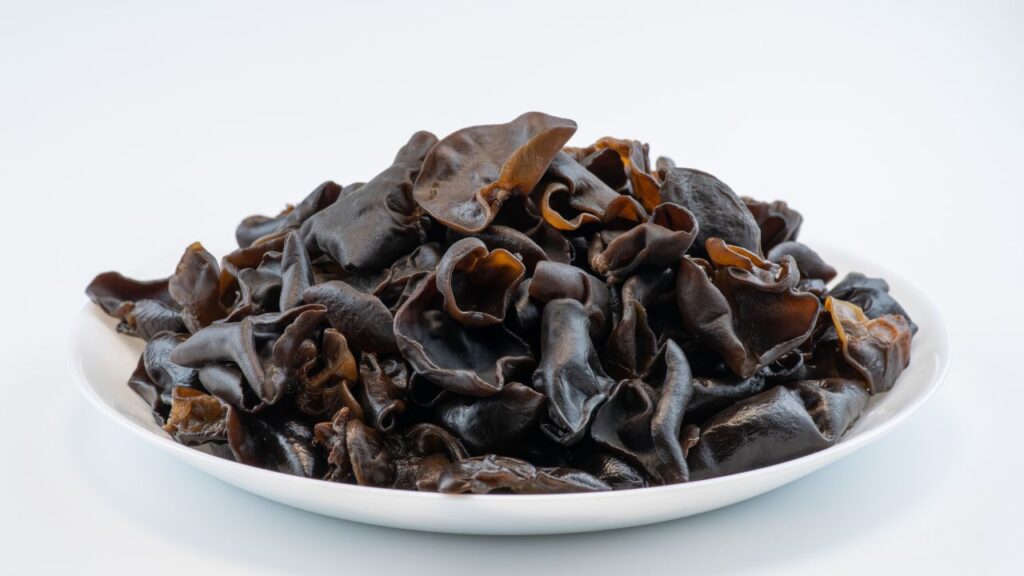
This vegetable, driedDried wood ear →
Black wood ear is an ingredient held to settle the circulation of blood and get the body moving. It is also said to moisten the Lung to ease breathing and to ease a dry cough and discomfort in the throat. It can be looked to for settling the intestines and keeping the bowels moving smoothly, and bringing it in day to day supports a healthy state from the inside.
TOC
The kinds of black wood ear, and how to rehydrate it
If you want to bring in what black wood ear does, deliciously, start by knowing the differences between the kinds and the trick to rehydrating it. Wood ear is a mushroom, and its appeal is a fine bite and a taste with nothing to object to, which sits well in any dish. Dried, it is available all year and you rehydrate only as much as you need.
Black wood ear and white wood ear
Wood ear comes broadly in black and white, and they belong in different dishes.
- Black wood ear — firm to the bite, suiting stir-fries, soups and vinegared dishes
- White wood ear — smooth and refined in the mouth, used in desserts and soups
Most of the black wood ear in supermarkets is the thick, easy-to-handle kind called arage kikurage. The fine hairs on the underside are how to tell. Black for dishes where you want texture, white where you want a gentle feel in the mouth: remembering that makes choosing easier.
Fresh and dried, and the convenience of all-year use
Wood ear comes fresh and dried. Fresh wood ear is juicy with a springy bite, and its true season is the damp period from the rainy season into summer. Fresh wood ear is cooked before eating as a rule, and used soon after buying. Dried wood ear keeps for a long time and is available all year, needing only water: that is its convenience. The main producing area is China, though Japanese-grown wood ear, from Miyazaki and Kagoshima, is increasing. Drying concentrates the savour as the water goes, and it works as a fibre-rich ingredient to keep in the cupboard.
How to rehydrate it without going wrong
The trick to using dried wood ear well is in the rehydrating. As a rule, soak it slowly for 20 to 30 minutes in water or lukewarm water at around 30 to 40 degrees. In a hurry, a little sugar speeds it up. Avoid boiling water to speed things along, as it spoils the distinctive bite. Once rehydrated, cut off the hard base, wash it well and use. Dried wood ear swells to seven to ten times its size, so even a small amount gives real volume. Putting it in the sun for about 30 minutes before eating is old wisdom that brings the flavour forward. Anything rehydrated in excess can be blanched lightly and frozen for later.
How to eat black wood ear
Black wood ear has little to object to and sits well in Japanese, Western and Chinese cooking alike. Here are the standard recipes that make the most of its firm bite, along with how to choose and keep it.
Chinese classics: mu shu pork and hot and sour soup
Black wood ear brings Chinese cooking to mind for many. Mu shu pork, stir-fried with pork and egg, is a dish where the texture of the wood ear takes the lead. Added to a sour, spicy hot and sour soup, it gives the broth an accent of bite. It goes well with oyster sauce and soy sauce, and paired with pork and vegetables it brings the savour forward. Beyond Chinese cooking, it works in easy home dishes too, stir-fried with glass noodles or bound with egg. A simple stir-fry of nothing but wood ear and egg is a standard where the texture stands out.
Texture in Japanese dishes and salads
Black wood ear sits well in Japanese cooking too. Cut into fine strips and dressed with vinegar, it makes a clean-tasting palate-cleanser. In a miso soup or a simmered dish, its neat bite is a good accent. Boiled, cut into strips and tossed in a dressing, it becomes a salad ingredient and slips easily into a Western dish. It works in happosai, in kanitama and as a ramen topping; its uses are wide, and even a little in a dressed dish gives the food bite and volume.
How to choose and keep Japanese-grown dried wood ear
When choosing dried wood ear, look for thick pieces, even in size and glossy. It is grown either on logs, which gives a strong flavour, or on a substrate, which gives consistent quality, and substrate growing is now widespread both in Japan and abroad. Dried, it can be sealed away from damp and kept at room temperature. A handful, around 5 to 6 grams, is a guide, which rehydrates to about a small dish's worth. The soaking water carries savoury compounds such as guanylic acid, so using it as stock in a soup or a simmered dish means nothing is wasted. To try Japanese-grown dried wood ear easily, Kyoto-grown dried wood ear and products made from Japanese ingredients, such as dried wood ear, are handy. Rehydrated wood ear does not keep, so rehydrate only what you will use.
Alongside this, it is worth knowing about The benefits of black soybean likewise loved as a black ingredient, and The benefits of jujube held to nourish the blood, and one kind to the gut, The benefits of Japanese yam as a guide when planning a menu.
Black wood ear, with its fine bite and nothing to object to, sits well in Japanese, Western and Chinese cooking alike. Bring it into stir-fries, soups and vinegared dishes and add the pleasure of texture to your everyday table. A packet of the dried kind in the cupboard is ready whenever you want one more dish.