The benefits of leek
Links on this page include advertising.
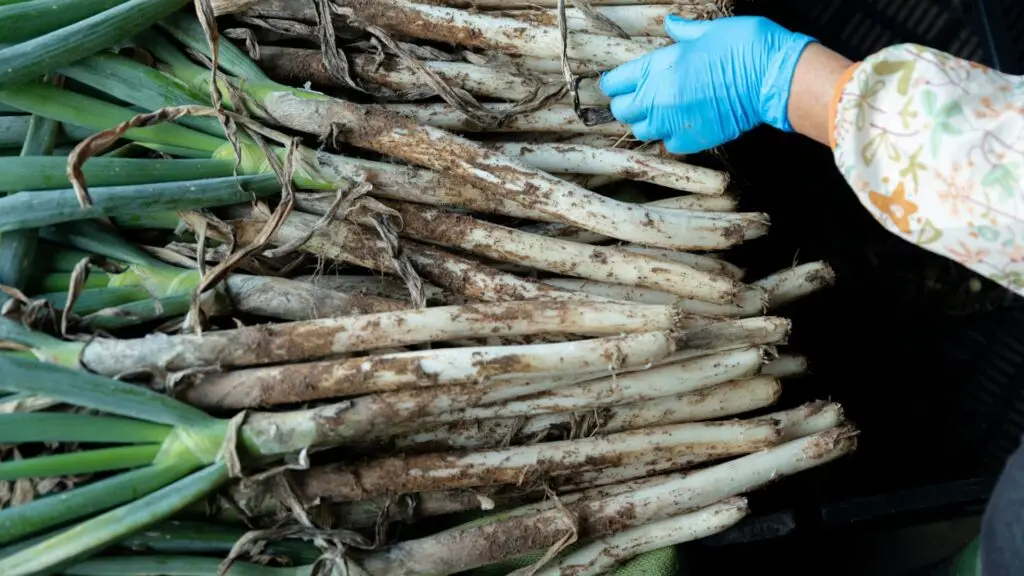 What white spring onion does
What this vegetable does
It is held to encourage sweating and warm the body, and is suggested for the trouble that comes with cold and with a cold.
How to eat it
Added to a hotpot or a soup, the sweetness comes forward. Grilled, it gives you a toasted note and real depth.
A yakuzen note
In the cold of winter, or when you are apt to be unwell, it is said to settle the body gently when brought into a warm dish.
This vegetable, driedDried white spring onion ->
White spring onion is pungent and warm, a vegetable held to warm the body and ease the circulation of qi. Cooked, it turns meltingly sweet; raw, it gives you a fresh sharpness as a garnish. It suits daily care when you would rather not cool the body, or when you want a warm dish in the cold months. From hotpot and grilled onion to garnishes and stews, it goes everywhere: the vegetable the winter table cannot do without.
TOC
When white spring onion is in season, its types, and how to choose it
If you want to enjoy what white spring onion does, it helps to know its season, its types and how to choose it. It is an amaryllis-family vegetable in season in winter, loved for the melting sweetness of the white part and its particular scent and sharpness.
In season in winter, sweeter for the cold
White spring onion is the deep-rooted kind, banked up with soil so the white part grows long, and it belongs to the onion group of the amaryllis family. Its season is winter, around November to February, when the cold brings up the sweetness and softens it. The crop around the first frosts is said to carry the sweetness best. Saitama, Chiba and Ibaraki are among the main growing areas, and it is indispensable in sukiyaki and hotpot. The white part turns sweet and melting with cooking, while the green part is strongly scented and suits garnishes and flavouring. The two parts have different strengths, so using each for its own job lifts the dish.
Deep-rooted, Shimonita and leaf onions
Onions of this kind can be chosen by how they are grown and by variety.
| kinds | What stands out |
|---|---|
| Deep-rooted onion (white spring onion) | A long white part. Melting and sweet when cooked. For hotpot and grilling |
| Shimonita onion | Thick and short. Meltingly sweet with cooking, for stews and hotpot |
| Leaf onion (green onion) | The green leaves are what you eat. Fragrant, for garnishes and colour |
For hotpot, grilling and stews, the long-white deep-rooted onion and the thick, sweet Shimonita onion suit. For garnishes and colour, fragrant leaf onions are the easiest to use. In eastern Japan the white part of the deep-rooted onion has been preferred, in western Japan the green leaves of the leaf onion. Choose by the dish and to taste and it shows its best. Shimonita onion is strongly sharp raw, so cooking it to draw out the sweetness is the way to go.
How to choose it and how to use each part
When picking out good white spring onion, these are the things to look for.
- A firm, hard white part, straight and of even thickness
- A clear line between white and green, and tightly wrapped layers
- Lively right to the leaf tips, not wilted
White spring onion shows its best when you use the white and the green parts for different ends. The white part turns sweet and melting with cooking, which suits hotpot, grilling and stews. The green part is strongly scented, so chop it for a garnish or use it to take the smell off meat and fish. To use it raw as a garnish, shred it or cut it into thin rounds and dip it briefly in water, and the sharpness softens and it turns crisp. When you want the sharpness, skip the water. Use the green part rather than throwing it away, and nothing is wasted.
How to eat white spring onion
The melting sweetness and fresh sharpness of white spring onion carry it from hotpot and grilling to garnishes. Here are the usual ways.
In hotpot, grilled, and in stews
White spring onion is at its best cooked. In sukiyaki or a hotpot it turns soft and melting and the sweetness comes forward. Cut into lengths and browned well, grilled onion is a simple, fine dish of sweetness and a toasted note. Negima, skewered alternately with tuna and grilled, is another standard. Slowly simmered in a soup, a gratin or a pot-au-feu, the sweetness melts out and gives the dish depth. Thick ones such as Shimonita onion give you that melting texture more still.
As a garnish, in nuta and in stir-fries
White spring onion can be used raw or lightly cooked. Shredded and soaked in water as shiraga negi, it adds a fresh sharpness and colour to ramen, chilled tofu and meat dishes. Cut into thin rounds, it is essential as a garnish for soba, udon and natto. Blanched quickly and dressed with vinegar miso as nuta, it makes a Japanese dish where the sweetness of the onion comes through. Stir-fried briefly in sesame oil with meat or egg, it finishes with a toasted note. The green part added to a stir-fry or a soup gives you both scent and colour.
How to keep white spring onion
A whole white spring onion keeps well wrapped in newspaper and stood upright somewhere cool and dark. Stood and buried in garden soil, it keeps longer still. A part-used one should be cut into white and green parts, wrapped in film or bagged, and kept in the vegetable drawer of the fridge. If you have a lot, cut it into rounds or shreds and freeze it in small portions, ready to go straight into garnishes, stir-fries and soups. The green part chopped and frozen is ready for flavouring, and nothing is wasted.
Alongside this, it is worth knowing about The benefits of ginger and an aromatic vegetable likewise held to warm the body, The benefits of Chinese chives as a guide when building a table for the cold season.
In season in winter, white spring onion is a vegetable whose melting sweetness and fresh sharpness carry it through hotpot, grilling, stews, garnishes and nuta. Deep-rooted onion for hotpot, thick and sweet Shimonita onion, leaf onion for garnishes: use each for the dish and it shows its best. When you would rather not cool the body, and for daily care in the cold months, bring white spring onion to the table.