The benefits of mung bean
Links on this page include advertising.
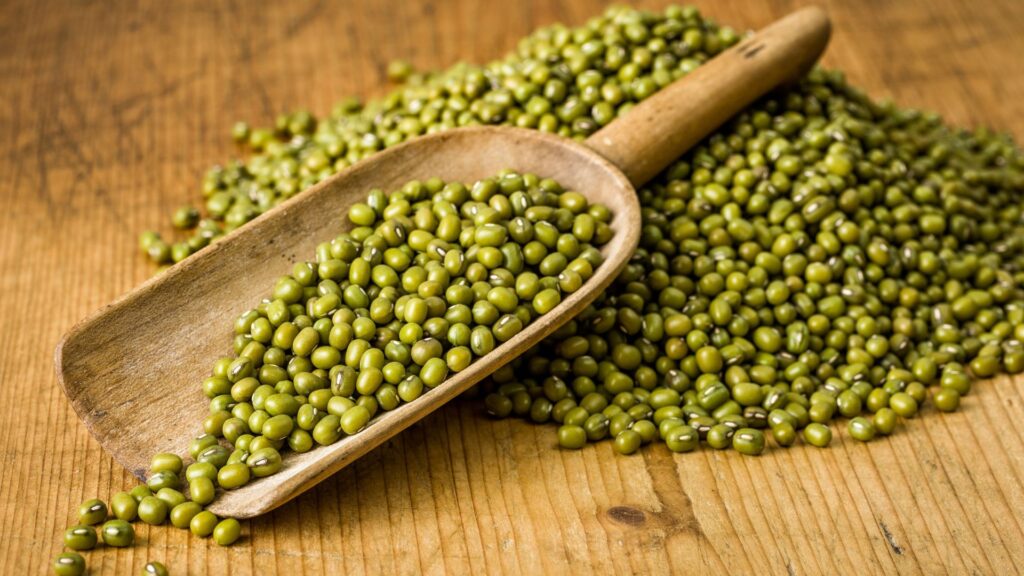 What mung beans do
What this vegetable does
Held to clear excess heat and help settle the balance of the body, which helps in managing how you feel through the summer.
How to eat it
Added to a soup, a simmered dish or a cold salad, its gentle sweetness and fresh taste are a pleasure.
A yakuzen note
Mung bean is said to clear heat from the body and bring moisture. A bean exactly right for the hot season.
Mung bean is a sweet bean, cold in nature, held to settle the heat the summer puts in the body and to clear trapped heat and toxins. Its appeal is a clean flavour and a floury texture, and it suits daily care when the heat leaves you with heat trapped inside, or when you want something for summer. As well as simmering the dried beans for soups and porridge, it is the source of bean sprouts and of glass noodles: the bean familiar from Chinese cooking.
TOC
When mung beans are available, the kinds, and how to choose
If you want to bring in what mung beans do, deliciously, knowing the forms they come in, the kinds and how to choose makes them easier to use. Their appeal is small, vividly green grains, and they are a bean deeply familiar from Chinese cooking and yakuzen.
Mostly sold dried, usable all year
Mung bean belongs to the same family as adzuki and is a small green grain. It is harvested in autumn, but dried beans are in the shops all year, so it can be used in any season. In China it has long been used in soups, porridge and confectionery as an ingredient that eases the summer heat. Dried beans are soaked and then simmered, or simmered directly, until soft. Sprouted they become mung bean sprouts, and from their starch come mung bean glass noodles: a bean that appears at the table in many forms.
Dried mung beans, bean sprouts and glass noodles
Mung bean can be chosen by the form you use.
| kinds | What stands out |
|---|---|
| Dried mung beans | Green grains. Simmered for soups, porridge and paste. The most common |
| Mung bean sprouts | Sprouted mung beans. Crisp, for stir-fries and namul |
| Mung bean glass noodles | Made from mung bean starch. Firm and they hold their shape |
For soups, porridge and confectionery, dried mung beans are the ones. When you want something quick for a stir-fry or a dressed dish, mung bean sprouts are handy. For hotpots, dressed dishes and Southeast Asian cooking, firm mung bean glass noodles go beautifully. The same mung bean does different things in different forms, so choosing by dish makes it easier to use.
How to choose them and how to prepare them
When choosing good mung beans, these points make it easier to tell.
- Dried: a vivid, glossy green
- Grains even in size, with little splitting or chipping
- Sprouts: white and taut, with crisp roots
Rinse dried mung beans and soak them in plenty of water for about 30 minutes, and they cook faster. In a hurry, you can simmer them directly without soaking. Simmer until the skins soften and a bean crushes between your fingers. Simmer less if you want to keep the texture of the skin, longer if you want it smooth. Skimming off the scum as it rises gives a cleaner taste.
How to eat mung beans
Mung bean works widely, from soups to porridge to confectionery, drawing on its clean flavour and floury texture. Here are the standard ways.
In mung bean soup and mung bean porridge
What brings out the most in mung bean is a slowly simmered soup. Sweet mung bean soup, with sugar added to softly simmered beans, is the standard hot-weather dessert in China and Taiwan. Chilled, it is cleaner still. Seasoned with salt it becomes a soup for a meal. Mung bean porridge, cooked with rice, suits times in summer when you want to be kind to the body. Used skin and all, the character of the bean comes through. With jujube and Job's tears it makes a yakuzen porridge of fine colour.
As sprouts, glass noodles and paste
Mung bean works widely in other forms too. Mung bean sprouts, with their crisp texture, are exactly right in stir-fries, namul and soups. Mung bean glass noodles are firm and hold their shape, which suits hotpots, dressed dishes and Southeast Asian dishes such as japchae. Simmered soft and crushed with sugar, mung bean becomes a paste for mochi, dango and confectionery. From the same bean: grains in a soup, sprouts in a stir-fry, glass noodles in a dressed dish.
How to keep mung beans
Dried mung beans keep, but they lose flavour if they take up damp, so keep them in an airtight container or bag somewhere cool and dark, away from damp. In humid seasons, the fridge is safest. Soaked and simmered mung beans spoil easily, so keep them chilled and use them within a few days. If you simmer a lot, freeze them in portions, ready for soups, porridge and paste. Mung bean sprouts spoil particularly easily, so use them the day you buy them or the next.
Alongside this, it is worth knowing about The benefits of adzuki bean likewise held to clear excess heat and fluid from the body, and one likewise held to ease the summer heat, The benefits of watermelon as a guide when building a summer table.
Mung bean, usable all year in dried form, is a bean whose clean flavour you can enjoy in mung bean soup, mung bean porridge, stir-fried sprouts and dressed glass noodles. Dried grains, crisp sprouts, firm glass noodles: using each form for what it does best brings out what it has. For daily care in the season when heat builds up inside, bring mung bean to your table.