The benefits of Job's tears
Links on this page include advertising.
 What Job's tears do
What this vegetable does
By encouraging the passing of water it drains excess fluid from the body, which helps with swelling and with damp.
How to eat it
Added to a soup, a stir-fry or a risotto, its roasted flavour is a pleasure.
A yakuzen note
Job's tears strongly encourages the passing of water and is said to help drain excess fluid from the body
Job's tears is a grain, sweet and bland in flavour and slightly cool in nature, held to help how the gut works and clear excess fluid and damp from the body. It suits daily care when swelling or heaviness is on your mind, and it has long been loved when the skin is on your mind too. Brewed as a tea or mixed into rice, it is easy to bring into daily life.
TOC
When Job's tears is in season, the kinds, and how to choose
If you want to bring in what Job's tears does, deliciously, knowing what it is made from, the kinds and how to choose makes it easier to use. Its appeal is a faint sweetness, a roasted note and a chewy texture, and it is a grain long used in yakuzen.
The grain ripens in autumn: a yakuzen staple
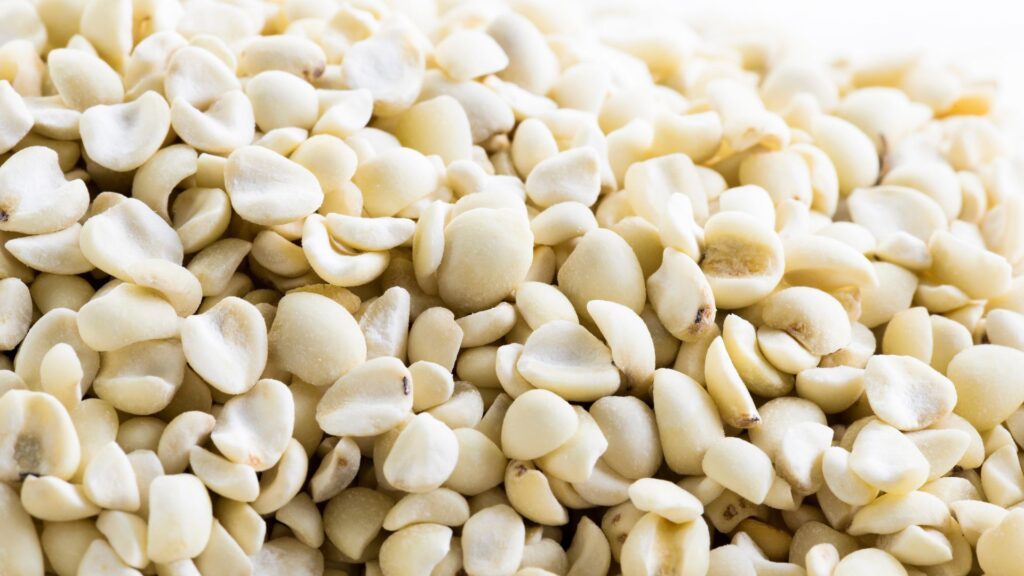
Job's tears is a grass-family plant, a relative of the adlay. The grain is harvested in autumn and dried for use as a grain and as tea all year. In kampo the seed with the hull and inner skin removed is called yokuinin, and yakuzen has long been fond of it. The main producing areas are Toyama, Iwate and Tochigi. It is widely drunk as tea and also used in multigrain rice and salads. As a dried grain it keeps and can be brought in at any time.
Whole grain, Job's tears tea and Job's tears flour
Job's tears comes in several forms.
| kinds | What stands out |
|---|---|
| Whole grain (polished) | A chewy texture. Mixed into rice or added to a soup |
| Job's tears tea | Roasted and brewed. Roasted in flavour, with little to object to |
| Job's tears flour | Ground. Mixed into baking and cooking |
Whole grain to bring a chewy texture into cooking, tea when you want something easy, flour for baking: choose by use. Whole grain, cooked with rice or added to a soup, is the form easiest to bring into everyday meals. Choose by what each does best.
How to choose it and how to prepare it
When choosing good Job's tears, these points make it easier to tell.
- Grains even in size, with little chipping or splitting
- No discolouring or damp, dry and loose
- For tea, a roasted aroma when the packet is opened
Whole Job's tears is hard on the outside, so soaking it overnight gives a chewy, tender result. In a hurry, boiling it for 20 to 30 minutes in plenty of water before using it is what to aim for. Using boiled Job's tears with its liquid keeps the savour in. Boiling a batch and keeping it in portions means it is ready for salads and soups.
How to eat Job's tears
Job's tears works widely, in rice, soups and tea, drawing on its chewy texture and roasted note. Here are the standard ways.
In multigrain rice, soups and salads
What brings out the most in Job's tears is a dish that uses its chewy texture. Multigrain rice, cooked with rice, gives you a roasted note and a popping chewiness. Added to a soup, a risotto or a rice porridge, it gives body and makes a warming dish. Boiled, cooled and tossed with vegetables in a salad, its grains give an accent. Added to a stew, it gives thickness and savour. It softens with long cooking, so cook it to the firmness you like.
As Job's tears tea and as a topping
Job's tears is loved as tea too. Roasted and brewed, it makes a roasted, unobtrusive tea, and chilled it is clean and refreshing in hot weather. Blended with barley tea or hojicha it is easy to drink and suits your daily drinking. Toasted Job's tears makes a topping for yoghurt, a salad or a soup, adding a roasted note and texture. The grains left after brewing tea are soft and can go into a soup or porridge, so nothing is wasted.
How to keep Job's tears
Dried Job's tears keeps, but it loses flavour if it takes up damp and can attract insects, so keep it in an airtight container somewhere cool and dark, away from damp. In summer, or when you will not use it for a while, sealing it and putting it in the fridge guards against insects and mould. Boiled Job's tears spoils easily, so freeze it in portions, ready to go straight from frozen into rice, soups and salads. Job's tears tea keeps its roasted aroma if sealed and used soon after opening.
Alongside this, a grain likewise held to be kind to the gut, The benefits of barley which the silk comes from, and one likewise held to settle the circulation of water, The benefits of corn silk as a guide for a seasonal table and for making tea.
Job's tears, long used in yakuzen, is a grain whose chewy texture and roasted note you can enjoy in multigrain rice, soups, salads and Job's tears tea. Whole grain for cooking, easy tea, flour for baking: using each form for what it does best brings out what it has. For daily care in the seasons when swelling and heaviness are on your mind, bring Job's tears in.