The benefits of chilli
Links on this page include advertising.
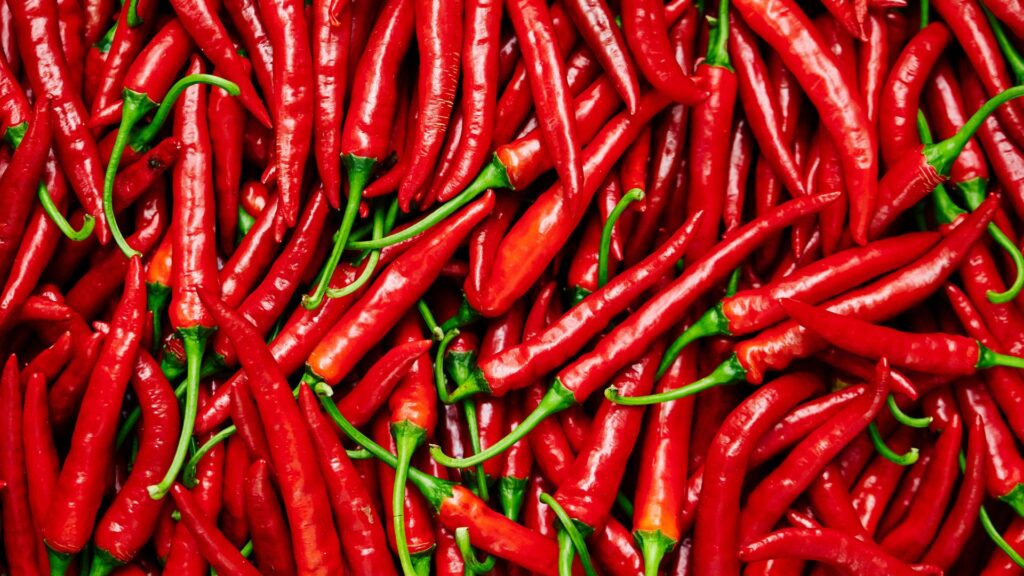 What chilli does
What this vegetable does
Held to warm the stomach, disperse cold and help digestion. It works on stomach and abdominal pain.
How to eat it
Add it to stir-fries and simmered dishes, or use it as a seasoning. Its heat gives a dish depth.
A yakuzen note
Chilli is held to warm the body and help with feeling the cold and poor digestion, which works particularly well in the cold season.
Chilli is a pungent, hot aromatic, held to warm the stomach, disperse cold and encourage the appetite. It suits daily care when you feel the cold, or when a run of cold food has taken your appetite, and a little in a dish is easy to use when you want heat along with warmth. It is strong, so a little at a time suits it.
TOC
When chillies are in season, the kinds, and how to choose
If you want to bring in what chillies do, deliciously, knowing the season, the kinds and how to choose makes them easier to use. Usable fresh or dried, as powder or as paste, they add heat and depth to cooking the world over.
Fresh from summer into autumn, dried all year
Chilli is the fruit of a nightshade-family plant, native to Central and South America. Fresh green and red chillies are in season from summer into autumn, roughly July to October, when you get their fresh heat. Red ripe chillies dried keep and are available all year. In Japan they are grown across the country, and mild sweet peppers such as Kyoto's Fushimi and Manganji are loved too. Using fresh ones in season and dried ones all year widens the range of heat you can work with.
Takanotsume, green chilli and chilli powder
Chillies are used in several forms, by ripeness and by processing.
| kinds | What stands out |
|---|---|
| Takanotsume (dried red chilli) | Red ripe fruit, dried. A firm heat, for stir-fries and hotpots |
| Green chilli | Unripe fruit. A fresh, sharp heat. For garnishes and pickles |
| Chilli powder (ichimi, Korean) | Ground. Ichimi is hot; Korean powder is rounder with savour in it |
Takanotsume, usable as it is, for stir-fries and hotpots; green chilli when you want a fresh heat; powder when you want to sprinkle: choose by dish. There are plenty of chilli-based seasonings too, from ichimi and shichimi to yuzu kosho, doubanjiang and gochujang, each with its own character of heat.
How to choose and handle them
When choosing good chillies, these points make it easier to tell.
- Dried chillies: a glossy red, with few wrinkles and unbroken
- Fresh chillies: taut and glossy, not shrivelled
- Chilli powder: bright in colour, with a strong aroma
The heat gathers most in the seeds and the pith. Removing the seeds keeps the heat down; using them whole keeps it up, which is how you adjust. Dried chilli gives up its heat and aroma readily when heated in oil, but burns bitter, so work over a low heat. After cutting a fresh chilli, take care not to touch your eyes or face, and wash your hands well.
How to use chillies
Chillies work widely, from stir-fries to hotpots to garnishes, drawing on their heat and aroma. Here are the standard ways.
In stir-fries, hotpots and stews
Where the heat of chilli most comes into its own is in stir-fries and stews. Peperoncino, where dried chilli is heated with garlic in oil to give up its aroma, is simple and deep. In mapo tofu, prawns in chilli sauce and Sichuan cooking generally, it is paired with doubanjiang for heat and depth. From kimchi nabe and jjigae to peperoncino and arrabbiata, it gives an accent of heat to cooking the world over. Added to a hotpot in cold weather, it suits times when you want warmth along with the heat.
As a garnish, a seasoning and in pickles
A little chilli also plays its part in pulling a dish together. Ichimi suits udon and soups; shichimi, whose aroma is part of the pleasure, suits yakitori and rice bowls. Green chilli chopped and steeped in soy sauce or miso makes a standing side dish that has you reaching for rice. Yuzu kosho adds a fresh heat to hotpots, grilled fish and meat. A single dried chilli in a nukazuke or a light pickle tightens the taste and helps keep it.
How to keep chillies
Dried chillies keep, but they lose flavour readily if they take up damp, so keep them in an airtight container somewhere cool and dark, out of direct sunlight. If you will not use them for a while, sealing them and putting them in the freezer holds the colour and the heat. Chilli powder loses its aroma quickly, so buy a little at a time and use it soon. Keep fresh chillies in a plastic bag in the vegetable drawer of the fridge, and freeze any you cannot use in portions so you can take out a little whenever you need it.
Alongside this, it is worth knowing about The benefits of ginger and a warm one likewise adding heat and aroma to cooking, The benefits of pepper as a guide when using aromatics.
Chilli, in season fresh from summer into autumn, is an aromatic that lifts a dish through heat and aroma, in stir-fries, hotpots, garnishes and seasonings. Firmly hot takanotsume, fresh green chilli, easy-to-sprinkle powder: choosing by use brings out what each has. For daily care in the seasons when the cold and the appetite are on your mind, bring chilli in a little at a time.