The benefits of orange
Links on this page include advertising.
 What oranges do
What this vegetable does
It is held to wake the appetite and moisten the Lung, and is looked to for settling the throat and the stomach.
How to eat it
As well as eating it as it is, juice and smoothies are worth trying.
A yakuzen note
Orange is said to generate body fluids, moisten the Lung and Stomach, and ease a dry throat.
Orange is sweet and sour and cool, a citrus held to settle the stomach and to replenish the body with moisture, its fluids. It suits daily care when a dry throat or trouble from dryness is on your mind, and it is also said to moisten the Lung. Clean in flavour, it is a fruit that goes easily into juice and salads as well as being eaten as it is.
TOC
When oranges are in season, their types, and how to choose them
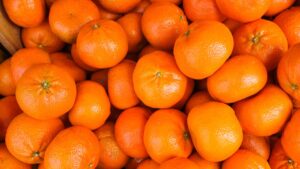
If you want to enjoy what orange does, it helps to know its season, its types and how to choose it. It is a citrus loved for its vivid colour, its fresh scent and the balance of sweetness and acidity.
In season from winter to spring, and imported all year
Orange is a citrus grown around the world, and imports keep it available all year. American and Australian fruit arrive at different times, so the shops are rarely without it. Japanese navel oranges and blood oranges are in season from winter into spring, roughly December to April, and that is when both scent and sweetness come up. They are grown in Hiroshima, Wakayama and Ehime among other places, with a juiciness particular to home-grown fruit. Using imported and Japanese fruit in turn gives you a range of flavour all year.
Navel, Valencia and blood oranges
Orange comes in several types, differing in flavour and in what they suit.
| kinds | What stands out |
|---|---|
| Navel orange | Soft flesh and a deep sweetness. Few seeds and easy to eat |
| Valencia orange | Plenty of juice and a fresh acidity. Suited to juicing |
| Blood orange | Red flesh, with a rich sweetness and scent. For colour and for baking |
Sweet navel to eat as it is, juicy Valencia to squeeze, blood orange for colour and flavour: you can choose by use. All of them can be peeled and eaten with the membrane, or the segments taken out.
How to choose it and how to cut it
When picking out good oranges, these are the things to look for.
- Heavy in the hand, as though full of juice
- Skin firm and glossy, with a scent rising softly from it
- Not shrivelled around the stem end, with few blemishes
Cut the top and bottom off an orange and score the skin lengthways and it peels easily by hand. Cut into rounds or wedges, in what is called a smile cut, it is easy to hold and eat with the skin on and looks good as well. For salads and baking, taking off the membrane and using only the flesh gives a smoother mouthfeel.
How to eat oranges
The sweet-sour juice and the scent of an orange are good as they are and good with a little work. Here are the usual ways.
As it is, as juice and in salads
Orange is at its best simply peeled and eaten. The sweet-sour note and scent that spread from the juicy flesh make it a dessert in itself. Freshly squeezed juice, with its fresh acidity, suits the morning. Segments broken up and combined with leaves, prosciutto and mozzarella make a bright salad. Added to jelly or a smoothie it finishes fragrant. That clean acidity also works as a palate cleanser after a rich dish.
In marmalade, baking and cooking
Orange can be used right down to the peel for its scent. Peel chopped and simmered with sugar into marmalade is richly fragrant and goes well with bread and yoghurt. Juice or thin slices added to baking work as a note of fresh scent. Juice in a sauce for pork or duck cuts the richness of the fat with its sweet-sour note. The white part of the peel is bitter, so for baking, use the coloured outer layer, the zest, and it finishes fragrant.
How to keep oranges
Oranges keep reasonably well, but the flavour falls away if they dry out. Whole, they hold their juiciness in a plastic bag in the vegetable drawer of the fridge. If you are eating them soon, somewhere cool with air moving is fine. Peeled segments dry out easily, so keep them in a container in the fridge and eat them soon. If you have a lot, squeeze the juice and freeze it in an ice tray, or freeze thin slices, ready for juice and for baking.
Alongside this, a citrus likewise held to settle the stomach, The benefits of mandarin orange and a large citrus likewise held to replenish moisture, The benefits of buntan pomelo as a guide when building a table from winter into spring.
Imported all year and home-grown in season from winter into spring, orange is a citrus whose sweet-sour note and scent carry it from eating as it is to juice, salads, marmalade and baking. Sweet navel, juicy Valencia and colourful blood orange: use each type for the job and it shows its best. For daily care in the season when a dry throat and dryness are on your mind, bring orange into the day.