The benefits of white wood ear
Links on this page include advertising.
 What white wood ear does
What this vegetable does
It is held to nourish the yin fluids and to moisten the Lung and Stomach.
How to eat it
Good added to desserts and soups, and a fine way to take in something nourishing.
A yakuzen note
It is looked to for moistening a dry throat and skin and for replenishing qi and blood.
White wood ear is held to nourish the yin fluids and to moisten the Lung and Stomach. In the dry season in particular, it helps hold moisture in the throat and the skin. By generating body fluids it is also looked to for constipation and for easing a dry throat. Brought into soups and desserts, it is good to eat and good for you.
TOC
The types of white wood ear and how to choose them
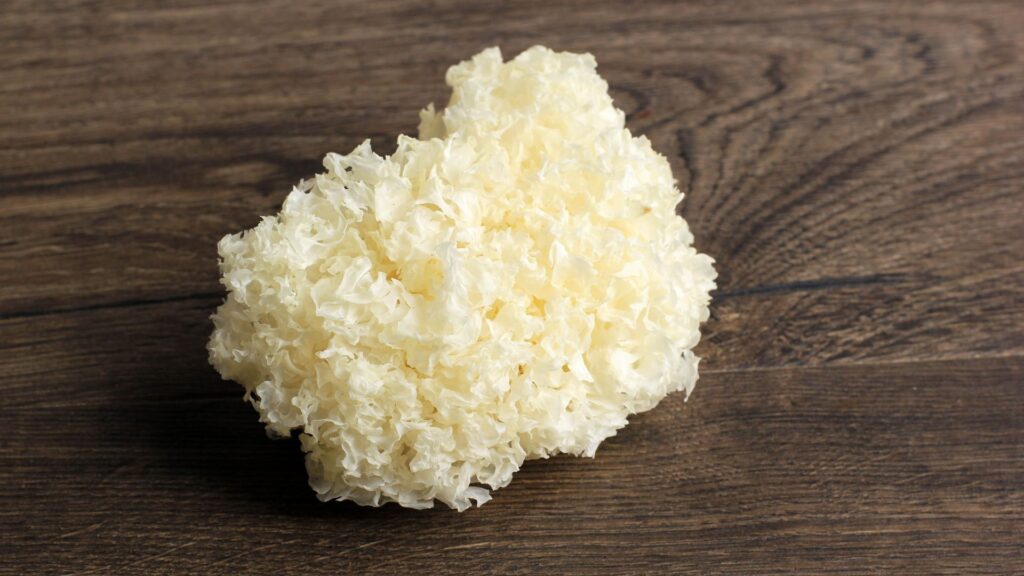
If you want to enjoy what white wood ear does, it helps to know what it is, its types and how to choose it. Half translucent and frilled, it is loved for its particular texture, at once firm to the bite and wobblingly soft.
A white mushroom, also called yin er
White wood ear is a half-translucent mushroom that opens out like petals, known in China as yin er. It has long been familiar in Chinese cooking and in desserts. In Japan almost all of it is sold dried, and it comes chiefly from China. The fresh kind barely reaches the market, and the usual method is to rehydrate the dried mushroom in water. Dried it is small and shrunken, but in water it swells several times over and turns soft and wobbling. Its thick mouthfeel is well liked, and in China it has long been used in everything from soups to sweet desserts.
How it differs from black wood ear
The Japanese names are alike, but white wood ear and black wood ear are different mushrooms, differing in texture and in use.
| White wood ear | Black wood ear mushroom | |
|---|---|---|
| Colour and appearance | White to cream, half translucent | Black to dark brown |
| Texture | Wobbling and soft | Firm, with a real bite |
| Dishes it suits | Soups and desserts | Stir-fries and dressed dishes |
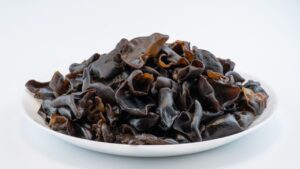
White wood ear has a soft mouthfeel that sits well even in sweet dishes, and it can be used in desserts, which is its particular character. For a stir-fry where you want the bite, black suits. Alongside this, The benefits of black wood ear mushroom is worth knowing as well, which makes it easier to use each for its own dish.
How to choose it and how to rehydrate it
When choosing dried white wood ear, these are the things to look for if you want good quality.
- A pale yellowish white to cream, not unnaturally bright white
- Caps opened wide, plump and well shaped
- No mould, spoiling or discolouring
To use it, soak it in plenty of water for twenty to thirty minutes to rehydrate. Once rehydrated, cut off the hard base and break it into easy pieces. The longer you simmer it, the softer it goes and the more it thickens, so adjust how far you rehydrate it and how long you cook it to suit the dish.
How to use white wood ear
White wood ear is a generous ingredient, at home in cooking and in desserts alike. Here are the usual ways to play to that wobbling texture.
In Chinese soups, stir-fries and dressed dishes
Rehydrated white wood ear is much used in Chinese home cooking. Dish by dish, it goes like this.
- Soup: combined with chicken, egg and greens, it gives a slippery mouthfeel and body
- Dressed dishes: blanched quickly and dressed with sesame oil or vinegar for something clean
- Stir-fries: fried with vegetables or mushrooms, its particular texture works as a note of its own
Having little in the way of a strong taste, it sits easily in a wide range of dishes, from Chinese soups to sweet desserts to clean, dressed dishes.
In the yakuzen dessert yin er tang
White wood ear is also a standard in sweet Chinese desserts. Yin er tang, simmered slowly with rock sugar, is a yakuzen sweet with a thick, melting mouthfeel. Simmered together with jujube, goji berries, lotus seeds or pear, it makes a rich picture. Combined in particular with The benefits of goji berry or The benefits of pear it becomes a dish for the season from autumn into winter, when dryness is on your mind. It is good chilled or warm, and adding fruit makes it a dessert after a meal.
How to keep dried white wood ear
The basic rule with dried white wood ear is to keep it away from damp. Once the bag is open, put it in an airtight container or a zip bag and keep it somewhere cool and dark, away from damp and insects. Damp brings mould and spoiling, so a desiccant alongside is reassuring. Dried, it keeps a long time, and the convenience of a dried good is that you rehydrate only what you need. Rehydrated wood ear you did not use can be drained and refrigerated and used within two or three days, or frozen in small portions so that nothing is wasted.
Alongside this, one likewise held to moisten the body, The benefits of lotus seed as a guide when building a table from autumn into winter.
Available dried all year round, white wood ear is an ingredient for cooking and dessert alike, from Chinese soups and stir-fries to yin er tang simmered with rock sugar. Since you rehydrate only what you need, keeping it in the cupboard widens what you can plan. Bring that particular wobbling mouthfeel into your everyday cooking.