The benefits of goji berry
Links on this page include advertising.
 What goji berries do
What this vegetable does
It nourishes the Kidney and replenishes the Liver, and eases tired eyes, a heavy lower back and tiredness.
How to eat it
Add it to a soup or porridge, or drink it as tea.
A yakuzen note
It moistens the Lung and eases a cough, and is excellent at nourishing the body as a whole.
It replenishes the Kidney and nourishes the Liver, which is held to ease tired eyes and a heavy lower back. It also moistens the Lung and eases a cough, which suits the seasons when dryness is on your mind. Added to a soup or porridge, or drunk as goji tea, it is easy to bring into daily life, and it is held to nourish and strengthen.
TOC
What goji berries are and how to choose them
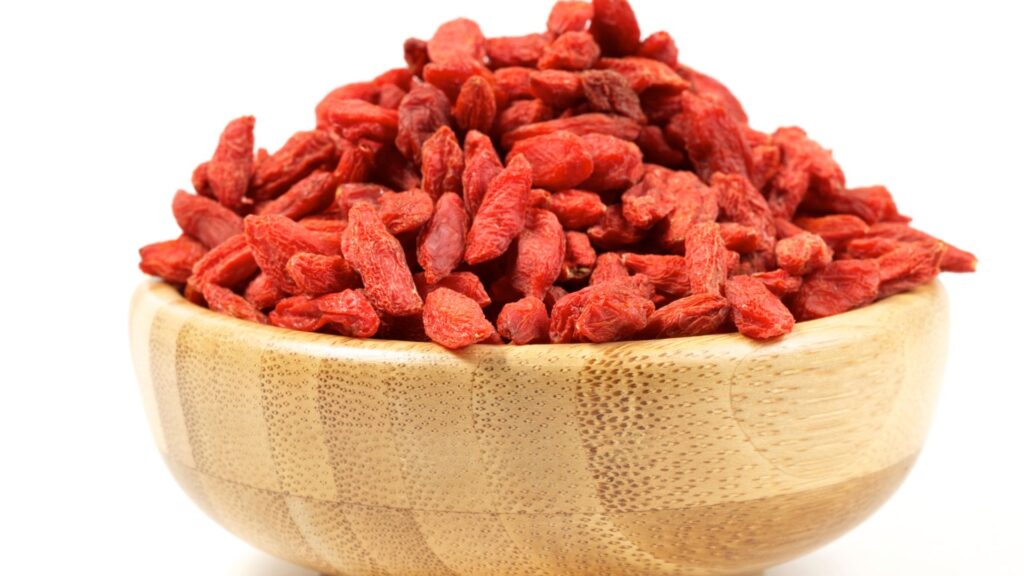
If you want to bring in what goji berries do, deliciously, knowing what they are, the kinds and how to choose makes them easier to use. Vivid red with a faint sweetness, they are familiar as the red berry on top of almond jelly.
Where they come from, and the name goji berry
Goji berry is the fruit of a nightshade-family plant, with Ningxia in China among the main producing areas. It is harvested from summer into autumn, but spoils easily fresh, so dried berries, sun-dried or machine-dried, are widely traded around the world. Dried berries are available all year in Japanese supermarkets and baking-supply shops. Kuko no mi, kukoshi and goji berry are different names for the same thing, and in Japan the dried fruit is traded as one and the same. The goji berries used abroad in cereal and smoothies are the same family as those familiar from yakuzen.
How to choose dried goji berries
When choosing dried goji berries, these points make it easier to tell a good one.
- A bright red to orange colour, not dulled
- Berries even in size
- No darkening, and not clumped together
Berries dulled and darkened in colour may be old. Avoid any that have taken up damp and clumped, and choose ones that fall apart loosely, which are easier to cook with.
Rehydrating them and the basics of using them
Dried goji berries can be rehydrated or used as they are, depending on the use.
- As they are: dry, as a snack or a topping
- Soaked a few minutes in water or lukewarm water: plump and soft to eat
- Scattered to finish: added at the end of a soup or a dish, for the colour
Added to a soup or porridge, they soften as they cook even without soaking. The soaking water takes on colour and flavour, so when using them in a soup or a tea, adding that water too is fine. A little gives a red accent, so a modest amount is plenty.
How to use goji berries
Goji berry is a useful dry good that works in cooking, in tea and in desserts. Here are the standard ways, drawing on its colour and faint sweetness.
In porridge, soups and yakuzen hotpots
Scattered over a Chinese porridge or a soup, they add red colour and a gentle sweetness. They are often used in samgyetang, simmered slowly with chicken, in yakuzen soups with jujube, and to finish a hotpot. In a stew, their loosened sweetness dissolves into the broth. Simmered with jujube and lotus seed, red, brown and white come together for a dish that is lively to look at. A little is enough to bring your usual soup closer to yakuzen.
In tea, desserts and as a topping
Pouring hot water over goji berries for tea is another standard. Floated in chrysanthemum tea with dried chrysanthemum flowers, the red and yellow are beautiful together and the aroma softens. In China there is a way of drinking called babaocha, eight-treasure tea, combining tea leaves and rock sugar with goji berries, jujube, chrysanthemum and more, with the blend varying by region and household. In desserts, beyond decorating almond jelly, they give an accent of faint sweetness and texture on yoghurt, granola or oats. Eaten dry as a snack, they are a pleasure much like dried fruit. If combining tea ingredients as goji berries are combined interests you, the case study on yakuzen tea OEM is worth a look.
Keeping goji berries, which take up damp easily
Goji berries are sweet and take up damp readily. Once the bag is open, put them in an airtight container or a zip bag and keep them somewhere cool and dark, away from damp and insects. In warm weather, or when keeping them a long time, the fridge holds the quality better. Damp makes the berries stick together and costs them flavour, so a sachet of desiccant with them is a safeguard. They are used a little at a time, so moving them into a smaller container keeps damp out each time you open it.
Alongside this, what is often used with them in yakuzen soups and teas, The benefits of jujube or The benefits of chrysanthemum flower as a guide when planning a menu.
Goji berry, available dried all year, is a useful dry good that works in porridge, soups, tea and desserts. Used a little at a time, it lasts, so keeping it in the kitchen widens what you can do. Bring its vivid red berries to your everyday table.