The benefits of lily bulb
Links on this page include advertising.
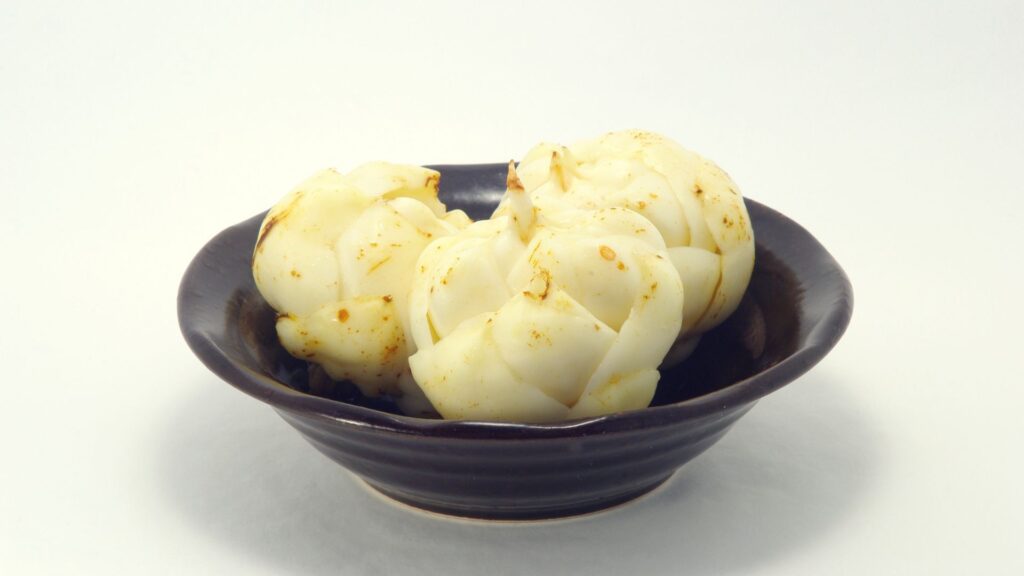 What lily bulb does
What this vegetable does
It can be looked to for moistening the Lung, settling a cough and steadying the mind.
How to eat it
Added to a soup, a simmered dish or cooked rice, its gentle sweetness comes forward.
A yakuzen note
Held to moisten the Lung, ease a dry throat and a cough, and settle the mind.
Lily bulb is held to moisten the Lung and ease a cough, and also to steady the mind. It is worth reaching for in dry seasons in particular, or when tiredness and irritability have built up. Known for a sweet, floury texture, it adds depth and nourishment to soups, simmered dishes and cooked rice. It helps keep the mind calm and settles how the body feels.
TOC
When lily bulb is in season, the kinds, and how to choose
If you want to bring in what lily bulb does, deliciously, knowing the season, the edible kinds and how to choose makes it easier to use. It is the bulb of the lily, and its appeal is a sweet, floury, refined taste.
In season in winter, and used in osechi
Lily bulb is in season in winter, roughly November to February. December in particular brings more of it to the shops, and it is familiar at the year-end table as colour in osechi kinton and chawanmushi. Most edible lily bulb in Japan is grown in Hokkaido, with Makkari among the known producing areas. It takes several years to grow to an edible size, so it is a labour-intensive ingredient. Hokkaido grows a wide range of crops besides lily bulb, and knowing the traditional vegetables of Hokkaido makes the background of the growing area more of a pleasure.
Edible versus ornamental
The lily bulbs used in cooking are those of less bitter species such as kooniyuri and oniyuri. They are different varieties from the lily bulbs sold for growing flowers, and ornamental ones are not for eating. Choosing something sold as food is the safe course. In supermarkets they are often sold packed in sawdust to stop them drying, and they are treated as a refined ingredient prized in restaurants too.
How to choose a good lily bulb
When choosing lily bulb, these points make it easier to tell a fresh one.
- White all over, plump and rounded
- Scales firmly closed, not falling apart
- Little discolouring, damage or wilting
Ones browned, or dried and wrinkled on the surface, have lost freshness. Choosing one that is firm, dense and juicy gives you that floury texture.
How to eat lily bulb
Peel the outer scales off one by one, rinse them briefly and use. If any part has browned, shaving it thinly with a knife gives a neater result. It has little harshness or anything to object to, so it needs no long parboiling, which makes it easy to handle. Here are Japanese and Western ways of using its refined sweetness and floury texture.
In fukumeni, chawanmushi, or simply boiled
Fukumeni, where the separated scales are simmered briefly in dashi, is the standard where you taste lily bulb's gentle sweetness. Added to chawanmushi, its floury texture gives colour. Simply blanched in salted water, its natural sweetness comes forward and it is good as it is. Long boiling breaks it up, so the trick is to take it off the heat once it turns translucent. Crushed into a chakin-shibori, or made into kinton, it suits a refined dish too.
In cooked rice, fried, or in a gratin
Added to cooked rice, its floury texture and sweetness give an accent. Scales in batter as tempura, or fried plain, come out roasted outside and floury inside. Lily bulb brings Japanese cooking to mind, but sautéed in butter, or in a gratin or a potage, it sits well in Western dishes too. Use it much as you would potato or chestnut, and a little added to a usual dish makes something that tastes of the season. A little salt brings the sweetness of the ingredient further forward.
Keeping lily bulb, which dislikes drying
Lily bulb does not like drying out and discolours easily as it loses water if left as it is. If it came packed in sawdust, keep it in the sawdust in a bag or container, somewhere cool and dark or in the fridge. Without sawdust, wrap it in newspaper or kitchen paper and put it in a plastic bag in the vegetable drawer to stop it drying. Wrap separated scales in cling film and use them soon. To keep it longer, blanch it on the firm side in salted water and freeze it in portions, ready to use a little at a time in simmered dishes and rice.
Alongside this, it is worth knowing about The benefits of lotus seed likewise held to settle the mind, and one held to moisten the Lung, The benefits of pear as a guide when building a table from autumn into winter.
Lily bulb, in season in winter, is a refined ingredient that sits well in both Japanese and Western cooking, in fukumeni, chawanmushi, fried dishes and gratins. Peel the scales and cook them briefly and you get a floury sweetness much like chestnut. Bring the taste that belongs to winter to your everyday table.