The benefits of onion
Links on this page include advertising.
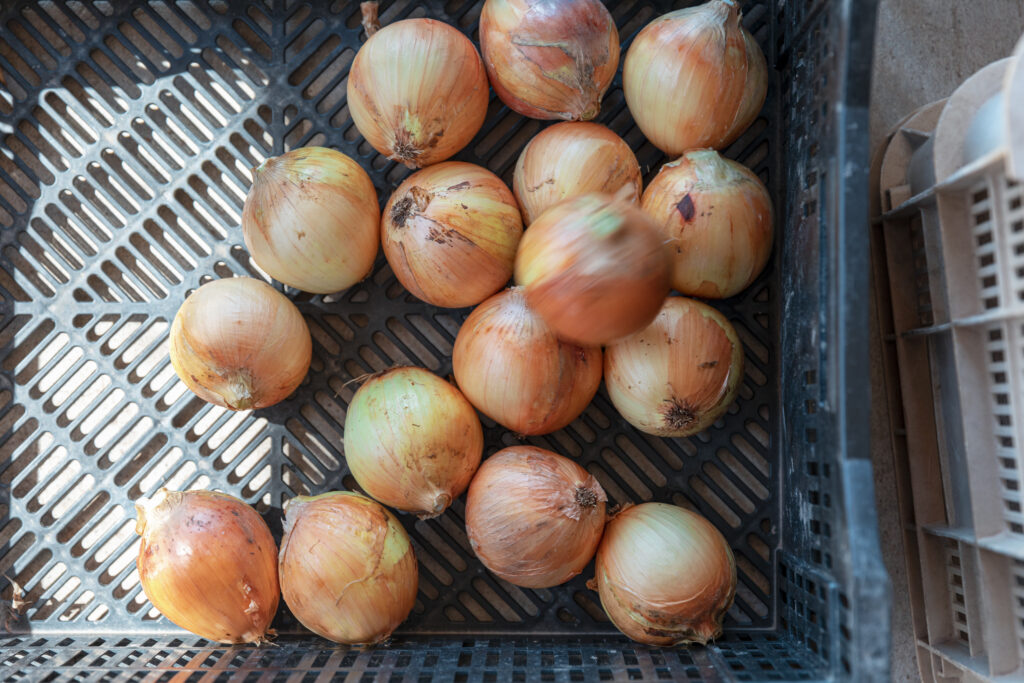 What onions do
What this vegetable does
On the days when your gut feels weak, or when you feel the cold, do try a dish made with onion
How to eat it
Thinly sliced onion with soy sauce and katsuobushi makes a simple Japanese-style salad worth trying.
A yakuzen note
Onion is said to warm the body, encourage the flow of blood, and ease a cold, tight feeling in the belly
This vegetable, driedDried onion ->
Onion is pungent and sweet and warm, a vegetable held to warm the body, ease the circulation of qi and help the gut work. The fresh sharpness when raw and the melting sweetness when cooked are what it is loved for, and it suits daily care when you would rather not cool the body, or simply want something for the everyday table. From salads and stir-fries to stews and fried dishes, Japanese, Western and Chinese alike, it is the vegetable that underpins cooking.
TOC
When onion is in season, its types, and how to choose it
If you want to enjoy what onion does, it helps to know its season, its types and how to choose it. It is an amaryllis-family vegetable available all year, loved both for its sharpness raw and its sweetness cooked.
New onions in spring, stored onions all year
Onion belongs to the same family as spring onion and garlic, and what you eat is the swollen part under the soil. The new onions sold in spring are juicy, low in sharpness and sweet, which suits them to raw salads. Onions dried and stored after harvest, on the other hand, are sold all year, are firmly sharp, and gain sweetness and body when cooked. Hokkaido, Awaji Island and Saga are among the main growing areas. Sharp raw, meltingly sweet cooked: how much the cooking changes its face is what makes onion interesting.
Yellow onions, new onions and red onions
Onion can be chosen by colour and by season.
| kinds | What stands out |
|---|---|
| Yellow onion | The most common. Stores well, and cooking brings out sweetness and body |
| New-season onion | The juicy onion of spring alone. Low in sharpness and suited to eating raw |
| Red onion | Purple, with a mild sharpness. Good colour, for salads and marinades |
For everyday cooking, yellow onions are handy, storing well and turning sweet with cooking. For juiciness raw, the new onions of spring, and for a colourful salad, purple red onions. Small pearl onions can be peeled and used whole in stews and pickles. Shallots are fragrant and suit flavouring a sauce. Choose by the dish and onion shows its best.
How to choose it, and how to take the sharpness out
When picking out good onions, these are the things to look for.
- Skin well dried, glossy and firmly closed
- Heavy in the hand, hard at the top
- No shoots or roots showing, nothing spoiled or gone soft
Onion can sting the eyes as you cut it, but chilling it well and using a sharp knife keeps that down. To eat it raw, slice it thin and either dip it briefly in water or leave it to the air, and the sharpness softens enough to eat easily. Cut along the grain it stays crisp, cut across the grain it finishes soft, so vary the cut with the dish. Cooking takes the sharpness out and brings sweetness, and frying it slowly draws out a deep, caramel-coloured sweetness.
How to eat onion
The fresh sharpness of raw onion and the sweetness of cooked onion carry it from salads to stir-fries to stews. Here are the usual ways.
In salads, stir-fries and caramelised onions
Onion is at its best when you use raw and cooked for different ends. New onions or red onions sliced thin and dressed with katsuobushi or a dressing give you that fresh sharpness. In pork cooked with ginger, or a vegetable stir-fry, the sweetness of onion is essential. Fried slowly to a caramel colour it becomes the base of curry, hayashi rice and onion gratin soup, giving the dish body and depth. Finely chopped into hamburg steak or meat sauce, it adds savour and sweetness and makes the flavour fuller.
In soups, stews and fried dishes
Cooked, onion turns sweet and thickens what it is in, rounding the dish out. Whole or cut into wedges and simmered in a soup, a pot-au-feu or oden, it is meltingly sweet and warms the body. Onion gratin soup is the classic way to enjoy the sweetness and body of caramelised onion. Cut into rings, battered and fried as onion rings, or in a kakiage fritter, the sweetness and the toasted note come forward. New onions steamed or simmered whole give you the juicy sweetness that only spring brings. Different ways of cooking give you different kinds of sweetness.
How to keep onions
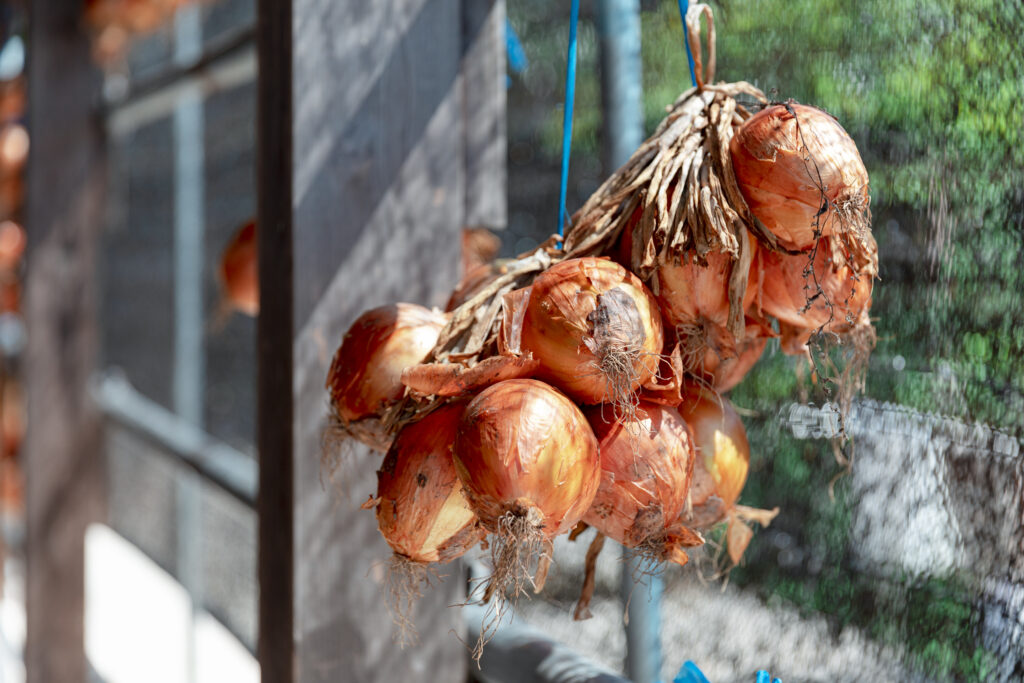
Yellow onions do badly in damp, so they keep longest hung in a net or held in a basket somewhere cool with air moving. New onions hold a lot of water and spoil easily, so put them in a plastic bag in the vegetable drawer of the fridge and use them up soon. Wrap a part-used onion in film and refrigerate it. If you have a lot, slice or chop them and freeze them raw in small portions, ready to go straight into stir-fries and soups. Caramelised onion frozen in advance is ready for curry and soup and saves time as well.
Alongside this, it is worth knowing about The benefits of leek likewise held to warm the body, and one likewise warming, The benefits of ginger as a guide when building a seasonal table.
Usable all year round, onion is a vegetable that offers the sharpness of raw and the sweetness of cooked, from salads, stir-fries and caramelised onions to soups, stews and fried dishes. Yellow onions that gain body with cooking, new onions for eating raw, red onions for colour: use each for the dish and it shows its best. When you would rather not cool the body, and for daily care, bring onion to the table.