The benefits of osmanthus
Links on this page include advertising.
 What osmanthus does
What this vegetable does
It warms cold within the body, eases pain in the stomach and belly, and improves the circulation of qi.
How to eat it
Drunk as a tea, it warms the body while you enjoy the scent.
A yakuzen note
Osmanthus is warm in nature and is said to answer digestive trouble and colds.
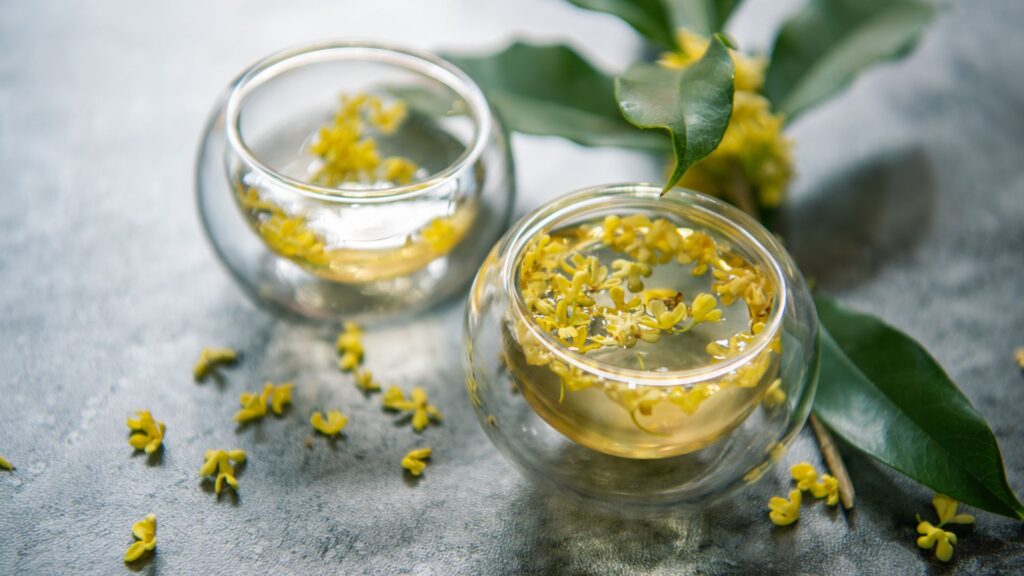
Osmanthus is a fragrant autumn flower, pungent and warm, a yakuzen flower held to warm the body from within and settle the circulation of qi. It suits daily care when the cold is on your mind, or when the stomach does not feel clear, and its heady scent is welcome when you want to ease your mood. Dried, the flowers make an easy tea.
TOC
When osmanthus is in season, its types, and how to choose it
If you want to enjoy the scent of osmanthus and what it does, it helps to know its season, its types and how to choose it. It carries small orange flowers in autumn and fills the air around it with a sweet scent, and it is a familiar flower in yakuzen.
In season in autumn, picked for its scent and dried
Osmanthus flowers in autumn, around September to October, when small orange flowers open all at once and give off a strong sweet scent. In China it is called guihua, and the dried flowers have long been used in tea, confectionery and liquor. In Japan it is widely planted as a garden tree, but for eating, use food-grade dried flowers grown without pesticides. The flowering season is very short, so the flowers are picked and dried while the scent is at its strongest, and the scent is then enjoyed all year round.
Golden, silver and pale yellow osmanthus
Osmanthus comes in several types, differing in the colour of the flower and the strength of the scent.
| kinds | What stands out |
|---|---|
| Osmanthus | Orange flowers with a strong scent. The standard for guihua tea and for baking |
| Silver osmanthus | White flowers with a softer scent. For a refined note |
| Pale yellow osmanthus | Pale yellow flowers. A scent somewhere between the golden and the silver |
Golden osmanthus for a clear sweet scent, silver osmanthus for something more restrained: choose to taste. The one most used in yakuzen is strongly scented golden osmanthus, guihua. Dried flowers scent generously in small amounts, so adding a little at a time to tea and baking brings out what they have.
How to choose and handle them
When picking out good dried osmanthus, these are the things to look for.
- Food grade, and stated to be grown without pesticides
- Flowers of a vivid colour, with a scent that rises firmly when you open the bag
- Dry and loose, holding no damp, with no discolouring or fading
Scent is everything with osmanthus, so using it up before the scent goes is how you keep it good. For tea, pour boiling water over it, put the lid on and let it stand a few minutes and the scent comes up. Simmered too long the scent weakens, so add it briefly at the end, or blend a little into another tea or a syrup.
How to use osmanthus
The heady sweet scent of osmanthus carries it from tea to confectionery to liquor. Here are the usual ways to enjoy it.
As guihua tea and in blends
Osmanthus is at its best as guihua tea, hot water poured over the dried flowers. A small amount in a cup with hot water is all it takes for a sweet, heady scent to spread, a cup for when you want a moment's pause. A little added to green tea, oolong or black tea turns the usual cup to autumn. In China, guihua oolong, oolong blended with osmanthus, is a familiar drink too. It is a tea to enjoy along with its scent in the cold months when you want to warm the body.
In syrup, confectionery and liquor
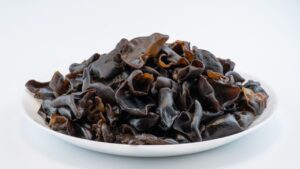
Osmanthus also suits scenting confectionery and liquor. Guihua syrup, the flowers steeped in sugar or honey, can be added to white wood ear, almond jelly, jellies and black tea for the scent. Scattered over agar jellies or steamed cakes, as in the Chinese guihua gao, it works as a note of colour and scent. Guihua liquor, made by steeping the dried flowers, is a fragrant drink to take slowly after a meal. Scattered over a dessert of white wood ear simmered with rock sugar, osmanthus makes a yakuzen sweet that tastes of autumn.
How to keep osmanthus
Dried osmanthus does badly in damp and light, and left alone the scent goes and the colour fades. Keep it with a desiccant in an airtight container or a sealed bag, somewhere cool and dark out of direct sun. In damp seasons, the fridge holds the scent better. Use it up before long after opening and you get the best of the scent. Steeped in syrup or in liquor, the scent is carried over and lasts.
Alongside this, a flower likewise enjoyed for its scent, The benefits of rose flower and one made into a dessert together with osmanthus, The benefits of white wood ear as a guide when making yakuzen teas and sweets.
Giving off its heady scent in autumn, osmanthus is a yakuzen flower that stays with you when you want to warm the body while enjoying its scent, in guihua tea and blends, syrups, confectionery and liquor. Strongly scented golden osmanthus, softer silver osmanthus: choose by type and each shows its best. For daily care in the season when the cold is on your mind, bring the scent of osmanthus into your days.