The benefits of pine nut
Links on this page include advertising.
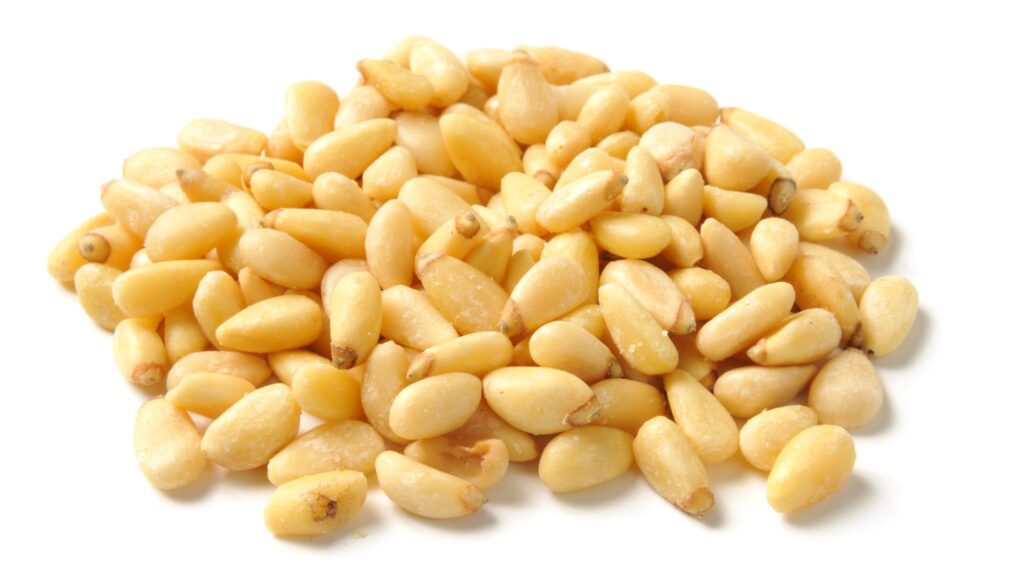 What pine nuts do
What this vegetable does
It replenishes the yin fluids and eases the discomfort and constipation that come with dryness.
How to eat it
They are good in salads and soups, and made into a paste for cooking.
A yakuzen note
They are held to moisten the Lung, ease a dry throat and dryness, and to suit the skin as well.
Pine nuts are held to nourish the yin fluids and to moisten the Lung. They help hold moisture in the throat and the skin, particularly in the dry season. They are also looked to for constipation, moistening the large intestine and easing things along. Taken in soups and salads, or worked into a paste, they make for good food and good eating.
TOC
The types of pine nut and how to choose them
If you want to enjoy what pine nuts do, it helps to know what they are, their types and how to choose them. Toasty in flavour and soft in texture, they are used around the world as a note in cooking.
The seed taken from a pine cone
The pine nut is, as the name says, the seed of a pine. The seeds form inside the scales of the cone, and a few pines, Korean pine among them, yield seeds that can be eaten. They come in a hard shell, so what is mostly sold for cooking is the white kernel, already shelled. In Japan almost all of them are imported, chiefly from East Asia, from China and Korea, and from the Mediterranean, Italy above all. Taking the small kernels out one by one is laborious, which makes them a relatively expensive ingredient among nuts.
How East Asian and Mediterranean pine nuts differ
Pine nuts differ a little in shape and flavour according to where they are grown, and choosing to suit the dish brings out what they have.
| Where it is grown | Shape and character | Dishes it suits |
|---|---|---|
| East Asian (China, Korea) | Somewhat squat and rounded | Chinese stir-fries, dressed dishes, congee |
| Mediterranean (Italy and others) | Long and slender, refined in scent, and expensive | Pesto alla genovese, Western baking |
Both are loved for their toastiness, so whichever you can find is fine. East Asian for Chinese cooking, Mediterranean for an Italian pesto: matching the origin to the style of cooking helps the flavour sit.
How to judge colour and freshness
Pine nuts are high in oil and lose their flavour as they age. When choosing them, these are the things to look for if you want fresh ones.
- An even cream colour throughout, with a gloss to them
- Little yellowing or browning
- Dry rather than damp, the kernels loose against one another
Browning or an oily smell can mean the oil has turned. Buying an amount you can finish soon after opening keeps the toastiness.
How to use pine nuts
The toastiness and texture of pine nuts carry them from cooking to drinks. Here are the usual ways, along with the small step that makes them better.
Toast them lightly for the scent
Toast pine nuts lightly in a dry pan before use, or in a toaster oven until they colour, and the toastiness comes forward markedly. They burn easily, so keep the heat low, stir, and take them off as soon as they are faintly coloured. Toasted pine nuts scattered over a salad, a marinade, dressed spinach or a carpaccio work as a note of texture and scent. They are also good eaten as they are with a drink, or added to yoghurt and granola. Combining them with other nuts and dried fruit, as in Combining dried fruit and nuts is worth a look as well.
In pesto, stir-fries and baking
Pine nuts are above all the essential ingredient in Italian pesto alla genovese, ground with basil. Ground together with cheese and olive oil, they make a sauce with real body. In Chinese cooking, a stir-fry of pine nuts with chicken or vegetables is the standard. Korea has jatjuk, a congee made from ground pine nuts. In baking they are worked into tarts, cookies and nougat, or set on top as decoration, and they sit well with Western ingredients. They belong equally in Japanese, Western and Chinese cooking, so a small amount widens the range of flavour.
How to keep pine nuts, which turn rancid easily
Pine nuts are high in oil and turn rancid when exposed to air and light, which costs them their flavour. Once opened, move them to an airtight container or a zip bag, press the air out and keep them in the fridge, and the toastiness lasts. If you cannot finish them soon, freezing them in small portions holds the rancidity off. Frozen pine nuts can go straight into cooking. Keep them away from hot, humid places and from anywhere the temperature rises, such as the side of the hob, and use them up before long, and they stay good.
Alongside this, one likewise held to moisten and nourish the body, The benefits of lotus seed or The benefits of goji berry as a guide when building a yakuzen table.
Loved for their toasty flavour, pine nuts are a useful ingredient that belongs in Japanese, Western and Chinese cooking alike, from salads and pesto to stir-fries and baking. Toast them lightly to bring out the scent and store them with rancidity in mind, and even a small amount lifts a dish. Bring that toasty kernel into your everyday cooking.