The benefits of shiso
Links on this page include advertising.
 What shiso does
What this vegetable does
Shiso is held to encourage the circulation of qi and to ease the gut trouble that comes from cold. It is useful at the turn of the seasons and when air conditioning leaves you out of sorts.
How to eat it
Chopped fine over chilled tofu or sashimi, shiso gives you a fresh flavour. The leaves fried as tempura add a toasted note and bring colour to a summer table.
A yakuzen note
Shiso is said to improve the circulation of qi and help settle the gut gently. When you want to warm a cold body, try bringing it into a soup or a hotpot.
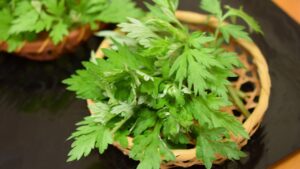
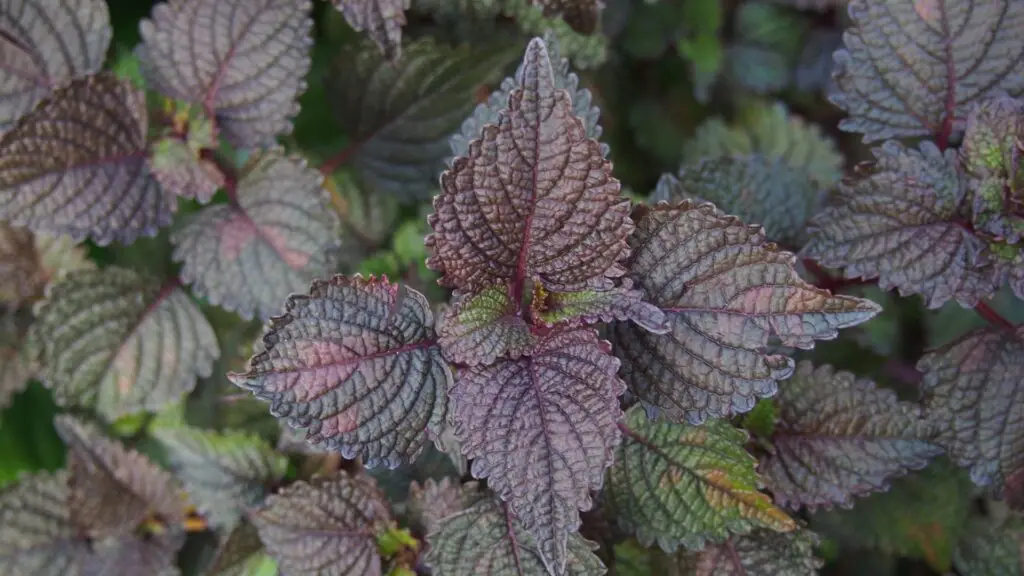
Shiso is pungent and warm, an aromatic vegetable held to help the circulation of qi and to settle the gut. Its fresh, strong scent is what it is loved for, and it suits daily care when you want to clear your head, or when the appetite will not come. From a garnish for sashimi and somen to tempura, meat rolls, umeboshi and shiso cordial, it is the fragrant mint-family plant that Japanese cooking cannot do without.
TOC
When shiso is in season, its types, and how to choose it
If you want to enjoy what shiso does, it helps to know its season, its types and how to choose it. It is a mint-family aromatic long loved in Japan, prized for its fresh, strong scent and its vivid leaves.
In season in summer, with green shiso sold all year
Shiso is a mint-family aromatic, like mint and basil, and leaves, flower spikes and seeds can all be used, with nothing wasted. The season for the field-grown crop is summer, around June to September, when the scent is at its strongest. Green shiso, or oba, is grown hydroponically and sold all year, so it is available whatever the season. Red shiso appears in quantity in early summer, when umeboshi are put down. One of the aromatics native to Japan, it is indispensable in Japanese cooking as a garnish and as colour. Scent is the point, so use it raw or add it at the end and it shows its best.
Green shiso, red shiso and flower spikes
Shiso can be chosen by colour and by the part you use.
| kinds | What stands out |
|---|---|
| Green shiso (oba) | The most common. A fresh scent, for garnishes and tempura |
| Red shiso | Red-purple leaves. For umeboshi, shiso cordial and furikake |
| Flower spikes and seedlings | The flower spikes and the seedlings. As a garnish for sashimi, and for colour |
For garnishes, tempura and colour in a dish, fresh-scented green shiso is the easiest to use and the most widely sold. For umeboshi, shiso cordial and furikake, red shiso suits, since it gives both colour and scent. For a garnish with sashimi, or a small note of colour in a dish, flower spikes and seedlings are used. Choose by the dish and shiso shows its best. In autumn, shiso seeds come in, the spikes picked while young, good simmered in soy sauce or salted.
How to choose it and how to use it
When picking out good shiso, these are the things to look for.
- Leaves lively and vividly coloured, standing firm
- No wilting and no dark discolouring, right to the leaf tips
- A juicy cut end on the stem, and freshly picked
Scent is what shiso has, so the basic approach is to use it raw or to add it at the end. To shred it, cut off the stem, stack the leaves, roll them up and cut them fine for a clean result. A quick dip in water after cutting holds back the change of colour and the harshness and keeps it crisp. Leave it too long and the scent goes, so a moment is enough. Torn by hand, the scent comes up more still. Red shiso is rubbed with salt to draw off the harshness before it goes into umeboshi or a cordial.
How to eat shiso
The fresh, strong scent of shiso carries it from garnishes to tempura to pickles. Here are the usual ways.
As a garnish, in tempura and in meat rolls
Shiso is at its best as a garnish of green shiso. Shredded and served with sashimi, somen or chilled tofu, its fresh scent lifts the dish. Chopped into a cold pasta or a garnish sauce it works as a note of scent too. A whole leaf battered and fried as tempura gives you both scent and texture. Wrapped around pork, chicken or white fish and grilled, in a meat roll or a stuffed grill, the scent lifts the flavour of the meat or the fish. Wrapped around a rice ball, or mixed into rice, it eats fresh as well.
In umeboshi, shiso cordial and shiso seeds
Red shiso gives you uses that play to colour and scent. Added when umeboshi are put down, it lends a vivid red and a scent of its own. Red shiso cordial, simmered out with sugar, vinegar and water, is a vividly coloured glass that drinks clean in hot weather. Red shiso dried and rubbed to a powder becomes yukari furikake. Shiso seeds picked in autumn, steeped in soy sauce, salted, or simmered as tsukudani, are made for eating with rice. Green shiso too, made into shiso miso or a pesto-like sauce, plays to the scent.
How to keep shiso
Green shiso does badly in dry air and loses its scent quickly, so trim the stems a little, stand them in a glass with a little water in it, drape a plastic bag loosely over the leaves and keep it in the fridge, and it lasts. Wrapping it in damp kitchen paper works too, and using it up soon is how you enjoy the scent. If you have a lot, shred and freeze it, or steep it in soy sauce or sesame oil, ready as a garnish or to eat with rice. Salted, it keeps and can go into rice balls and cooking. Red shiso rubbed and frozen is ready for making cordial.
Alongside this, an aromatic vegetable likewise held to warm the body, The benefits of ginger and one likewise used as a garnish and held to help the circulation of qi, The benefits of myoga as a guide when building a table around aroma.
In season in summer, shiso is an aromatic vegetable whose fresh, strong scent carries it through garnishes, tempura, meat rolls, umeboshi and shiso cordial. Green shiso as a garnish, red shiso for pickles and cordial, flower spikes for colour: use each for the dish and it shows its best. For daily care when you want to clear your head, or when the appetite will not come, bring shiso to the table.