The benefits of Jerusalem artichoke
Links on this page include advertising.
 What Jerusalem artichoke does
What this vegetable does
Held to drain excess fluid and replenish the gut, which is said to help with swelling and a tired stomach.
How to eat it
Sliced into a salad, or used in a soup or a simmered dish, it keeps its nourishment.
A yakuzen note
Jerusalem artichoke is held to replenish the gut and drain excess fluid from the body, a winter vegetable that suits keeping well.
Jerusalem artichoke is a sweet root, neutral in nature, held to help how the gut works and clear excess fluid trapped in the body. Its appeal is a crisp texture and a faint sweetness, and it suits daily care when the gut tires easily, or when you do not want to hold excess fluid. Usable raw or cooked, it works widely from salads to simmered dishes and soups: a daisy-family root vegetable.
TOC
When Jerusalem artichoke is in season, the kinds, and how to choose
If you want to bring in what Jerusalem artichoke does, deliciously, knowing the season, the kinds and how to choose makes it easier to use. It is a daisy-family plant that bears vivid yellow flowers, and the tuber that swells underground is eaten.
In season from autumn into winter, a tuber grown underground
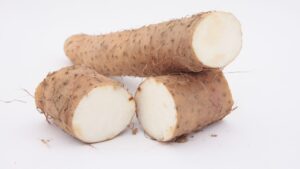
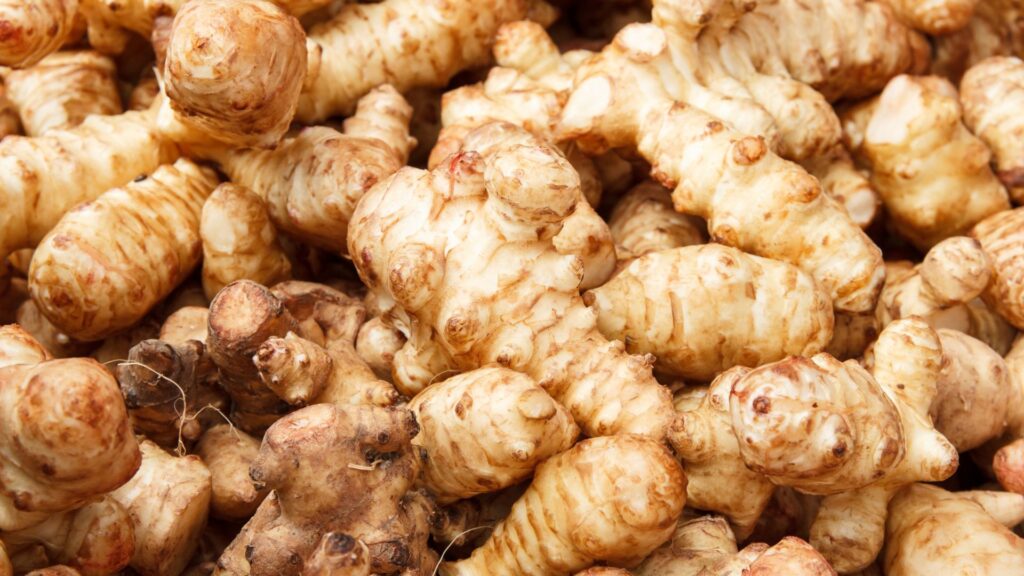
Jerusalem artichoke is a daisy-family plant like the sunflower, flowering yellow in autumn and swelling its tubers underground. It is in season from late autumn into winter, roughly November to February, with lifting beginning around the first frosts. The cold makes it sweeter and brings its firm bite forward. Raw, it is vulnerable to drying and damage, so it mostly reaches the shops in season. Knobbly like ginger and often sold with the soil on, it has thin skin and can be used unpeeled if washed well.
White and red Jerusalem artichoke, and processed forms
Jerusalem artichoke can be chosen by skin colour and by the form you use.
| kinds | What stands out |
|---|---|
| White Jerusalem artichoke | Pale-skinned. The most common, unobtrusive and easy to use |
| Red Jerusalem artichoke | A variety with reddish-purple skin. Sweet, and good raw |
| Processed forms | Dried chips, powder, Jerusalem artichoke tea and the like. Easy to use |
To use it raw, white or red Jerusalem artichoke in season is handy. Because the fresh root does not keep, processed forms such as dried chips, powder and tea make it easy to bring in all year. In season for a crisp raw texture, processed when you want it any time: choose by use.
How to choose and handle them
When choosing good Jerusalem artichoke, these points make it easier to tell.
- A taut surface, without wrinkles
- Firm and dense, not soft or spongy
- Sprouts not too far out, with few marks or discolouring
The skin is thin, so washed well it can be used unpeeled. If that bothers you, scrub it with a brush or peel it thinly. Cut surfaces discolour easily, so cook it straight after cutting or dip it briefly in water. Soil stays in the crevices of its knobbly shape, so wash it carefully under running water. Raw, it dries easily, so washing it just before use is what to aim for.
How to eat Jerusalem artichoke
Jerusalem artichoke works widely, from raw salads to simmered dishes to soups, drawing on its good bite and faint sweetness. Here are the standard ways.
In salads and kinpira
What brings out the most in Jerusalem artichoke is its crisp texture raw. Sliced thin and dressed with salt, olive oil and lemon, it makes a salad with a clean bite. Sliced thin with the skin on and fried in sesame oil with soy sauce as kinpira, it makes a dish that goes beautifully with rice. Shredded and steeped in sweet vinegar, it becomes a light pickle exactly right as a palate-cleanser. The texture is at its best raw, so eating it in a salad while fresh is what to aim for.
Simmered, in soups, and fried plain
Cooked, Jerusalem artichoke turns floury. Simmered gently in dashi, its faint sweetness comes forward. In a soup or a stew it gives a soft feel in the mouth and suits warm dishes in the cold season. Cut into rough chunks and fried plain, or sliced thin and fried into crisps, it works as a snack. Using the crisp raw texture and the floury cooked one for different dishes brings out what it has.
How to keep Jerusalem artichoke
Jerusalem artichoke does not like drying out and spoils easily raw. Ones sold with the soil on keep their freshness wrapped in newspaper in a plastic bag in the vegetable drawer of the fridge. Washed ones dry easily, so use them soon. To keep them longer, slice them or cut them into chunks, parboil them on the firm side and freeze them in portions, ready for simmered dishes and soups. Grated and frozen, they also work to thicken a soup. Dried into chips, they keep a long time.
Alongside this, it is worth knowing about The benefits of adzuki bean likewise held to clear excess fluid from the body, and a root vegetable likewise held to be kind to the gut, The benefits of taro as a guide when building a seasonal table.
Jerusalem artichoke, in season from autumn into winter, is a root vegetable whose firm bite and faint sweetness you can enjoy in salads, kinpira, simmered dishes, soups and fried plain. Fresh in season, or as dried chips and tea any time: using each form for what it does best brings out what it has. When you want to be kind to your gut, bring Jerusalem artichoke to your table.