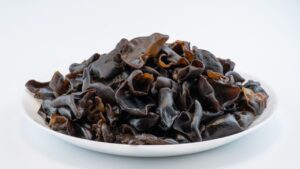
The benefits of kombu
Links on this page include advertising.
 What kombu does
What this vegetable does
Held to ease excess damp and swelling.
How to eat it
As well as taking stock from it, it works in tsukudani and clear soups.
A yakuzen note
Thought to help hold down fat levels and steady blood pressure.
Kombu is salty and cold in nature and is held to encourage circulation in the body and drain excess damp. It is also known for softening what has hardened and stalled, which suits times when swelling is on your mind. Beyond taking stock, it works widely in tsukudani and simmered dishes, and is loved as something that supports healthy living day to day.
TOC
The kinds of kombu and how to choose
If you want to bring in what kombu does, deliciously, knowing the kinds, how to choose and how to soak it makes it easier to use. With a deep savour and the scent of the sea, it has carried the stock of Japanese cooking.
The seaweed that stock is made from
Kombu is a large seaweed taken from the seas off Hokkaido and Tohoku, harvested from summer into autumn. Dried for keeping, it is usable all year. It is rich in glutamic acid, the source of savour, and paired with the savour of katsuobushi the two lift one another into a deeper awase-dashi. As the foundation of Japanese stock it is essential, and the colour, aroma and depth of the stock vary by growing area and kind.
Ma-kombu, Rishiri, Rausu and Hidaka
Kombu is named by growing area, and each gives stock of a different character and suits different dishes.
| kinds | What stands out |
|---|---|
| Ma-kombu | From southern Hokkaido. A refined, clear stock, for clear soups |
| Rishiri kombu | Finely aromatic and clear in the stock. Favoured in Kyoto cooking |
| Rausu kombu | Deep in richness and aroma, for a stock with real depth |
| Hidaka kombu | Soft and quick to cook. Good for stock and for simmered dishes alike |
For a clear, refined stock, ma-kombu or Rishiri kombu; for a rich stock, Rausu kombu; for an all-purpose kind you can also simmer, Hidaka kombu: choose by use. There are distinctive kinds too, such as gagome kombu, known for its viscosity.
How to choose it and how to rehydrate it
When choosing good kombu and taking stock well, these points help you avoid going wrong.
- Thick and broad, a deep blackish green and glossy
- The white powder on the surface is savour, so rather than washing it off, wipe it lightly
- For stock, soak it in water for 30 minutes to overnight and lift it out just before it boils
Boiled too long, kombu gives out sliminess and harshness and clouds the stock, so the trick is to lift it out just before boiling. Before taking stock, rather than washing it in water, wipe the surface lightly with a damp cloth to keep the savour in. Simply watching the heat and the moment you lift it out gives a clean, clear stock.
How to use kombu
Kombu is not only for stock; there are plenty of dishes where you eat the kombu itself. Here are the standard ways.
As stock and as kombu water
Kombu stock is the foundation of taste in Japanese cooking: simmered dishes, soups, hotpots, oden. Kombu water, made by putting kombu in a container of water and leaving it in the fridge overnight, needs no heat and works as stock and as a drink in itself. Awase-dashi with katsuobushi layers the savour for more depth. In Buddhist temple cooking, kombu is combined with dried shiitake for a stock rich in savour.
In tsukudani, shio-kombu and kombu rolls
Kombu left after taking stock, simmered sweet and salty in soy sauce and mirin as tsukudani, becomes an accompaniment to rice. Shio-kombu, chopped fine and seasoned, is handy for rice balls, ohitashi and light pickles. Kombu rolls, wrapped around fish, are a staple of New Year nishime. Tororo kombu and oboro kombu add savour easily, simply laid over a clear soup or udon.
How to keep kombu
Kombu is a dry good and keeps for a long time if you keep it away from damp. It takes up damp easily in its bag, so put it in an airtight container or a zip bag with a sachet of desiccant and keep it somewhere cool and dark, out of direct sunlight. Damp causes mould and costs it flavour, so take particular care in humid seasons. The white powder on the surface is savour, not mould, so there is no need to wipe it off.
Alongside this, another gift of the sea, The benefits of nori and what is used with kombu to make stock, The benefits of shiitake as a guide for making stock every day.
Kombu, rich in savour, is a gift of the sea that carries the taste of Japanese cooking, in stock and kombu water, of course, and in tsukudani, shio-kombu and kombu rolls. Ma-kombu and Rishiri for a clear stock, Rausu for richness, Hidaka for simmering too: using each kind for what it does best brings out what it has. Keep it well away from damp and bring the savour of kombu to your everyday table.