The benefits of plum
Links on this page include advertising.
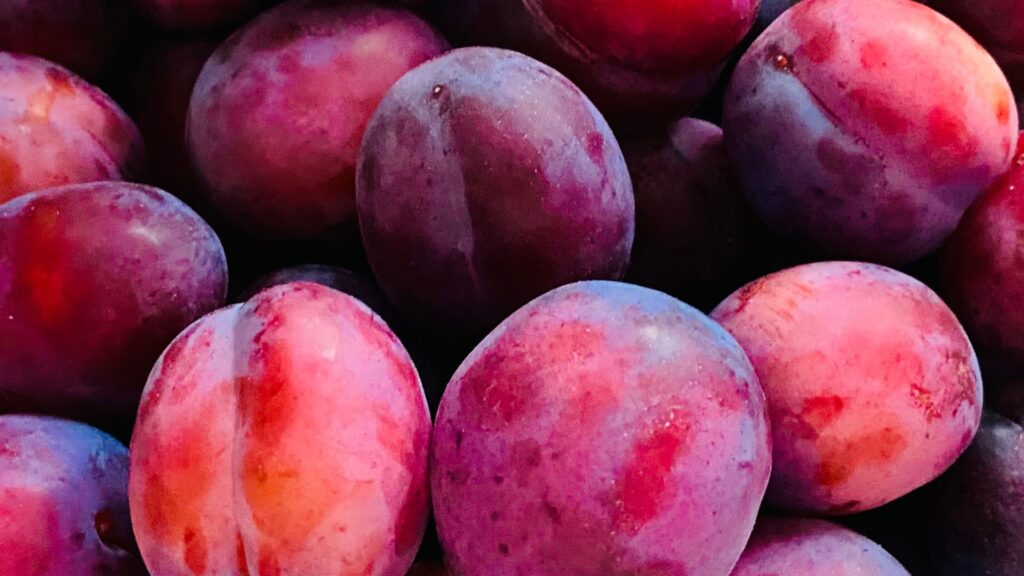 What plums do
What this vegetable does
It generates body fluids, regulates the handling of water and clears excess heat from the body.
How to eat it
As well as eating them as they are, they work as jam and compote, and as a sweet.
A yakuzen note
Plums are said to ease a dry throat and clear heat from the body. They are the fruit for summer.
The Japanese plum is sweet and sour, a fruit held to settle excess heat in the body, generate moisture and settle the circulation of water. It suits daily care when the heat leaves you thirsty, or when feelings run high and the head feels hot, and it is also said to settle an over-active Liver. As well as being eaten as it is, it goes easily into juice and jam: a fruit of summer.
TOC
When plums are in season, their types, and how to choose them
If you want to enjoy what plum does, it helps to know its season, its types and how to choose it. It is a fruit of the Japanese summer, loved for its sweet-sour juice and its juiciness.
In season in summer, grown mainly in Yamanashi
The Japanese plum is a stone fruit of the rose family, with a hard stone at the centre. It is in season in summer, appearing from around June to August, with the varieties coming in one after another as though in relay. Yamanashi, the largest producer in the country, is the main growing area, along with Wakayama and Nagano. A white dust called bloom sometimes sits on the skin, but the fruit itself produces this to hold its freshness, and it is a sign of quality. It is a summer fruit, juicy in the heat.
Oishi Wase, Soldam and Taiyo
Plums come in several varieties, differing in colour and in how sweet and sour they are.
| kinds | What stands out |
|---|---|
| Oishi Wase | A small red fruit that comes early. A fresh acidity |
| Soldam | Red flesh, with a good balance of sweetness and acidity. Full of juice |
| Taiyo | Large and strongly sweet. A deep red-purple skin, and a good scent |
Early Oishi Wase for a fresh acidity, Soldam for the balance of sweet and sour, the large Taiyo for a firm sweetness: you can choose to taste. Prunes, the European plum, are a close relative, good fresh and dried alike. Since the varieties appear at different times, tasting them against one another through the summer shows up the differences.
How to choose them and how to ripen them
When picking out good plums, these are the things to look for.
- Colour well spread over the whole fruit, with a firm, glossy skin
- An even coat of the white bloom, with few blemishes
- A faint give when you press the base, and a sweet scent
Firm plums left at room temperature ripen off the tree and gain sweetness and scent. When the base softens and a sweet scent rises, they are ready. Ripe ones spoil if left longer, so move them to the fridge and eat them soon. The acidity and scent sit near the skin, so wash them well and eat them skin and all to get the best of them.
How to eat plums
The sweet-sour juice of a plum is good as it is and good in baking. Here are the usual ways.
As they are, and in smoothies
Plums are at their best chilled well and eaten whole, skin and all. The juice and the sweet-sour note suit the heat. You get the contrast between the acidity near the skin and the sweetness of the flesh. The area around the stone is awkward to eat, so cutting along the stone makes it easier. Frozen plums blended with milk or yoghurt make a cold smoothie that suits a summer morning. Made into a sorbet, they eat clean.
As jam, compote and syrup
Worked on a little, the acidity and scent of a plum come forward more still. Simmered down with sugar into jam, or briefly in syrup as a compote, they finish a clear red, good with bread, yoghurt and ice cream. Simmered skin and all, the red comes out and it looks the part. Plum syrup, the fruit steeped with sugar or rock sugar, makes a clean summer drink cut with soda or water. Slightly firm plums, and sharply acidic ones, suit this kind of work.
How to keep plums
Plums keep best if you change how you store them according to how ripe they are. Leave firm ones somewhere cool at room temperature with air moving to ripen, and move them to the vegetable drawer of the fridge once they are ready. Ripe ones go in a bag so they do not dry out, and should be eaten within two or three days. Chilled too hard the flavour blurs, so chill them a little before eating. If you have a lot, stone them and freeze them, ready for smoothies, sorbet and baking.
Alongside this, one likewise a summer stone fruit held to bring moisture, The benefits of peach and a summer fruit likewise held to cool excess heat, The benefits of watermelon as a guide when building a summer table.
In season in summer, plum is a fruit whose sweet-sour note and juiciness carry it from eating as it is to smoothies, jam, compote and syrup. Fresh Oishi Wase, well-balanced Soldam and strongly sweet Taiyo: choose by variety and each shows its best. For daily care in the season when the heat leaves you thirsty, bring plums in season into the day.