The benefits of coriander
Links on this page include advertising.
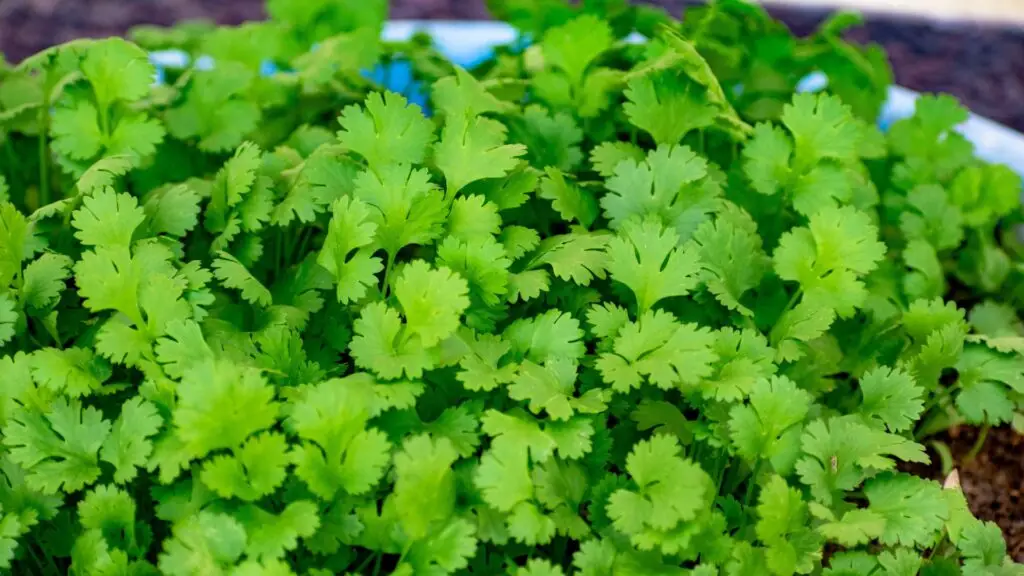 What coriander does
What this vegetable does
Coriander is said to improve the circulation of qi and settle the gut gently. It also encourages sweating and helps settle the balance of how you feel.
How to eat it
Fresh coriander in a soup or a salad gives a highly aromatic accent. Chopped into a stir-fry or made into a coriander sauce, its distinctive flavour lifts a dish.
A yakuzen note
Coriander is said to settle the gut and improve the circulation of qi. In muggy weather in particular, or when digestion feels poor, bringing it into a soup or a light stir-fry is the way.
Coriander, or pakuchi, is a pungent aromatic vegetable, warm in nature, held to help the stomach work and settle the circulation of qi. Its appeal is a distinctive strong aroma, and it suits daily care when your appetite will not come, or when you want to clear your head. From a garnish on pho and tom yum kung to salads and the finish of a stir-fry, it is the highly aromatic umbellifer that Southeast Asian cooking cannot do without.
TOC
When coriander is in season, the kinds, and how to choose
If you want to bring in what coriander does, deliciously, knowing the season, the kinds and how to choose makes it easier to use. Its appeal is a distinctive strong aroma and serrated leaves, and it is the aromatic umbellifer familiar from Southeast Asian cooking.
In season in spring and autumn, also called xiangcai and coriander
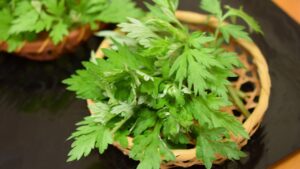
Coriander is an aromatic umbellifer like celery and mitsuba; pakuchi is its Thai name. In China it is called xiangcai and in English coriander, and it has been used in cooking around the world. It likes a cool climate, and open-field coriander is in season in spring and autumn, while hydroponic coriander is in the shops all year. The leaves and stems are used raw as a garnish, the root for flavouring Thai stews, and the seed as a spice, coriander seed, with each part giving a different aroma.
Fresh coriander, the root and coriander seed
Coriander can be chosen by the part and the form you use.
| kinds | What stands out |
|---|---|
| Fresh coriander (leaves and stems) | The most common. Its distinctive aroma, for garnishes and salads |
| Coriander root | Strongly aromatic. For flavouring Thai stews and pastes |
| Coriander seed | The dried seed. A citrus aroma, for curries and pickles |
For garnishes and salads, use the fresh leaves and stems. To cook Thai food properly, using the strongly aromatic root to flavour a stew or a paste brings you far closer to the real thing. Surprisingly, coriander seed, unlike the leaf, has a fresh citrus aroma and is used in curries, pickles and confectionery. The aroma differs greatly by part even within the same plant, so using each for the dish at hand brings out what it has.
How to choose it and how to use it
When choosing good coriander, these points make it easier to tell.
- Lively green leaves, standing upright
- Crisp stems, healthy right down to the base
- Leaf tips neither yellowed nor blackened
Coriander is valued for its aroma, so as a rule use it raw, or add it at the end of cooking. Tear the leaves or cut them roughly, and chop the stems, which are aromatic too. If the aroma feels strong, using fewer leaves or cooking them makes it easier to eat. Wash the root well to remove the soil, crush it and use it in a stew. Tastes divide sharply on this vegetable, so adding it a little at a time and adjusting to taste is what to aim for.
How to eat coriander
Coriander works widely, from garnishes to salads to stir-fries, drawing on its distinctive strong aroma. Here are the standard ways.
As a garnish and in salads
What brings out the most in coriander is using it raw as a garnish. Cut roughly over pho, tom yum kung or gapao rice, the aroma of the real thing comes through. A salad built on plenty of coriander, with fish sauce, lemon and peanuts, makes a properly Southeast Asian dish. Chopped with tomato and onion into a salsa, or stirred into a yoghurt sauce, its fresh aroma is a pleasure. Wrapped with grilled meat or in a fresh spring roll, it gives an accent of aroma. If you love the aroma, use plenty.
In stir-fries, soups and pastes
Cooked, coriander's aroma softens and becomes easier to eat. Added quickly at the end of a stir-fry, the aroma carries into the dish. In a soup or a hotpot, its fresh flavour is a pleasure. A paste of crushed root, stem, garlic and pepper is the foundation of Thai cooking, and using it in a stir-fry or a stew gives a properly authentic taste. Leaves blended with oil and nuts into a paste work like a coriander pesto, for pasta or a dip. Even those who find the aroma hard going can bring it in cooked.
How to keep coriander
Coriander does not like drying out and loses its aroma easily, so standing it in a glass with a little water, roots in, with a plastic bag loosely over the leaves, in the fridge, makes it last. Wrapping it in damp kitchen paper in a plastic bag works too. Using it soon is the trick to enjoying the aroma. When you have a lot, chop it and freeze it in portions, ready for stir-fries and soups. The root, washed and frozen, works for flavouring a stew. Made into a paste and frozen, it goes straight into cooking and none is wasted.
Alongside this, it is worth knowing about The benefits of mint likewise held to help the circulation of qi through a fresh aroma, and a fellow umbellifer enjoyed for its aroma, The benefits of mitsuba as a guide when building a table around aroma.
Coriander, enjoyable all year, is an aromatic vegetable whose distinctive strong aroma you can enjoy as a garnish on pho and in salads, in stir-fries, soups and pastes. Fresh leaves and stems, the strongly aromatic root, citrusy coriander seed: using each part for what it does best brings out what it has. For daily care when your appetite will not come, or when you want to clear your head, bring coriander to your table.