The benefits of okra
Links on this page include advertising.
 What okra does
What this vegetable does
When the heat leaves you heavy, or constipation is on your mind, try it in simmered dishes or soups.
How to eat it
Blanch okra briefly, cut it into rounds, and a shake of katsuobushi and soy sauce makes an easy dish.
A yakuzen note
Okra is said to moisten the gut and to cool heat trapped in the body.
Okra is sweet and cool, a summer vegetable held to moisten the gut and settle excess heat trapped in the body. Its particular stickiness and crisp bite are what it is loved for, and it suits daily care when heat builds up in the body, or when you want something of the summer. From a quick blanch and chop into a dressed dish to tempura, salads and soups, it goes everywhere, and the star-shaped cut is a pleasure in itself.
TOC
When okra is in season, its types, and how to choose it
If you want to enjoy what okra does, it helps to know its season, its types and how to choose it. It is a mallow-family vegetable in season in summer, loved for its particular stickiness and for the star shape it makes when cut.
In season in summer, a summer vegetable loved for its stickiness
Okra belongs to the mallow family, like hibiscus, and what you eat is the young pod that forms after the yellow flower. It is in season in summer, roughly July to September, and grows fast in the heat. Kagoshima and Kochi are among the main growing areas, and the sticky texture is what it is known for. Grown too large, the pod turns hard and stringy, so if you want the stickiness and the tenderness, the small ones picked young suit. Cut across, the face makes a star, which gives colour and decoration to a dish. It works raw or lightly cooked, an easy summer vegetable to handle.
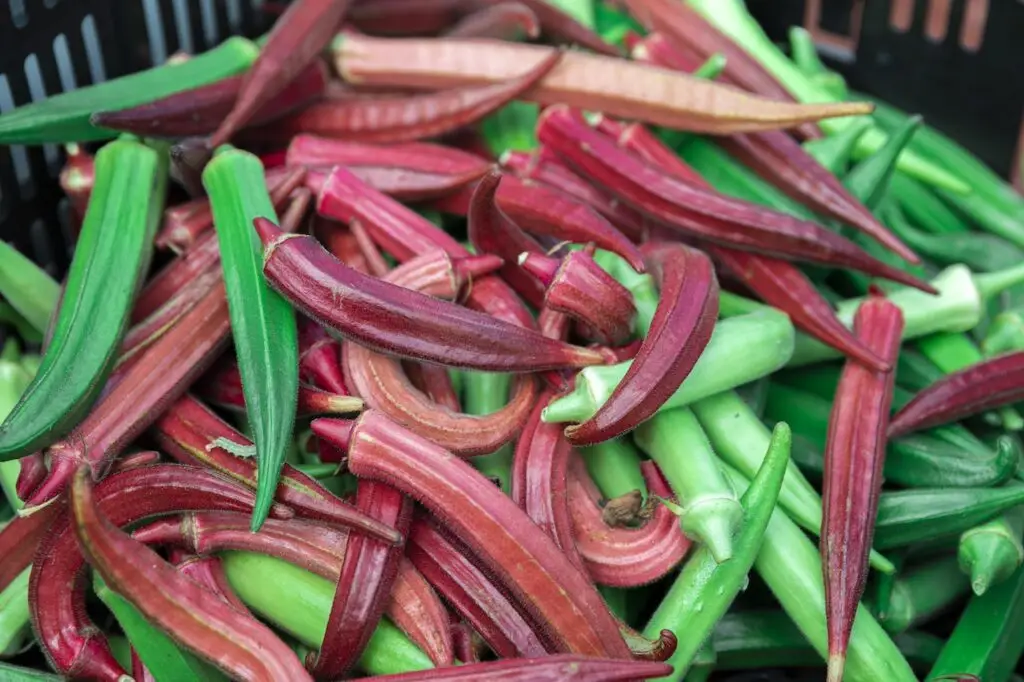
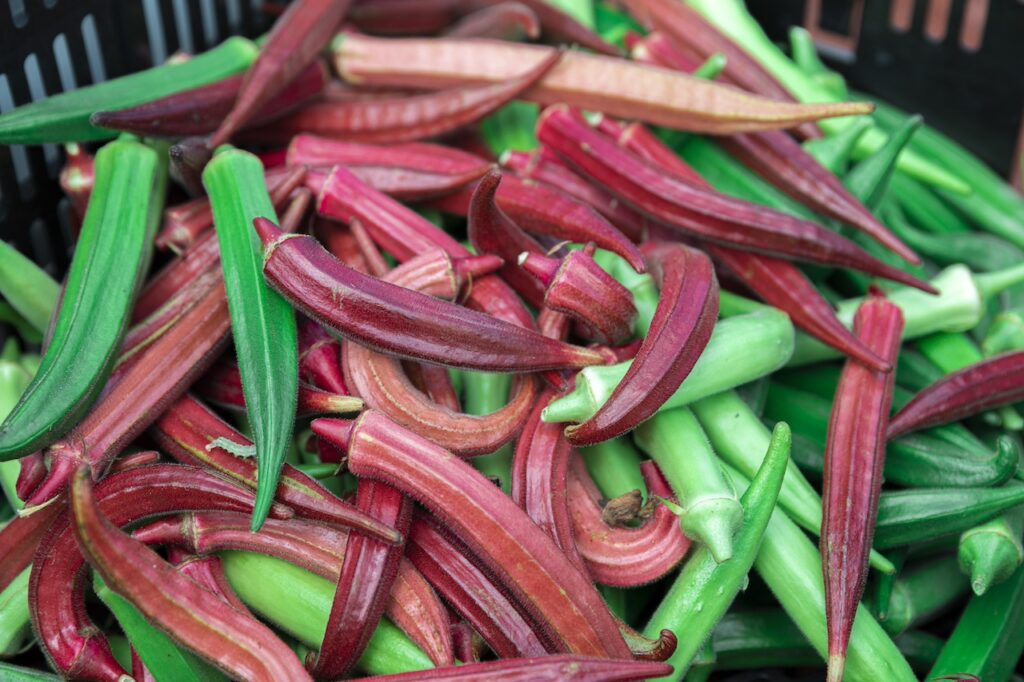
Five-sided okra, round okra and red okra
Okra can be chosen by shape and by colour.
| kinds | What stands out |
|---|---|
| Five-sided okra | The most common. Cuts into a star. A good balance of stickiness and texture |
| Round okra (shima okra) | Round, with no ridges. Stays tender even when large, and rarely turns stringy |
| Red okra | A red-purple pod. Colour when raw, turning green once cooked |
For everyday use, five-sided okra is handy, with its star-shaped face. When you want something that stays tender even when large, round okra, grown in Okinawa among other places, suits. For salads and for colour, red-purple okra stands out, but since it turns green when cooked, use it raw if you want the colour. Choose by the dish and by how you want it to look and okra shows its best. The small ones, with an even coat of down, are the fresh ones.
How to choose it and how to prepare it
When picking out good okra, these are the things to look for.
- A bright green, with a thick, even coat of down
- Small and firm, with clearly defined ridges
- No darkening or hardening at the cut end or the tip
Taking the down off the surface of okra makes it better in the mouth. Sprinkle it with salt and roll it on the board, then rinse it quickly, and the down comes away and the colour brightens. Thinly pare off the dark part around the stem end and the hard part of the calyx. To boil it, leave the salt on, blanch it briefly in boiling water and drop it into cold water. Chopping brings out the stickiness, so cut it fine when you want that, and larger when you want the texture. For raw use too, salt-roll it first and then slice it thin.
How to eat okra
The particular stickiness and crisp bite of okra carry it from dressed dishes to tempura to soups. Here are the usual ways.
Blanched and dressed, and in sticky mixes
Okra is at its best blanched briefly and chopped. Boil it, cut it into rounds, and a shake of katsuobushi and soy sauce is all you need for the stickiness and the clean flavour. Chopped and combined with natto, mekabu and nagaimo, a sticky rice bowl is the sort of dish that keeps you eating in hot weather. On tofu, or as a garnish for somen, it eats light. Play to the star-shaped face and scatter the rounds over a salad or a dish for colour and it looks the part too. The finer you chop it, the more stickiness comes out, so vary the cut to taste.
In tempura, stir-fries and soups
Okra is good cooked as well. Battered and fried whole as tempura, it is crisp outside and sticky and crunchy within. Stir-fried with meat or other summer vegetables, the stickiness clings and goes well with rice. Added to soup or curry it gives body and a rounder mouthfeel. It can also be used to thicken a stew, as in gumbo in the American South. Wrapped in pork and fried, it makes a colourful dish for dinner or a lunchbox. Cooked briefly, it keeps its texture.
How to keep okra
Okra does badly in dry air and in cold, so put it in a plastic bag or wrap it in film and keep it in the vegetable drawer of the fridge. Too cold and it can darken, so watch the chill and use it up within four or five days. If you have a lot, salt-roll it, blanch it briefly, drain it and freeze it in small portions, ready to go straight into dressed dishes and soups. To freeze it raw, salt-roll it first and then bag it. Chopped and frozen, it is ready for sticky mixes and soups, and nothing is wasted.
Alongside this, it is worth knowing about The benefits of cucumber a gourd-family vegetable likewise held to settle summer heat, and a summer vegetable likewise held to cool excess heat in the body, The benefits of eggplant as a guide when building a summer table.
In season in summer, okra is a summer vegetable whose particular stickiness and crisp bite carry it through blanched and dressed dishes, sticky mixes, tempura, stir-fries and soups. Star-shaped five-sided okra, tender round okra and colourful red okra: use each for the dish and it shows its best. For daily care in the season when heat builds up, bring okra to the table.