The benefits of kiwi fruit
Links on this page include advertising.
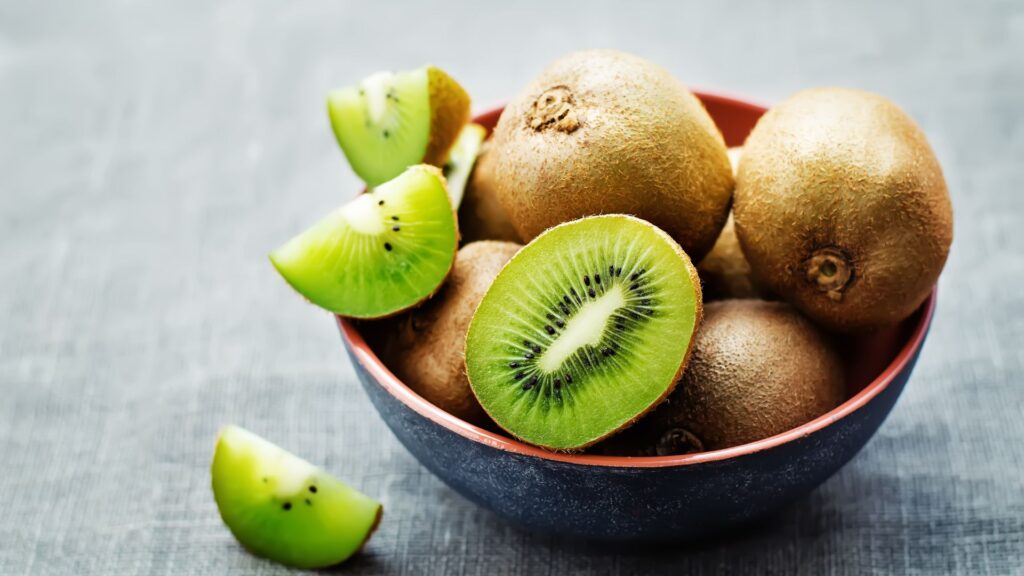 What kiwi fruit does
What this vegetable does
Said to clear excess heat and settle the stomach, which helps ease poor digestion and a dry throat.
How to eat it
Eat it as it is, or add it to yoghurt or a salad, where its acidity lifts the dish.
A yakuzen note
Kiwi fruit is held to help settle the stomach, which makes it ideal as a dessert after a meal.
Kiwi fruit is sweet and sour and cold in nature, held to settle excess heat trapped in the body, moisten a dry throat and help the stomach work. Its appeal is a fresh acidity and juicy flesh, and it suits daily care when you have eaten too much, or when you want moisture. As well as eating it as it is, it is easy to use with yoghurt, in salads and in smoothies.
TOC
When kiwi fruit is in season, the kinds, and how to choose
If you want to bring in what kiwi fruit does, deliciously, knowing the season, the kinds and how to choose makes it easier to use. Its appeal is a fresh acidity and the texture of its tiny seeds, and it grows on a climbing plant.
Japanese-grown from winter into spring, imported all year
Kiwi fruit grows on a climbing plant, is harvested in autumn and ripened to readiness. Japanese kiwi is in season from winter into spring, roughly November to April, and imported fruit from New Zealand and elsewhere is in the shops from early summer into autumn, so it is available all year. Freshly picked, the flesh is firm and sour, so as a rule it is ripened at room temperature and eaten once soft. How to tell when it is ready is covered under choosing, below.
Green, gold and red varieties
Kiwi fruit can be chosen by flesh colour and by variety.
| kinds | What stands out |
|---|---|
| Green kiwi | Green flesh. Hayward and the like. A fresh acidity |
| Gold kiwi | Yellow flesh. Gentle in acidity and strongly sweet |
| Red-centred and baby kiwi | Varieties with red at the centre, and small ones eaten skin and all |
For a fresh acidity, green kiwi; for sweetness, yellow gold kiwi. When you want something easy to eat skin and all, small baby kiwi, or sarunashi, is handy. Choosing by how you like the balance of sweet and sour, and by the dish, brings out what kiwi has.
How to choose them and how to ripen them
When choosing good kiwi fruit, these points make it easier to tell.
- No marks or dents on the surface, with even down
- Evenly firm all over, plump and rounded
- A little give when pressed lightly (ready to eat)
Kiwi is often firm when you buy it, so ripen it at room temperature before eating. To bring it on faster, put it in a plastic bag with an apple or a banana. Once soft, move it to the fridge and eat it soon. Halved and scooped with a spoon, it is easy to eat. To eat it skin and all, scrub off the down, or choose a variety with little down such as gold kiwi.
How to eat kiwi fruit
Kiwi fruit works as it is, of course, and in desserts and cooking, drawing on its fresh acidity and juicy flesh. Here are the standard ways.
As it is, with yoghurt, or in a salad
What brings out the most in kiwi is eating it well chilled, as it is. Halved and scooped with a spoon, its juicy sweet-sourness is a pleasure. Sliced or diced over yoghurt, it suits breakfast or a snack. In a salad with leaves and cured ham, its fresh acidity gives an accent. Green and gold kiwi together make a lively-looking dish.
In smoothies, and for preparing meat
Kiwi goes well in a smoothie too. Blended with other fruit, leafy greens and yoghurt, it makes a fresh glass. The flesh breaks down protein, so grated and worked into meat it also serves to tenderise it. Note that raw kiwi keeps jelly from setting, so heat it once before using it in a jelly. Over-ripe kiwi works in a smoothie or a jam, where its sweetness can be used with nothing wasted.
How to keep kiwi fruit
The basic rule is to ripen kiwi at room temperature until it is ready. Putting it in the fridge while firm stops it ripening, so leave it out until soft. Once ready, move it to the fridge and keep it in a plastic bag to stop it drying. If you cannot eat it all, peel it, slice it into rounds and freeze it, ready for smoothies and sorbets. Half-thawed, it makes a cold snack.
Alongside this, it is worth knowing about The benefits of lemon which likewise moistens the body and eases a dry throat, and a fruit likewise held to help the stomach work, The benefits of apple as a guide when building a seasonal table.
Kiwi fruit, enjoyable all year, is a fruit whose fresh sweet-sourness you can enjoy as it is, with yoghurt, in a salad or in a smoothie. Sour green, sweet gold: choosing by taste and by use brings out what each has. For daily care when you have eaten too much, or when you want moisture, bring kiwi fruit to your table.