The benefits of lotus seed
Links on this page include advertising.
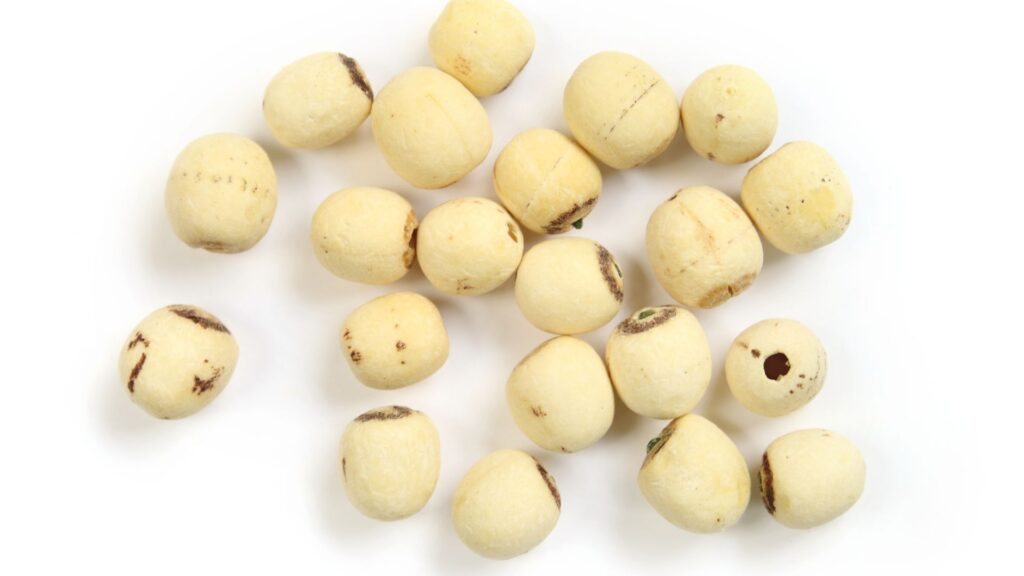 What lotus seeds do
What this vegetable does
Held to support how the Spleen and Kidney work and, by replenishing blood, to settle the mind.
How to eat it
Added to a soup, a stir-fry or porridge, it makes a nourishing dish.
A yakuzen note
Lotus seed is held to nourish and strengthen and to steady the mind, which suits autumn in particular.
Lotus seed is held to replenish the Spleen and Kidney and settle the mind. It suits times when the digestive system is weak, or when you feel emotionally unsteady, in particular. Added to a soup, a stir-fry or porridge, it makes a nourishing dish that settles body and mind.
TOC
When lotus seed is harvested, the kinds, and how to choose
If you want to bring in what lotus seed does, deliciously, knowing when it is harvested, what it is, the kinds and how to choose makes it easier to use. With a floury texture much like chestnut or lily bulb, it sits well in everything from cooking to desserts. Lotus seed comes broadly in these kinds.
| kinds | What stands out | Main uses |
|---|---|---|
| Fresh lotus seed | Juicy freshly picked (mostly traded in the growing areas) | As it is, or in dressed dishes |
| Dried lotus seed | Available all year, rehydrated for use | Porridge, soups, desserts |
| Renshishin (the central germ) | Green, and strongly bitter | Removed, or used for tea to make the most of the bitterness |
It ripens from summer into autumn, after the lotus flowers
Lotus seed is the seed that forms in the honeycomb-like receptacle after the summer lotus flower drops. It is harvested roughly August to September, and most of what is sold has had the seeds taken out, the outer coat removed and been dried. Chinese and Vietnamese lotus seed dominates the food trade, and dried seed is available in Japan all year. The underground stem of the same lotus plant is the well-known lotus root. The lotus is a plant where both seed and root can be eaten, and each part is processed for use, as with lotus root powder, made by grinding lotus root finely.
The central germ, renshishin, is bitter
At the centre of a lotus seed sits a small green germ. This is called renshishin and is strongly bitter. Shop-bought dried lotus seed usually has it already removed, but where it remains, splitting the seed in half and taking it out keeps the dish from turning bitter. In sweet dishes such as confectionery and porridge, removing it makes the taste come together more easily. The green germ itself is sometimes used for renshin tea, making the most of the bitterness, so drying it rather than discarding it means nothing is wasted.
How to choose dried lotus seed and how to rehydrate it
When choosing dried lotus seed, ones even in size with little splitting or chipping cook evenly. Rehydrate it before cooking, as follows.
- Soak it in water for several hours to rehydrate slowly, right to the core
- In a hurry, boil it once and throw the water away before use
- If it stays hard, parboiling it with a little baking soda helps it soften
Rehydrated properly and then simmered, it becomes floury. If bitterness or harshness bothers you, discard the soaking water and simmer it in fresh water for a cleaner result.
How to eat lotus seed
Lotus seed is a generous ingredient that works in cooking and in desserts. Here are the standard ways of using its floury texture and gentle sweetness.
Floury, in porridge and soups
Rehydrated lotus seed in a Chinese porridge or a soup gives a floury texture much like chestnut or lily bulb. It is sometimes added to samgyetang, the Korean dish simmered slowly with chicken. Cooked with rice or other grains it makes a gently sweet porridge, and cooked soft it suits a morning dish. In Chinese cooking it often goes into a soup with chicken, mushrooms and jujube, making a bowl full of ingredients. It softens the longer it cooks, so in soups and simmered dishes, cooking it slowly with the other ingredients lets the flavour in. Split in half it cooks faster, which suits a shorter cooking time.
In mooncakes, oshiruko and other desserts
Lotus seed is loved as an ingredient in sweet confectionery too. Lotus seed paste, worked smooth with sugar and oil, is known as the standard filling of a fine mooncake. At home, rehydrated lotus seed simmered with sugar can go into oshiruko or zenzai, or be simmered sweet in syrup as a dessert, much as you would use chestnut. Simmering it sweet with jujube and lily bulb is a combination often seen in yakuzen desserts. Its sweetness is gentle, so you can cook it to whatever softness you like.
How to keep dried lotus seed
The basic rule with dried lotus seed is to keep it away from damp. Once the bag is open, put it in an airtight container or a zip bag and keep it somewhere cool and dark, away from damp and insects. Damp causes mould and spoiling, so a sachet of desiccant with it is a safeguard. To keep it a long time, the fridge holds the flavour better. Anything rehydrated but not used can be boiled and frozen in portions, ready to use a little at a time in soups and porridge.
Alongside this, what is often used with it in yakuzen desserts and stews, The benefits of jujube or The benefits of lily bulb as a guide when planning a menu.
Lotus seed, which ripens from summer into autumn, is an ingredient that works in cooking and in desserts alike, in porridge, soups, mooncakes and oshiruko. Rehydrate the dried seed and simmer it floury and you get a gentle sweetness much like chestnut. Watch only for the bitterness of the central germ, and bring it to your everyday table.