The benefits of mulberry leaf
Links on this page include advertising.
 What mulberry leaf does
What this vegetable does
It clears the bad influences at the surface of the body and eases trouble in the eyes and throat.
How to eat it
Good as tea, in a smoothie, or as a topping on a dish.
A yakuzen note
Mulberry leaf nourishes the Liver, eases tired and red eyes, and works well on a summer cold.
Mulberry leaf is bitter and sweet and cold in nature, and is a yakuzen tea ingredient held to settle excess heat trapped in the body and clear the eyes and head. Its appeal is a gentle flavour with nothing to object to, and it suits daily care when you want a moment's rest, or when you feel you have used your eyes too much. As well as drying it for tea, you can stir the powder into a drink or cook with the young leaves: an ingredient that is easy to bring in.
TOC
When mulberry leaf is in season, the kinds, and how to choose
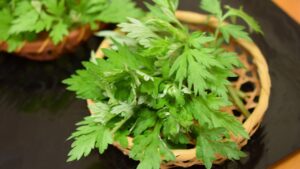
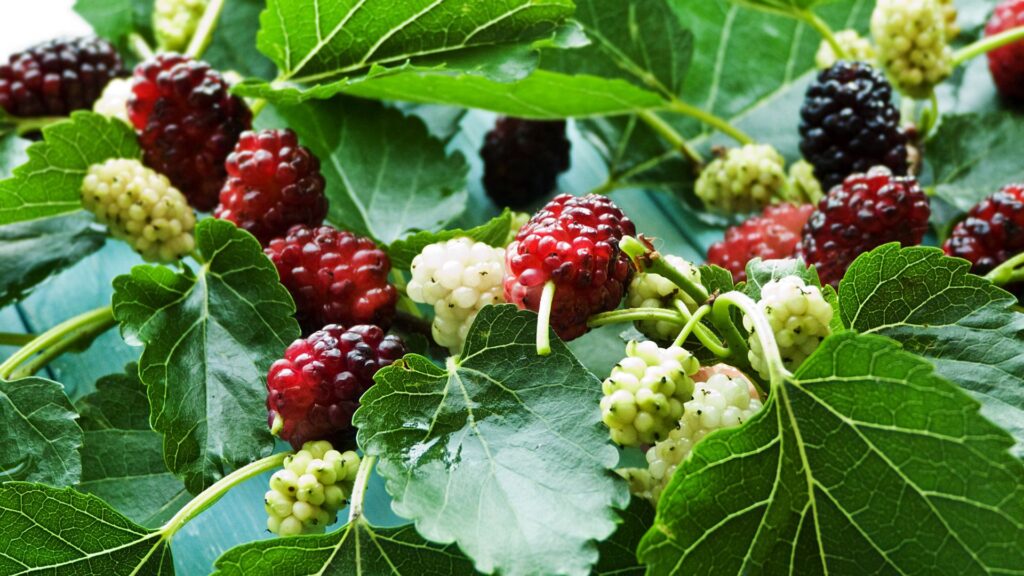
If you want to bring in what mulberry leaf does, deliciously, knowing the forms it comes in, the kinds and how to choose makes it easier to use. It is the leaf of the mulberry tree, known also as food for silkworms, and it has long been used in yakuzen teas.
Young leaves are in season in early summer; dried is available all year
Mulberry leaf is the leaf of the mulberry, a deciduous tree of the mulberry family. Fresh young leaves are in season from spring into early summer, roughly May to June, and the tender new shoots can be enjoyed as tempura or ohitashi. Few fresh young leaves reach the shops, though, and what is used all year is the dried leaf for tea, or the powder. In China it has long been loved as a yakuzen tea for easing heat trapped in the body. It contains no caffeine, which makes it easy to drink at any hour.
Mulberry leaf tea, powder and fresh young leaves
Mulberry leaf can be chosen by the form you use.
| kinds | What stands out |
|---|---|
| Mulberry leaf tea | Dried leaves. The most common. Just pour hot water |
| Mulberry leaf powder | Finely ground. Stirred into drinks and baking |
| Fresh young leaves | New shoots, only in early summer. Enjoyed as tempura or ohitashi |
To enjoy it easily as tea, dried mulberry leaf tea is handy. When you want to stir it into a drink or baking, powder suits. Fresh young leaves give a taste that belongs to early summer alone and can be cooked. Tea leaves or powder to bring it into daily life, fresh young leaves for the taste of the season: choosing by use makes it easier.
How to choose it and how to brew it
When picking out good mulberry leaf, these are the things to look for.
- Tea leaves: a bright green, well dried and not damp
- Powder: an even colour, with no lumps
- Fresh young leaves: soft, juicy new growth
Mulberry leaf tea and powder lose their scent once opened, so use them up before too long. The powder has little in the way of a strong taste and blends easily with other ingredients, so add it to drinks and baking a little at a time until it suits you. With fresh young leaves, check that no insects have got to them and give them a quick rinse before use. How to brew and use it comes next.
How to use mulberry leaf
Mulberry leaf has a gentle flavour and nothing to object to, which lets it go into teas, drinks and cooking alike. Here are the usual ways.
As hot tea and cold-brew tea
Mulberry leaf is at its best as tea. Pour boiling water over the dried leaves and you get a tea with a gentle scent and a faint sweetness. It has no caffeine, so you can drink it with a meal or before bed without watching the clock. In summer, put the leaves in cold water and leave them in the fridge overnight for a cold brew that drinks clean. Simmered together with jujube, goji berries and chrysanthemum flowers it makes a colourful yakuzen tea, good for the days when you want to be kind to yourself.
As a powdered drink, and young leaves in tempura
Ground to a powder, mulberry leaf goes further still. Stir it into water, hot water, milk or soy milk and drink it like a green juice, or mix it into a smoothie or yoghurt for an easy way to take it. Its vivid green also works mixed into cookies, pound cake or agar jellies. If you can get fresh young leaves in early summer, tempura brings out a light bitterness and a fresh scent. Blanched quickly and dressed, they make a dish of the season.
How to keep mulberry leaf
Mulberry leaf tea and powder keep well, but damp costs them their flavour, so store them in an airtight container or a sealed bag with a desiccant, somewhere cool, dark and dry. Powder takes up moisture especially easily once opened, so close it firmly and use it up before long. If you keep it in the fridge, watch for condensation each time you take it out. Fresh young leaves spoil quickly: wrap them in damp kitchen paper, put them in a plastic bag in the fridge, and use them the same day or the next.
Alongside this, one likewise held to refresh the eyes, The benefits of goji berry likewise held to be kind to the eyes, and one likewise used in yakuzen teas and held to settle heat, The benefits of chrysanthemum flower as a guide when making yakuzen teas.
Available dried all year round, mulberry leaf is a yakuzen tea ingredient with a gentle flavour, from hot tea and cold brew to powdered drinks and tempura of the young leaves. Choose by form, whether easy tea leaves, powder to mix in, or fresh young leaves only in early summer, and it shows its best. When you want to sit down for a moment, or when your eyes feel overworked, bring mulberry leaf into the day.