The benefits of broad bean
Links on this page include advertising.
 What broad beans do
What this vegetable does
Held to replenish the Spleen and Stomach and clear excess damp, which helps with swelling and poor digestion.
How to eat it
Boiled in salted water or stir-fried, its taste comes forward and its nourishment is kept.
A yakuzen note
Broad bean is held to replenish the Spleen and Stomach and clear damp, which suits swelling and tiredness in particular.
Broad bean is a sweet bean of gentle nature, held to replenish how the gut works and clear excess damp from the body. It suits daily care when swelling or heaviness is on your mind, and it comes into season from spring into early summer. As well as eating it boiled in salted water as it is, it is easy to bring into stir-fries and soups: an ingredient that gives you the season.
TOC
When broad beans are in season, the kinds, and how to choose
If you want to bring in what broad beans do, deliciously, knowing the season, the kinds and how to choose makes them easier to use. Their appeal is plump beans and a faint sweetness and bitterness, and they announce spring and early summer.
In season from spring into early summer, and good only briefly
The Japanese name for the broad bean is said to come from the pods growing up towards the sky. It is in season from spring into early summer, roughly April to June, appearing from the Kanto region southwards and moving north. Sweetness and flavour fall away sharply with time after harvest, to the point that people say they are good for only three days, so freshness matters. The main producing areas are Kagoshima Prefecture, which grows more than anywhere in the country, along with Chiba and Ibaraki. Choose them in the pod and shell them just before eating to bring out what they have.
Issun broad bean and otafuku bean
Broad beans come in several kinds, differing in size and use.
| kinds | What stands out |
|---|---|
| Issun broad bean | The standard variety, large in the bean. For boiling in salted water and grilling |
| Otafuku bean | A large dried bean. Used for sweet simmered beans |
| Young-picked pods | Harvested while young and tender. Easy to eat, inner skin and all |
Large-grained issun broad beans for boiling and grilling, dried otafuku beans for sweet simmered beans: choose by use. Dried beans keep and are used in Japanese cooking, in osechi and sweet simmered dishes. Fresh broad beans taste of their season alone, so they are a bean to enjoy in the short time they are in the shops.
How to choose it and how to prepare it
When choosing good broad beans, these points make it easier to tell.
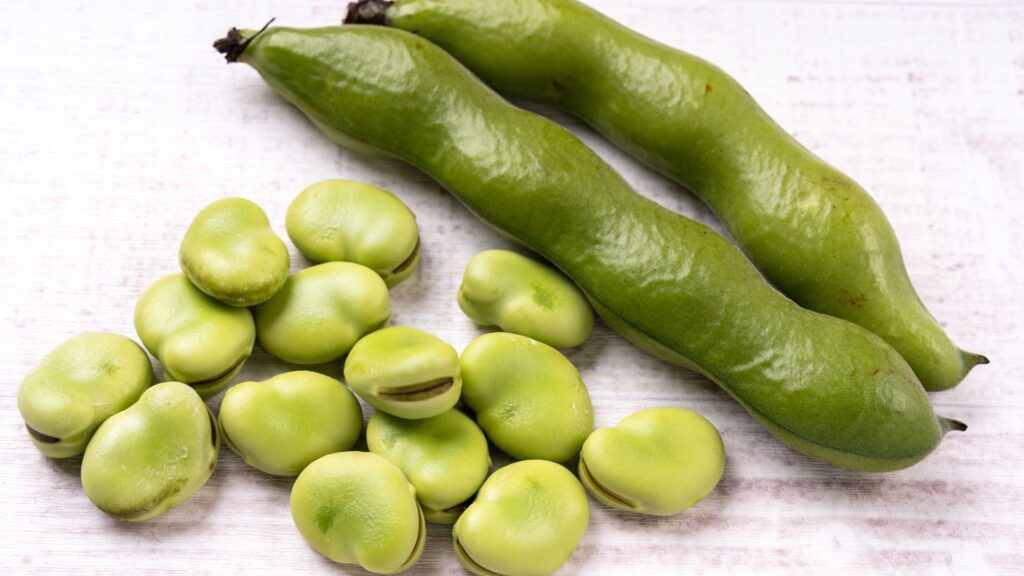
- Pods deep green and glossy, plump and taut
- A faint down still on the outside of the pod
- The dark seam on the bean still pale green (the sign of freshness)
Broad beans dry out once out of the pod, so shell them just before cooking. A shallow cut on the side opposite the dark seam helps them cook through and makes the inner skin easier to remove. Boil for two or three minutes in salted water, drain and cool, and they come out a good colour. You can peel the inner skin or, when tender, eat it as it is, as you prefer.
How to eat broad beans
Broad beans can be enjoyed boiled and grilled, and in stir-fries and soups, drawing on their floury texture and faint sweetness. Here are the standard ways.
Boiled in salted water, or grilled
What brings out the most in broad beans is boiling them in salted water, or grilling them. Boil them briefly in salted water, peel the inner skin while hot and eat, and you get the floury texture and the sweetness. Grilled in the pod on a grill or in a frying pan, they steam inside, the sweetness concentrates and a roasted note comes with it, which suits a drink. Boiled broad beans with nothing but a little salt let you taste the ingredient itself. Cooked straight after picking, they are sweeter still.
In stir-fries, soups and broad bean rice
Broad beans also play their part as colour and as the lead in a dish. Fried in olive oil or butter they gain depth and go well stir-fried with meat or prawns. Crushed into a potage they make a smooth, round soup. Cooked with rice as broad bean rice, their aroma and colour make a dish that tastes of spring. In a kakiage they give a floury texture to enjoy. Blanched briefly and added to a salad or a dressed dish, their green shows and the table comes to life.
How to keep broad beans
Broad beans lose freshness quickly, and out of the pod the flavour goes faster still. Cooking them as soon as you get home is best, but if you cannot, keep them in the pod in a plastic bag in the vegetable drawer of the fridge for two or three days as a guide. If you cannot eat them soon, boil them on the firm side in salted water, peel the inner skin and freeze them in a bag, ready for stir-fries, soups and rice. Blanching briefly before freezing holds the colour and flavour better than freezing them raw and shelled.
Alongside this, a bean likewise held to replenish the gut, The benefits of haricot bean and one likewise held to be kind to the Spleen and Stomach, The benefits of soybeans as a guide when building a seasonal table.
Broad bean, in season from spring into early summer, is a bean whose floury texture and faint sweetness you can enjoy boiled in salted water, grilled, in stir-fries, soups and broad bean rice. Large-grained issun broad beans and otafuku beans for simmering: using each kind for what it does best brings out what it has. For daily care in the season when swelling and heaviness are on your mind, bring broad beans in while they are in season.