The benefits of bitter melon
Links on this page include advertising.
 What bitter melon does
What this vegetable does
Said to cool heat in the body and help settle excess heat, which suits the hot season.
How to eat it
Enjoy its bitterness and flavour in champuru, in tempura, or dressed with vinegar.
A yakuzen note
Bitter melon is said to cool excess heat in the body and settle how you feel. A summer vegetable known for its bitterness.
Bitter melon is a bitter summer vegetable, cold in nature, held to settle the heat the summer puts in the body and help the stomach work. Its appeal is a distinctive faint bitterness and a crisp texture, and it suits daily care when the heat leaves you with heat trapped inside, or when you want something for summer. From champuru and stir-fries to vinegared dishes and tsukudani, it is the gourd-family vegetable familiar in Okinawa that works widely.
TOC
When bitter melon is in season, the kinds, and how to choose
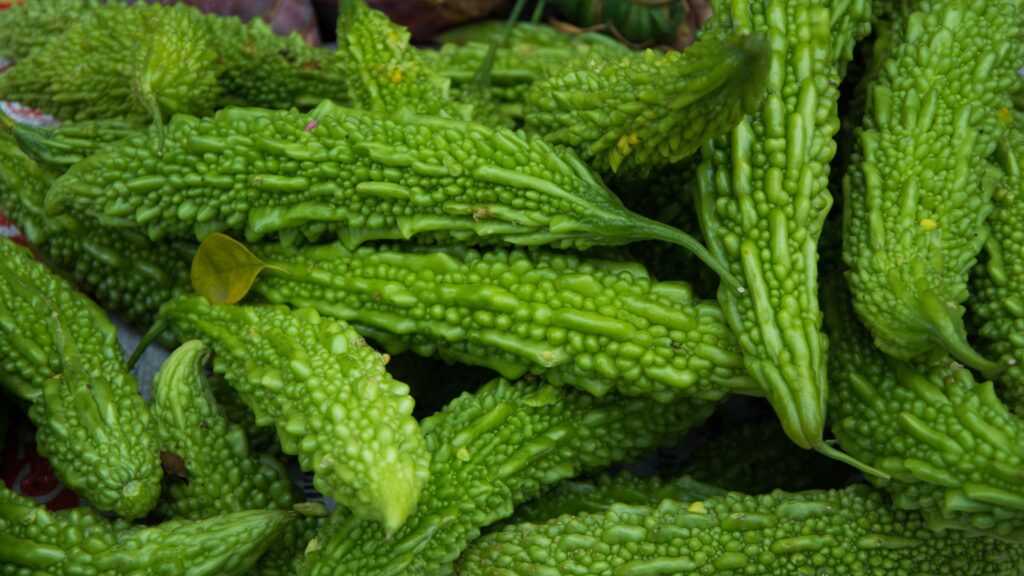
If you want to bring in what bitter melon does, deliciously, knowing the season, the kinds and how to choose makes it easier to use. Its appeal is a vivid green and the rough bumps on its surface, and it is a gourd-family vegetable in season in summer.
In season in summer, the summer vegetable also called nigauri
Bitter melon, also called nigauri or tsurureishi, is a climbing gourd-family vegetable. It is in season in summer, roughly June to August, with Okinawa and Kyushu known as the main producing areas. It grows fast in strong sunlight and reaches the shops in the hot season. The tighter the bumps on the surface and the deeper the green, the firmer the bitterness. It is also loved as a green curtain for shade in summer and is widely grown in home gardens, a vegetable that stands for the season.
Chunaga, abashi and white bitter melon
Bitter melon varies in bitterness by shape and colour.
| kinds | What stands out |
|---|---|
| Chunaga | The most common. Long, slim and deep green, with a firm bitterness |
| Abashi | A thicker variety common in Okinawa. Squat, with a gentler bitterness |
| White bitter melon | A white-skinned variety. Gently bitter, and good raw in a salad |
To enjoy a firm bitterness, deep green chunaga is the one. To keep the bitterness down, the thicker abashi and the white-skinned white bitter melon are easier to eat and work raw in a salad. Choosing by how bitter you like it and by the dish brings out what bitter melon has. Deeper green tends to mean stronger bitterness, so colour is a useful guide.
How to choose it and how to take the bitterness down
When choosing good bitter melon, these points make it easier to tell.
- Tight bumps, taut and glossy
- Heavy in the hand, firm and dense
- Not turning yellow, with a lively green
Cut bitter melon in half lengthways and scoop out the seeds and pith thoroughly with a spoon before use. Most of the bitterness sits near the pith, so removing it carefully softens it. Sliced thin, rubbed with salt, left a while and squeezed, it loses a good deal of the bitterness. A quick blanch works too. When you want the bitterness, use it as it is without salting. Paired with tofu, egg or meat, the bitterness softens and it becomes easier to eat.
How to eat bitter melon
Bitter melon works widely, from stir-fries to vinegared dishes to deep-frying, drawing on its faint bitterness and crisp texture. Here are the standard ways.
Goya champuru and stir-fries
What brings out the most in bitter melon is goya champuru, the Okinawan dish. Sliced thin and stir-fried with tofu, egg and pork, the bitterness and the savour of the other ingredients come together into a dish that goes beautifully with rice. With egg or atsuage the bitterness softens and it is easier to eat. Stir-fried with chirimenjako or katsuobushi, it finishes with a roasted aroma. The trick is a quick stir-fry over high heat, keeping the crisp texture. If the bitterness bothers you, salt it first.
Vinegared, as tempura, or as tsukudani
Bitter melon works well beyond stir-fries. Sliced thin, salted and dressed in sweet vinegar, it makes a clean-tasting side for a hot day. In a thin batter as tempura, the batter softens the bitterness and gives a pleasant floury texture. Simmered slowly in soy sauce and mirin as tsukudani, it suits a rice accompaniment or a dish made ahead, and is handy for using up a glut. White bitter melon, and thinly sliced pieces, keep a crisp texture raw in a salad too.
How to keep bitter melon
Bitter melon spoils from the seeds and pith, so even when keeping it whole, halve it, remove the seeds and pith, wrap it in cling film and put it in the vegetable drawer of the fridge, and it lasts longer. Use it within three or four days. When you have a lot, slice it thin and freeze it in portions, either raw or salted, ready for stir-fries and soups. As tsukudani it keeps and makes a standing side dish. Freezing takes a little of the bitterness out, so it also suits anyone wanting it gentler.
Alongside this, it is worth knowing about The benefits of cucumber a gourd-family vegetable likewise held to settle summer heat, and a summer vegetable likewise held to cool excess heat in the body, The benefits of eggplant as a guide when building a summer table.
Bitter melon, in season in summer, is a summer vegetable whose faint bitterness and crisp texture you can enjoy in champuru, stir-fries, vinegared dishes, tempura and tsukudani. Firmly bitter chunaga, gentler abashi and white bitter melon: choosing by taste brings out what each has. For daily care in the season when heat builds up inside, bring bitter melon to your table.