The benefits of cabbage
Links on this page include advertising.
 What cabbage does
What this vegetable does
When your stomach feels heavy or tiredness will not lift, try it raw in a salad, or simmered to draw out its sweetness.
How to eat it
Cut into fine strips with a little salt and sesame oil, it makes an easy salad.
A yakuzen note
Cabbage is said to care for the gut and help digestion.
This vegetable, driedDried cabbage →
Cabbage is a sweet vegetable, neutral in nature, held to be kind to how the gut works and to replenish your energy. Its appeal is tender leaves and a faint sweetness, and it suits daily care when you want to go easy on your stomach, or simply to bring it to the table every day. From raw shreds and salads to stir-fries, stews and pickles, it is the table staple that works all year.
TOC
When cabbage is in season, the kinds, and how to choose
If you want to bring in what cabbage does, deliciously, knowing the season, the kinds and how to choose makes it easier to use. Its appeal is tender leaves and a faint sweetness, and it is a brassica leaf vegetable available all year.
A year-round vegetable whose taste changes with the season
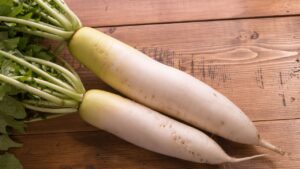
Cabbage is a brassica leaf vegetable like Chinese cabbage and daikon, and a relay of varieties and growing areas keeps it in the shops all year. Spring cabbage, in the shops in spring, has tender leaves, a loose head and a juicy sweetness. Winter cabbage, or kandama, from autumn into winter, has a firm head and grows sweeter when cooked. From summer into autumn, much of it is grown in cool highlands. Spring cabbage when you want juiciness raw, winter cabbage when you want to simmer or fry it slowly: that the taste changes with the season is part of its appeal.
Spring cabbage, winter cabbage and red cabbage
Cabbage can be chosen by time of year and by variety.
| kinds | What stands out |
|---|---|
| Spring cabbage | In season in spring. A loose head and tender leaves. For eating raw and in salads |
| Winter cabbage (kandama) | In season in autumn and winter. Firm, tightly packed leaves. Sweeter for cooking |
| Red cabbage | Red-purple leaves. Good for colour, in salads, marinades and pickles |
For a juicy texture, loose-headed spring cabbage; to draw out sweetness slowly in cooking, firmly packed winter cabbage. For colour, salads and marinades, red-purple cabbage shows well. Round, tender green ball cabbage and small Brussels sprouts work too, according to the dish. Choosing by season and by dish is what brings out what cabbage has.
How to choose it and how to cut it
When choosing good cabbage, these points make it easier to tell.
- Spring cabbage: a loose head and lively-looking leaves
- Winter cabbage: heavy in the hand, with firmly packed leaves
- A fresh-looking cut at the core, neither too large nor discoloured
The outer leaves are deep green and suit stir-fries and stews, while the tender inner leaves suit a raw salad. To shred it, stack the leaves, roll them up and cut finely across the fibres for a tender feel in the mouth. To keep a crisp texture, cut along the fibres. The core is hard, so slice it thin or cut it on the slant to make it easy to eat. The part around the core is sweet, so using it rather than discarding it means nothing is wasted. When cooking, a quick fry over high heat keeps the texture and the colour.
How to eat cabbage
Cabbage works widely, from raw salads to stir-fries to stews, drawing on its tender leaves and faint sweetness. Here are the standard ways.
In salads, coleslaw and stir-fries
What brings out the most in cabbage is its crisp texture raw. Shredded alongside tonkatsu or other fried food, or dressed for a salad, its juiciness is a pleasure. Coleslaw, with carrot and sweetcorn in mayonnaise, is exactly right as a palate-cleanser. A vegetable stir-fry with pork or chirimenjako, or sweet-and-salty twice-cooked pork, makes a standard dish that has you reaching for rice. Plenty of it in okonomiyaki gives a light finish. The trick is a quick fry over high heat, keeping the texture.
Stewed, steamed and pickled
Heated, cabbage grows sweeter and shrinks so you can eat plenty. Stuffed cabbage rolls simmered with minced meat, pot-au-feu with bacon, and soups all take on the sweetness of the cabbage cooked out into them, for a gentle taste. Cut roughly and steamed, as steamed vegetables or in a bamboo steamer, its sweetness comes forward. Rubbed with salt as a light pickle, or shredded and fermented as sauerkraut, it makes a clean-tasting palate-cleanser. The core and the outer leaves work in soups and stir-fries, so nothing need be wasted. The longer you simmer winter cabbage, the more its sweetness comes through.
How to keep cabbage
A whole cabbage keeps longer if you cut out the core, pack the hollow with damp kitchen paper, put it in a plastic bag and keep it in the vegetable drawer of the fridge. It spoils from the core, so removing it makes it last. Peel the leaves off one at a time from the outside and it stays juicy to the last. A cut piece should have the cut surface wrapped in cling film and be used soon. When you have a lot, cut it roughly and freeze it in portions, raw or blanched briefly, ready for stir-fries and soups.
Alongside this, it is worth knowing about The benefits of daikon radish likewise held to be kind to the gut, and a fellow brassica likewise held to settle it, The benefits of Chinese cabbage as a guide when building a seasonal table.
Cabbage, enjoyable all year, is a vegetable whose tender leaves and faint sweetness you can enjoy in salads, coleslaw, stir-fries, stews and pickles. Juicy spring cabbage, winter cabbage that sweetens when cooked, red cabbage for colour: choosing by season and by dish brings out what each has. When you want to go easy on your stomach, or simply for everyday care, bring cabbage to your table.