The benefits of Chinese cabbage
Links on this page include advertising.
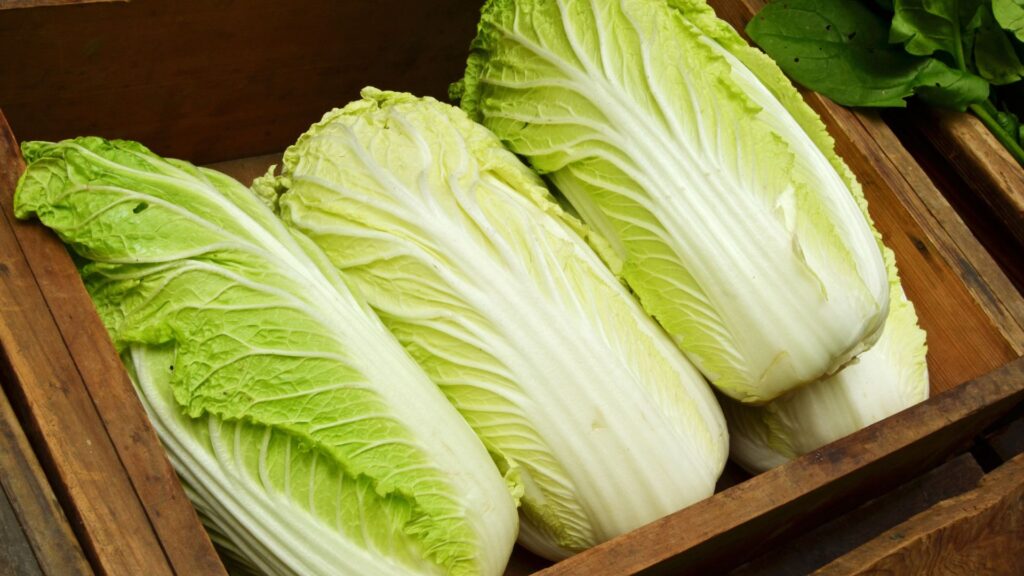 What Chinese cabbage does
What this vegetable does
Held to clear excess heat and help digestion, and brought in for constipation and for the effects of eating too much.
How to eat it
Enjoy it in a hotpot, a soup or pickled, and you get the most of its sweetness and texture.
A yakuzen note
Chinese cabbage is said to clear excess heat from the body and help digestion. High in water, it is ideal for settling how you feel.
Chinese cabbage is a sweet winter vegetable, neutral in nature, held to settle excess heat trapped in the body and settle how the gut works, gently. Its appeal is a juicy sweetness and a tender texture, and it suits daily care when you want to go easy on your stomach, or through the cold season. From hotpots and soups to pickles and stir-fries, it is the leaf vegetable the winter table cannot do without.
TOC
When Chinese cabbage is in season, the kinds, and how to choose
If you want to bring in what Chinese cabbage does, deliciously, knowing the season, the kinds and how to choose makes it easier to use. Its appeal is a juicy sweetness and tender leaves, and it is a brassica leaf vegetable in season in winter.
In season in winter, sweeter for the frost
Chinese cabbage is a brassica leaf vegetable like cabbage and daikon, its leaves layering into a head. It is in season in winter, roughly November to February, and the cold makes it sweeter and the leaves tenderer. Heads picked around the time of the frosts are held to be particularly sweet. Ibaraki and Nagano are the main producing areas, and it is the vegetable that winter hotpots and pickles cannot do without. The outer leaves are green, the middle and the core white; the leaf tips are tender and the part near the core the sweetest, so using each part for what it does best brings out what it has.
Heading, mini and yellow-cored Chinese cabbage
Chinese cabbage can be chosen by size and by the colour inside.
| kinds | What stands out |
|---|---|
| Heading Chinese cabbage | The most common. Large, and easy to use in hotpots and pickles |
| Mini Chinese cabbage | Small and easy to use up. Suits smaller households |
| Yellow-cored Chinese cabbage | A variety with a yellow centre. Strongly sweet, and good raw in a salad |
To use plenty in a hotpot or in pickles, the large heading kind is handy. When you want to use it up in a small household, mini Chinese cabbage suits. Yellow-cored Chinese cabbage is strongly sweet and easy to use raw in a salad or as a light pickle. Halves and quarters are widely sold too, so choosing by how much you need means nothing is wasted.
How to choose it and how to use each part
When choosing good Chinese cabbage, these points make it easier to tell.
- Whole: heavy in the hand, with firmly wrapped leaves
- Lively outer leaves, with a white, juicy cut at the core
- Cut pieces: a cut surface that has not domed upwards, still packed tight
The texture varies by part, so using each for what it does best brings out what it has. The tender leaf tips suit quick cooking, raw salads and light pickles. The thick core sweetens when cooked, so in a hotpot, a stew or a stir-fry it gives a soft feel in the mouth. Cutting the core on the slant, across the fibres, helps it cook. Water runs from a cut surface, so use it soon after cutting.
How to eat Chinese cabbage
Chinese cabbage works widely, from hotpots and soups to pickles and stir-fries, drawing on its juicy sweetness and tender texture. Here are the standard ways.
In hotpots, soups and stews
What brings out the most in Chinese cabbage is a winter hotpot. Cooked, it shrinks so you can eat plenty, and the longer it simmers the sweeter and more unctuous it becomes. Mille-feuille nabe, layered alternately with pork and simmered, is the standard that brings its sweetness forward. In a soup with chicken and mushrooms, a Chinese-style braise or a cream dish, its tender texture is a pleasure. Adding the core first and the leaf tips later lets each part show. The broth takes on its savour, so it suits dishes you eat with the liquid.
Pickled, stir-fried and in salads
Chinese cabbage works raw and lightly cooked too. A light pickle made by rubbing it with salt, or a quick pickle with yuzu and kombu, is clean-tasting and exactly right as a palate-cleanser. Pickled properly it becomes hakusai-zuke or kimchi. Fried quickly in sesame oil and seasoned with salt or oyster sauce, it makes a stir-fry that goes beautifully with rice. The tender leaf tips and yellow-cored cabbage, shredded and dressed with shio-kombu or a dressing, make a crisp salad. It is a vegetable with a wide range, from raw to long-simmered.
How to keep Chinese cabbage
A whole Chinese cabbage keeps if you wrap it in newspaper and stand it somewhere cool and dark. In cold weather, a cool spot such as a balcony works. Cut pieces should be wrapped tightly in cling film so the cut surface does not dry, stood upright in the vegetable drawer of the fridge and used soon. When you have a lot, cut it roughly and freeze it in portions, raw or blanched briefly, ready for hotpots, soups and stir-fries. Salted down, it keeps as a pickle and works in cooking too.
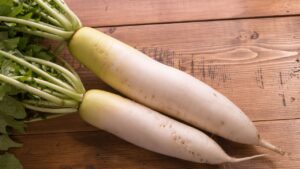
Alongside this, it is worth knowing about The benefits of daikon radish likewise in season in winter and held to be kind to the gut, and a fellow brassica likewise held to help the stomach work, The benefits of turnip as a guide when building a winter table.
Chinese cabbage, in season in winter, is a leaf vegetable whose juicy sweetness and tender texture you can enjoy in hotpots, soups, stews, pickles, stir-fries and salads. Large heading cabbage, easy-to-finish mini cabbage, sweet yellow-cored cabbage: choosing by use brings out what each has. When you want to go easy on your stomach, or for daily care through the cold season, bring Chinese cabbage to your table.