The benefits of sanchu lettuce
Links on this page include advertising.
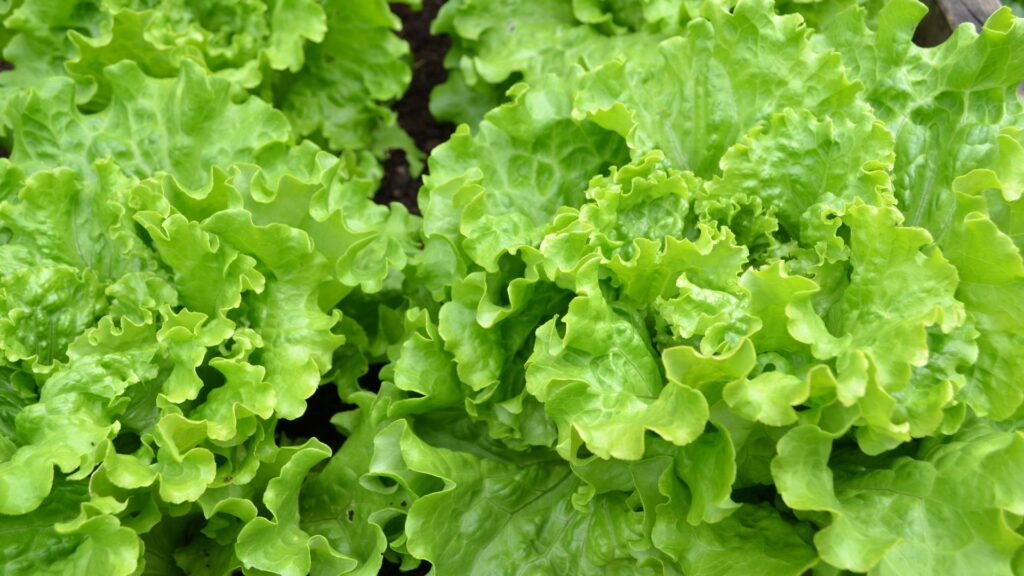 What sanchu does
What this vegetable does
It is looked to for clearing excess heat and, by encouraging the flow of water, for settling the balance of fluid in the body.
How to eat it
Good in salads and stir-fries. The bitterness works as a note of its own and wakes the appetite.
A yakuzen note
Chisha is a vegetable said to clear heat from the body and encourage the flow of water. It suits summer.
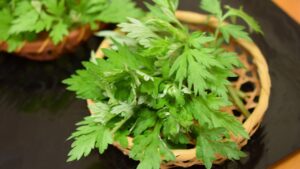
Sanchu, or chisha, is bitter and cool, a leaf vegetable held to settle excess heat in the body and to settle the circulation of water. It suits daily care when heat builds up in the body, or when you want something of the summer, and its crisp bite and faint bitterness are what it is loved for. As well as wrapping grilled meat, it is easy to use in salads, stir-fries and soups.
TOC
When sanchu is in season, its types, and how to choose it
If you want to enjoy what sanchu does, it helps to know its season, its types and how to choose it. Harvested leaf by leaf, soft and easy to wrap with, it is the leaf vegetable familiar from grilled meat.
In season in spring and autumn, a leaf vegetable picked leaf by leaf
Sanchu is a relative of lettuce, one of the leaf vegetables called kaki chisha, which do not form a head. It can be harvested leaf by leaf from the outside, and new leaves keep coming. Grown under glass it is available all year, but the season for the field-grown crop is spring, around March to May, and autumn, around September to November, when the leaves are soft and carry more sweetness. In Japan it is familiar as the leaf you wrap grilled meat in, and it is indispensable in Korean cooking. The leaves cook quickly and work raw or cooked, which makes it an easy leaf vegetable to handle.
Sanchu, sunny lettuce and butterhead lettuce
Several leaf vegetables among sanchu's lettuce relatives do not form a head.
| kinds | What stands out |
|---|---|
| Sanchu (kaki chisha) | Picked leaf by leaf. Soft, and suited to wrapping grilled meat |
| Sunny lettuce | A leaf lettuce with red-purple tips. Good colour, for salads |
| Butterhead lettuce | Soft leaves forming a loose head. For salads and as a garnish |
Soft sanchu for grilled meat and for wrapping, sunny lettuce for a colourful salad, butterhead lettuce for a gentle texture: you can choose by use. None of them is harsh, and all can be used quickly, raw or cooked. Choosing to play to each one widens what you can cook.
How to choose and handle them
When picking out good sanchu, these are the things to look for.
- Leaves standing firm, deeply green and juicy
- Firm right to the leaf tips, with no wilting or yellowing
- No discolouring at the base or the cut, and freshly picked
Sanchu has soft leaves that spoil easily, so wash it quickly just before use and drain it well. The cut edges discolour easily, so tear it by hand, or cut it just before eating. If the bitterness bothers you, a quick dip in cold water softens it and makes it easier to eat. When cooking, it goes through quickly, so a brief stir-fry that keeps the texture is the way to go.
How to eat sanchu
The crisp bite and faint bitterness of sanchu carry it from wrapped dishes to salads to stir-fries. Here are the usual ways.
With grilled meat, in salads and as namul
Sanchu is at its best wrapped around grilled meat. Wrap grilled meat, rice, gochujang and garlic in it and it takes the fat of the meat cleanly. Raw in a salad, you get the crisp bite and the faint bitterness. Dressed with sesame oil, salt and garlic as namul, it makes a dish that goes well with rice. Chopped into a sanchu kimchi, or geotjeori, it becomes a lightly pickled dish with a bite to it that keeps the chopsticks moving. Its clean feel in the mouth also works as a palate cleanser after a rich dish.
In stir-fries and soups
Sanchu is good cooked as well. Stir-fried Chinese-style with garlic and seasoned with oyster sauce or salt, it shrinks down so you can eat plenty of it. It goes through quickly, so a brief stir-fry over a high heat that keeps the crispness is the way to go. Added at the end to a Chinese soup or an egg soup, it brings colour and a gentle texture. Simmered too long the texture goes, so adding it briefly at the end is about right. It is also a handy way to use up sanchu left over from eating it raw.
How to keep sanchu
Sanchu does badly in dry air and spoils easily. Wrap it in damp kitchen paper, put it in a plastic bag and stand it upright in the vegetable drawer of the fridge and it holds its freshness. Use it up within two or three days. If the leaves start to dry, a quick dip in cold water brings the crispness back. If you have a lot, blanch it quickly, squeeze out the water and freeze it in small portions, ready for stir-fries and soups. Frozen raw the texture falls away, so freeze it on the understanding that it will be cooked.
Alongside this, a leaf vegetable likewise held to cool excess heat, The benefits of pak choi and another leafy one, The benefits of spinach as a guide when building a seasonal table.
In season in spring and autumn, sanchu is a leaf vegetable whose crisp bite and faint bitterness carry it through grilled meat, salads, namul, stir-fries and soups. Sanchu that is easy to wrap with, colourful sunny lettuce and soft butterhead lettuce: use each for the job and it shows its best. For daily care in the season when heat builds up, bring sanchu to the table.