The benefits of black soybean
Links on this page include advertising.
 What black soybeans do
What this vegetable does
Held to clear wind and to drain damp by encouraging the passing of water, which helps with swelling.
How to eat it
Eaten simmered or in a soup, it helps nourish and strengthen and eases swelling.
A yakuzen note
Black soybean is held to improve the flow of blood and clear damp from the body.
Black soybean is a sweet bean of gentle nature, held to nourish the strength of the Kidney, help the gut, clear excess fluid from the body and encourage the circulation of blood. It suits daily care when swelling, or cold and dryness, are on your mind, and it is an auspicious ingredient used in osechi. Deep in flavour, it can be brought in many forms: simmered, in soups and as tea.
TOC
When black soybeans are in season, the kinds, and how to choose
If you want to bring in what black soybeans do, deliciously, knowing the season, the kinds and how to choose makes them easier to use. Their appeal is glossy black skins and a deep sweetness, and they are the auspicious bean familiar from osechi.
Harvested in autumn, the auspicious black soybean
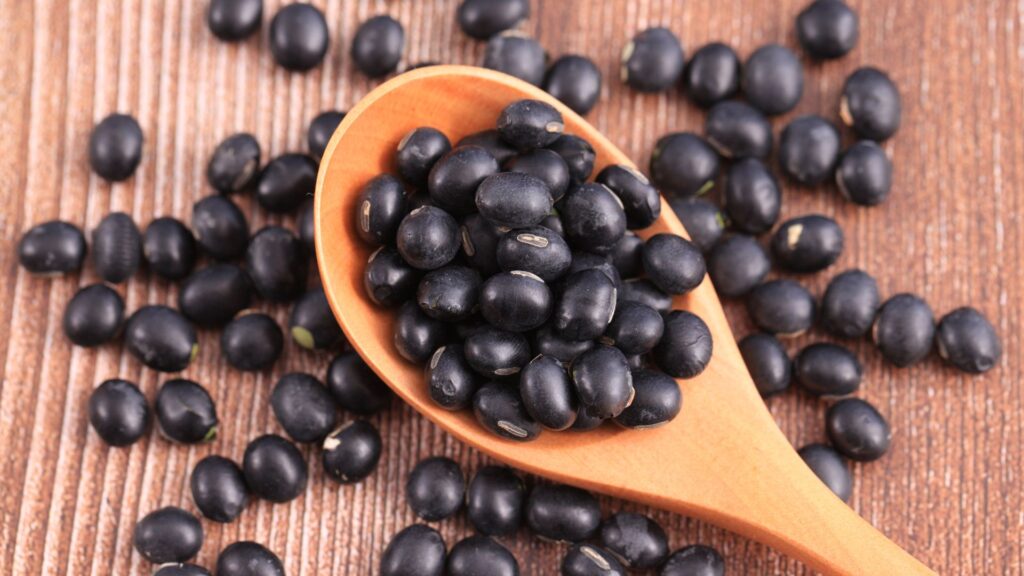
Black soybean is a soybean with a black seed coat. It is harvested in autumn, and dried beans keep and can be used all year. A play on words, wishing that you may work in good health and in earnest, has long made them an auspicious food that osechi cannot do without. The main producing areas are Hyogo Prefecture, around Tanba Sasayama, known for Tanba-guro, held to be the finest, along with Kyoto, Hokkaido and Okayama. New-crop beans in the shops in autumn are fragrant and cook up plump. They belong not only to New Year but to everyday cooking and tea.
Tanba-guro, kurosengoku and black soybean tea
Black soybeans come in several kinds, differing in size and in use.
| kinds | What stands out |
|---|---|
| Tanba-guro | A large-grained black soybean held to be the finest. For plump, sweet simmered beans |
| Kurosengoku | A small-grained black soybean. Mixed into rice, or made into tea |
| Black soybean tea | Roasted and brewed. Roasted in flavour, with little to object to |
Large-grained Tanba-guro for osechi and confectionery, small-grained kurosengoku for rice and tea: choose by use. As well as dried beans, you can buy them canned, steamed or as tea, ready to use, so you can choose to suit how much work you want to do. Using each for what its deep sweetness and roasted aroma do best brings out what it has.
How to choose and how to cook them
When choosing good black soybeans, these points make it easier to tell.
- Grains large and even, with glossy skins and few wrinkles
- For Tanba-guro and the like, fresh ones with a white bloom on the surface
- For ease, pre-cooked forms such as canned or steamed black soybeans
Soak black soybeans overnight in plenty of water, then simmer slowly over a low heat, and they come out plump and tender. Keeping the beans covered with liquid throughout, topping up as needed, is the trick that prevents wrinkles. Adding a rusty iron nail or an iron ball gives the skins a beautiful black. When sweetening, adding the sugar in several goes lets the flavour in. A pressure cooker gets them tender in a short time.
How to eat black soybeans
Black soybeans work widely, from simmered beans to rice to tea, drawing on their deep sweetness and roasted aroma. Here are the standard ways.
Simmered, and in black soybean rice
What brings out the most in black soybeans is simmering them plump and sweet. A staple of osechi, cooked to a good shine, they bring colour to a celebration. Simmered with less sugar they make an everyday side or a palate-cleanser. Black soybean rice, cooked with rice after toasting the beans, brings roasted aroma and colour to the table. Steamed or boiled black soybeans added to a salad or a soup give depth and something to chew on. Softly simmered, they are also good with yoghurt or ice cream.
As tea, toasted, and in confectionery
Black soybeans are also loved as tea and as a snack. Black soybean tea, brewed from roasted beans, is roasted in flavour with little to object to, and chilled it is refreshing in hot weather. Toasted in a frying pan, they make a snack or something alongside a drink as they are, and are good mixed into rice. They also work widely in confectionery: black soybean kinako, steamed buns, yokan. The cooking liquid carries depth and colour, so making it into a jelly or an agar dessert lets you enjoy their flavour with nothing wasted.
How to keep black soybeans
Dried black soybeans keep, but they lose flavour if they take up damp and can attract insects, so keep them in an airtight container somewhere cool and dark, away from damp. In summer, or when you will not use them for a while, sealing them and putting them in the fridge is safest. Simmered black soybeans should be kept in their liquid in a container in the fridge and eaten within a few days. If you cannot use them soon, freeze them in portions with their liquid, ready for snacks, confectionery and cooking. Black soybean tea keeps its roasted aroma if sealed and used soon after opening.
Alongside this, it is worth knowing about The benefits of soybeans of the same soybean family, and a bean likewise held to settle the circulation of water, The benefits of adzuki bean as a guide when building a seasonal table.
Black soybean, the auspicious bean used in osechi, is a bean whose deep sweetness and roasted aroma you can enjoy simmered, in rice, as tea, toasted and in confectionery. Large-grained Tanba-guro and small-grained kurosengoku: using each kind for what it does best brings out what it has. For daily care in the seasons when swelling, cold and dryness are on your mind, bring black soybeans to your table.