The benefits of mitsuba
Links on this page include advertising.
 What mitsuba does
What this vegetable does
Said to help ease coughs and cold brought on by wind-cold.
How to eat it
Ideal for colour and flavour in a hotpot. Its aroma and texture are a pleasure in clear soups and dressed dishes.
A yakuzen note
Mitsuba brought in when you feel the cold or when the circulation of qi has stalled helps settle the body gently.
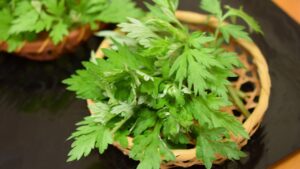
Mitsuba is a pungent, sweet aromatic vegetable, neutral in nature, held to settle the circulation of qi and settle the mind. Its appeal is a clean aroma and a crisp texture, and it suits daily care when you want to clear your head, or take a moment's rest. From clear soups, chawanmushi and dishes bound with egg to tempura, it is the umbellifer familiar from Japanese cooking that brings aroma and colour.
TOC
When mitsuba is in season, the kinds, and how to choose
If you want to bring in what mitsuba does, deliciously, knowing the season, the kinds and how to choose makes it easier to use. Its appeal is a clean aroma and the shape of its three leaves, and it is an umbellifer long loved in Japan.
Open-field mitsuba is in season in spring; hydroponic mitsuba all year
Mitsuba is an aromatic umbellifer like celery and coriander, and its Japanese name comes from the leaf dividing into three. Open-field mitsuba is in season in spring, roughly March to May, when the aroma is at its strongest. Hydroponic mitsuba is in the shops all year, so it is available in any season. It is one of the few vegetables native to Japan and has been used as an aromatic that Japanese cooking cannot do without. Its aroma is its point, so overcooking drives it off. Adding it at the end is the trick to using it well.
Ito, ne and kiri mitsuba
Mitsuba can be chosen by how it is grown and by form.
| kinds | What stands out |
|---|---|
| Ito mitsuba | Hydroponic, all year. Slim green stems. The most common and easiest to use |
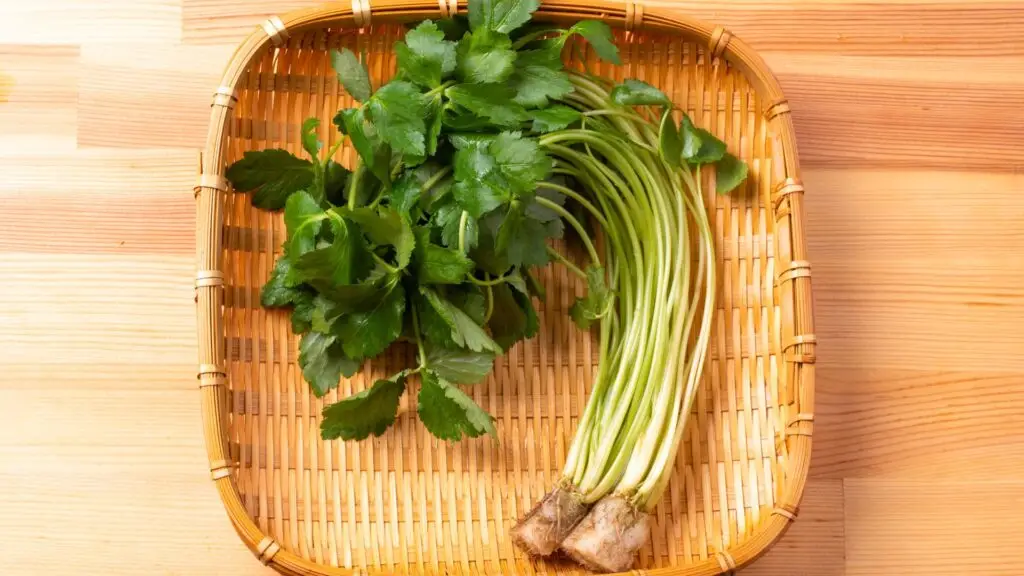
| Ne mitsuba | Sold with the root, in season in spring. Thick stems and the strongest aroma |
| Kiri mitsuba | White stems grown out of the light. A gentle aroma and tender |
For everyday use, year-round ito mitsuba is handy. When you want a firm aroma, ne mitsuba, in season in spring, suits. For a tender texture, white-stemmed kiri mitsuba is easy to use. Choosing by dish and by taste brings out what mitsuba has. The root of ne mitsuba, made into kinpira, is fragrant and good to eat, so nothing is wasted.
How to choose it and how to use it
When choosing good mitsuba, these points make it easier to tell.
- Lively green leaves, standing upright
- Crisp stems, not wilted
- A fine aroma, with leaf tips not yellowed
Mitsuba is valued for its aroma, so as a rule use it raw or add it briefly at the end. Even when blanching it, pass it through the water only briefly to keep the aroma and the texture. Cut to an easy length, or tied in a knot and floated in a clear soup, it looks refined too. Leaves and stems cook at different rates, so adding the stems first and the leaves later lets each show. Wash the soil off the base of ne mitsuba well before use.
How to eat mitsuba
Mitsuba works widely, from soups to egg dishes to dressed dishes, drawing on its clean aroma and crisp texture. Here are the standard ways.
In clear soups, chawanmushi and dishes bound with egg
What brings out the most in mitsuba is finishing a soup or an egg dish with it. Scattered over a clear soup, a miso soup or chawanmushi at the end, its clean aroma rises. Added to finish oyakodon, katsudon or a dish bound with egg, aroma and colour come sharply forward. Mitsuba simmered briefly in dashi and bound with egg is a refined dish in itself. Overcooking drives the aroma off, so the trick is to add it last and let the residual heat do the work. Tied in a knot and floated in a clear soup, it looks showy too.
As ohitashi, dressed, or in kakiage
Mitsuba is a pleasure as ohitashi and in dressed dishes too. Blanched briefly and dressed with dashi and soy sauce or with sesame, it makes a fragrant palate-cleanser. As ohitashi it finishes well in colour alongside other greens. Strongly aromatic ne mitsuba works in kakiage or tempura, where you get the roasted note along with it. Chopped as a garnish on cold tofu, soba or a rice bowl, it gives a fresh accent. Added raw to a salad, its crisp texture and aroma come through.
How to keep mitsuba
Mitsuba does not like drying out and loses its aroma easily, so wrap it in damp kitchen paper, put it in a plastic bag and stand it upright in the vegetable drawer of the fridge. Standing it in a glass with a little water, root ends in, makes it last longer. Using it soon is the trick to enjoying the aroma. When you have a lot, chop it to an easy size and freeze it in portions, ready to finish soups and egg dishes. Ne mitsuba, with its roots in water, will send up new leaves and can be enjoyed a second time.
Alongside this, a fellow umbellifer enjoyed for its aroma, The benefits of celery and one likewise an aromatic vegetable held to help the circulation of qi, The benefits of shiso as a guide when building a table around aroma.
Mitsuba, in season in spring, is an aromatic vegetable whose clean aroma and crisp texture you can enjoy in clear soups, chawanmushi, dishes bound with egg, ohitashi and kakiage. Year-round ito mitsuba, aromatic ne mitsuba, tender kiri mitsuba: using each for the dish at hand brings out what it has. For daily care when you want to clear your head, or take a moment's rest, bring mitsuba to your table.