The benefits of chrysanthemum flower
Links on this page include advertising.
 What chrysanthemum flowers do
What this vegetable does
Thought to clear heat from the surface of the body by encouraging sweating. Said to ease heat in the Liver and settle tired or red eyes.
How to eat it
Add it to tempura, a vinegared dish or chawanmushi and enjoy the aroma and colour of the flower.
A yakuzen note
Chrysanthemum flower is held to help care for the eyes and settle heat in the body, and is worth bringing in when you feel tired.
Chrysanthemum flower is sweet and bitter and cool in nature, held to settle excess heat trapped in the body and clear the eyes and head. Its appeal is vivid petals and a faint aroma, and it suits daily care when you feel you have used your eyes too much, or when you want to feel clear. From vinegared dishes and tempura to colour on a plate and chrysanthemum tea, it is an ingredient that is a pleasure to look at and brings autumn with it.
TOC
When chrysanthemum flower is in season, the kinds, and how to choose
If you want to bring in what chrysanthemum flower does, deliciously, knowing the season, the kinds and how to choose makes it easier to use. Its appeal is vivid petals and a faint aroma and bitterness, and it is the edible flower that stands for autumn.
Fresh edible chrysanthemum is in season in autumn; dried is available all year
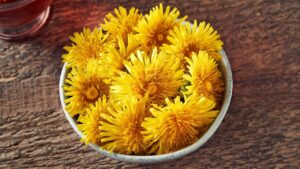
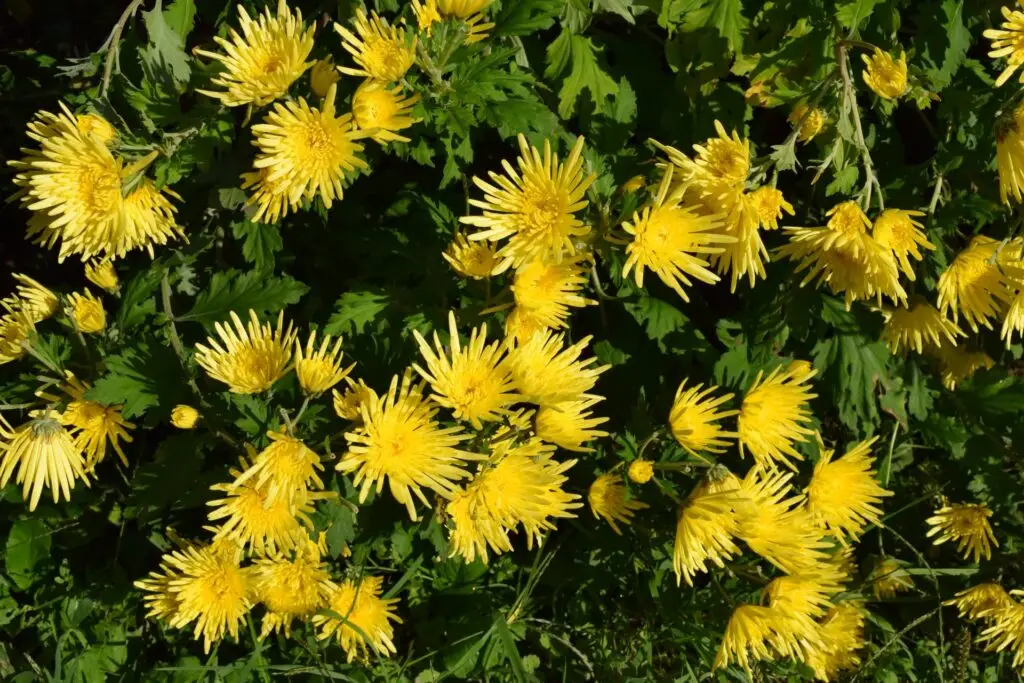
Chrysanthemum flower is the flower of a daisy-family plant eaten as food, with varieties grown for eating separately from ornamental ones. Fresh edible chrysanthemum is in season in autumn, roughly September to November, and has long been loved in the Tohoku and Hokuriku regions, in Niigata, Yamagata and Aomori. Dried chrysanthemum is available all year as chrysanthemum tea. In China too it has long been used as a yakuzen tea for easing heat trapped in the body. The petals are pulled apart one by one, and their vivid colour brings the season and some colour to a dish.
Yellow chrysanthemum, purple chrysanthemum (mottenohoka) and chrysanthemum tea
Chrysanthemum flower can be chosen by colour and by the form you use.
| kinds | What stands out |
|---|---|
| Yellow chrysanthemum | The most common edible chrysanthemum. Little to object to, for vinegared dishes and colour |
| Purple chrysanthemum (mottenohoka) | A purple edible chrysanthemum. Finely aromatic, with a crisp texture |
| Chrysanthemum tea | Dried white or yellow chrysanthemum. Just pour hot water for an easy tea |
For colour on a plate and for vinegared dishes, the unobtrusive yellow chrysanthemum is easy to use; for aroma and texture, the purple mottenohoka, also called kakinomoto, suits. To bring it in easily as tea, dried chrysanthemum tea is handy. Fresh edible chrysanthemum for the season, or dried for any time: choosing by use is what brings out what chrysanthemum has. The small chrysanthemums served with sashimi are used for colour and aroma.
How to choose it and how to blanch it
When choosing good chrysanthemum flower, these points make it easier to tell.
- Lively petals, vivid in colour
- Taut petals, neither wilted nor discoloured
- Dried: finely aromatic, well dried and not damp
With fresh edible chrysanthemum, pull the petals off the calyx one by one. Blanching the loosened petals briefly in water with a little vinegar added keeps the colour vivid and softens the distinctive sliminess and bitterness. Overboiling costs them their texture, so pass them through the water briefly, then take them straight into cold water and squeeze them out. Prepared that way, they are ready for vinegared dishes, dressed dishes and colour. Chrysanthemum tea needs only hot water poured over the dried flowers.
How to eat chrysanthemum flower
Chrysanthemum flower works widely, from vinegared dishes to colour on a plate to tea, drawing on its vivid petals and faint aroma. Here are the standard ways.
Vinegared, as ohitashi, and for colour
What brings out the most in chrysanthemum flower is an autumn vinegared dish. Petals blanched briefly and dressed in sweet vinegar give you vivid colour, a crisp texture and a faint aroma. With cucumber or mushrooms it makes a dish of fine colour. Dressed in dashi as ohitashi, or in a white sesame dressing, it is refined in taste. Scattered over chawanmushi, a clear soup or chirashizushi, it lifts a dish at once. As a garnish for sashimi it brings colour and aroma. It suits a dish for guests in autumn, or for an outing.
As tempura and as chrysanthemum tea
Chrysanthemum flower is good cooked too. Whole flowers, or petals gathered together, in a thin batter as tempura give a light feel in the mouth and a faint aroma. Chrysanthemum tea, made by pouring hot water over dried flowers, has a gentle aroma that suits a moment of rest. With goji berries, jujube or green tea it makes a yakuzen tea of fine colour. Chilled over ice it is clean and refreshing. Fresh and dried chrysanthemum alike can be brought into cooking and into tea for what each does best.
How to keep chrysanthemum flower
Fresh edible chrysanthemum does not like drying out and spoils easily, so wrap it in damp kitchen paper, put it in a plastic bag, keep it in the vegetable drawer of the fridge and use it soon. When you have a lot, pull the petals apart, blanch them briefly in water with vinegar added, squeeze them out and freeze them in portions, ready for colour and vinegared dishes. Dried chrysanthemum and chrysanthemum tea lose flavour if they take up damp, so keep them in an airtight container somewhere cool and dark, away from damp. Using them before the aroma goes keeps them at their best.
Alongside this, it is worth knowing about The benefits of goji berry likewise held to be kind to the eyes, and one likewise used in yakuzen teas and held to settle heat, The benefits of mulberry leaf as a guide when making yakuzen teas.
Chrysanthemum flower, in season in autumn, is an ingredient whose vivid petals and faint aroma you can enjoy in vinegared dishes, ohitashi, colour on a plate, tempura and chrysanthemum tea. Unobtrusive yellow chrysanthemum, aromatic purple mottenohoka, easy chrysanthemum tea: choosing by use brings out what each has. When you feel you have used your eyes too much, or when you want to feel clear, bring chrysanthemum flower in.